Chile’s power shift: lessons from a decade of power sector transformation
Attachments
Chile's power sector transformation
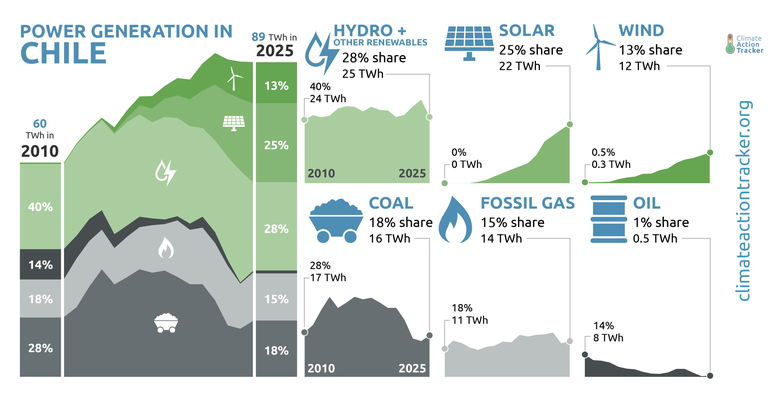
Our memo examines Chile’s power sector transformation over the past decade, showing that large-scale renewable energy deployment can exceed expectations when supported by a strong and predictable policy framework, effective procurement mechanisms and clear long-term decarbonisation signals.
However, Chile’s experience also demonstrates that if new renewable generation capacity is not matched with equivalent progress on grid expansion, transmission planning and storage development it can produce several imbalances such as grid congestion, high rates of renewable curtailment and inefficiencies in electricity generation and consumption.
A transition resilient to government change
Chile’s far-right government has not questioned the role of renewable energy in Chile’s power sector. Instead, it has shifted the emphasis from climate policy to a more market-oriented approach. Because of the low costs and the advanced state of the transition, renewable energy expansion remains economically and strategically important for the government.
The recent global energy crisis has reinforced the strategic importance of domestic renewable energy development in reducing exposure to volatile international fossil fuel markets. Chile has been comparatively less affected, largely due to its relatively high share of renewable energy. However, future supply or price disruptions could still occur. Further expanding Chile’s renewable energy capacity together with flexibility and system stability solutions can help reduce its vulnerability to these risks and strengthen long-term energy security.
Fossil fuel phase-out remains a work in progress
While coal generation has declined faster than anticipated, remaining plants without a phase-out commitment year are not obliged to stop operating until 2040. The role of fossil gas as a transition fuel, including plans to retrofit coal plants for fossil gas use, combined with early indications from the new government that fossil gas could play a larger role in the future electricity mix, introduces risks of long-term carbon lock-in and continued dependence on imported fossil fuels.
Entering a new phase
Chile is now entering a new phase of the transition. Increased shares of variable renewable energy sources require special attention to system stability and flexibility solutions across multiple timescales. Addressing these challenges is not only essential for the secure operation of the power system, but also for maximising the benefits of further renewables deployment.
Maintaining this momentum will be increasingly important as electricity demand is expected to grow significantly due to the electrification of transport, industry and buildings, as well as continued economic and industrial development.
Stay informed
Subscribe to our newsletter