Mexico
Policies & action
We rate Mexico’s policies and action as “Highly insufficient” when compared to modelled domestic pathways. The “Highly insufficient” rating indicates that Mexico’s policies and action in 2030 lead to rising, rather than falling emissions and are not at all consistent with the 1.5°C temperature limit. If all countries were to follow Mexico’s approach, warming could reach over 3°C and up to 4°C by the end of the century.
Policy overview
President Claudia Sheinbaum’s first year in office has seen mixed signals emerge. Mexico elected Sheinbaum, a former climate scientist, in 2024, and she will lead the country through to 2030. There are high expectations that her administration will strengthen climate ambition after years of fossil fuel prioritisation under former President Andrés Manuel López Obrador. President Sheinbaum must establish renewable energy as a hallmark of her government, rather than continuing her predecessor’s focus on fossil fuels, the rollback of climate and energy policies, and the dismantling of climate governance institutions (Toche, 2023; Esposito, 2024).
In January 2025, the administration released the Mexico Plan, an ambitious economic strategy aimed at positioning Mexico among the world’s ten largest economies by 2030 (Gobierno de México, 2025i). The plan underscores the goal of producing 50% of domestic consumption in strategic sectors – including energy, petrochemicals, and mobility – by that year. Measures affecting the energy sector include commitments to both increase oil production and to scale up investment in clean energy sources. Under Mexican law, however, the clean energy category includes certain fossil gas-fired power plants, which limits the climate impact of this commitment (Gobierno de México, 2025g).
In February 2025, the government published its National Development Plan (2025-2030) (Gobierno de México, 2025j), a framework that successive administrations have historically used to guide policymaking (Balderas Torres et al., 2020). Organised around four pillars, one of which focuses on sustainable development, the plan reaffirms the intention to maintain and increase oil and gas production to enhance energy security and reduce import dependence. At the same time, it highlights the need for a gradual transition from fossil fuels towards renewable energy. Other positive developments in the plan include commitments to promote a circular economy and to halt ecosystem loss and degradation by tackling its underlying causes.
First published in 2013, the National Strategy on Climate Change outlines Mexico’s priorities for achieving the adaptation and mitigation goals and specific sectoral action lines for the upcoming 10, 20 and 40 years. The strategy should be revised at least every 10 years for mitigation and every 6 years for adaptation.
In September 2024, the government published the updated version of the Strategy in Mexico's Official Gazette, realising a first version in 2025 (Gobierno de México, 2025b). The updated strategy follows the same structure as the first, 2013, building the country strategy into a 10, 20, and 40-year timeline.
The new document is divided into different dimensions – adaptation, mitigation, and a cross-cutting component. For each dimension, the document proposes different measures aligned with the goals and targets set under the Mexican 2030 NDC and its announced 2050 net zero goal. For the mitigation dimension, measures under different sectors such as energy, oil and gas, transport, waste, industry, LULUCF and agriculture are listed. These are mainly strategies and guidelines that should be further developed to operationalise them. The document emphasises the importance of electrification and the deployment of renewables to reduce emissions.
Despite these mixed signals in strategic documents, government action during Sheinbaum’s first year has not matched the level of climate ambition suggested in some policy announcements. In August 2025, the strategic plan for PEMEX (2025-2030) – the national oil company –was released, forecasting increased fossil fuel production and exploration over the next decade (Gobierno de México, 2025h).
The government's emphasis on increasing oil and gas production stands in sharp contrast to its limited plans for renewable energy deployment. When questioned, environment minister Alicia Bárcena argued that PEMEX’s production targets were compatible with national emission reduction targets set under the new 2035 NDC, because this could be compensated for through offsets (elDiario, 2025). However, relying on compensation rather than delivering absolute emissions cuts is both risky and opaque. A recent comprehensive review of global offset markets finds that for the past 25 years, carbon offsets have failed to deliver credible climate mitigation outcomes and should be rapidly phased down (Romm et al., 2025), underscoring that over-reliance on compensation mechanisms is likely to delay the deep structural emissions reductions required.
Mexico has substantial renewable energy potential, yet the power sector development plan (PLADESE) 2025-2039 sets a target of 38.5% of electricity generation from clean energy sources by 2030 (SENER, 2025) – a figure that, due to the legal definition of clean energy, includes fossil gas (Gobierno de México, 2025g) and therefore falls well short of a 1.5°C-compatible pathway (NewClimate Institute and Climate Analytics, 2023). At the same time, annual solar and wind deployment in Mexico has slowed significantly in recent years, declining from over 4.8 GW in 2019 to just 1.6–1.1 GW in 2023 and 2024 (Borrero et al., 2025).
We estimate that Mexico’s GHG emissions under current policies will continue to grow through 2035. Compared to our 2022 assessment, projected emissions are slightly lower. This is attributed to policies fostering the integration of clean energy sources in electricity generation, based on the projections available for the current policies deployed under the electricity sector (Gobierno de México, 2024c).
Mexico is at a crossroads. Sheinbaum’s administration needs to turn missed opportunities into progress by making a just and equitable shift to renewable energy – and a rapid phase-out of fossil fuels – the hallmark of its government. Policy decisions taken in the coming years will be critical in either shaping the country’s energy transition or ensuring a costly and risky carbon lock-in. The early retirement of fossil gas plants could reduce emissions, mitigate energy security risks, and unlock substantial economic benefits from low-cost renewable energy.
Emissions projections from policies
Greenhouse gas emissions in Mexico continuously increased between 1990 and 2019, declined in 2020 due to the COVID-19 pandemic, and rose again after the 2021 economic crisis. Mexico had the 12th largest CO2 emissions in 2023, 1.3% of the global share (IEA, 2025a).
The largest contributor to total GHG emissions is the energy sector, which accounted for approximately two-thirds of total emissions (excl. LULUCF) in 2023. We estimate that Mexico’s emissions under current policies will increase towards the end of the decade, climbing to up to 803 -817 MtCO2e, excluding LULUCF, in 2030. These projections are slightly lower than previous projections since the integration of clean energy sources in electricity generation, based on current policies deployed under the electricity sector, would bring emissions slightly down for this sector (Gobierno de México, 2024c).
We predict that this growth in Mexico's emissions will be driven primarily by the energy sector – including transport, electricity and heat production, oil & gas, building and industry consumption – unless more ambitious policies are implemented. Our analysis suggests that Mexico is likely to meet its unconditional 2030 NDC target – which allows for increasing emissions – but additional policies and action will be required to achieve the conditional target goal.
The estimated range assumes two possible pathways depending on the implementation of policies in different sectors of the economy, considering an assessment of existing government planning documents and assuming that no additional climate policies have been implemented since 2013 (see the Assumptions section for more details).
Power sector
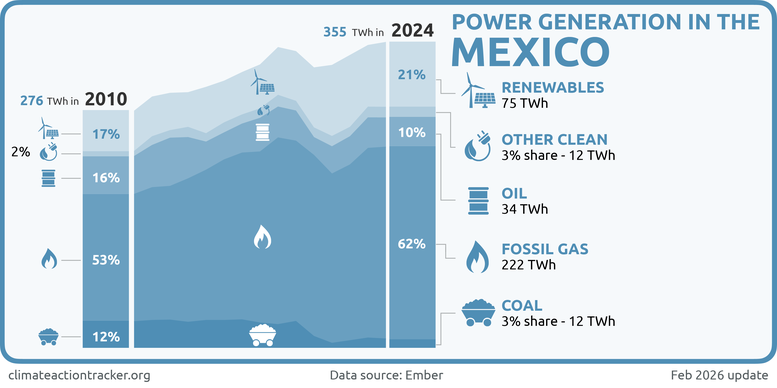
Mexico’s power sector is heading in the wrong direction. Greenhouse gas (GHG) emissions from electricity and heat production have almost doubled between 1990 and 2023 (SEMARNAT, 2025). From 1990 to 2019, emissions increased but started declining in 2019 after the pandemic, and have been declining since, but at a lower rate. They are now close to plateauing, according to the most recent national inventory (SEMARNAT, 2025). In 2023, the power sector accounted for 18% of Mexico’s total GHG emissions (excluding LULUCF), making it the second-largest emitting sector after transport. The electricity mix remains dominated by fossil fuels, with fossil gas supplying around 62% of generation (Ember, 2025).
Despite its critical role in achieving national decarbonisation targets, the sector lacks a clear pathway for phasing out fossil fuels. Instead, policy direction continues to favour fossil-based generation while providing mixed signals on the role of renewables.
In 2025, Mexico enacted a new Electricity Sector Law (Ley del Sector Eléctrico, LSE), aimed at strengthening the state’s role in electricity generation and promoting clean energy sources. However, the law retains the previous definition of “clean energy”, which includes fossil gas-fired generation, thereby diluting its climate relevance (Gobierno de México, 2025g).
In parallel, the government approved the Energy Transition and Planning Law (Ley de Planeación y Transición Energética) (Gobierno de México, 2025f), which introduces several new planning instruments for the energy system: PLATEASE (Plan for the Energy Transition), PLADESE (Plan for Power Sector Development), and PLADESHi (Plan for Hydrocarbon Development). While these frameworks could improve long-term coordination, they also reiterate an emphasis on clean energy rather than explicitly prioritising renewables. Under PLADESE projections, Mexico aims to achieve a 38.5% share of clean energy in electricity generation by 2030, a target insufficient for a Paris-compatible pathway (SENER, 2025).
Fossil gas
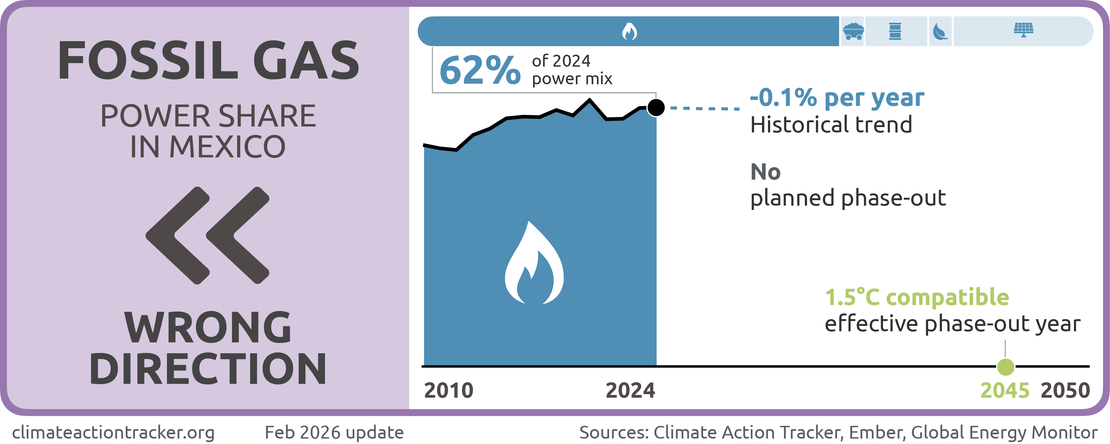
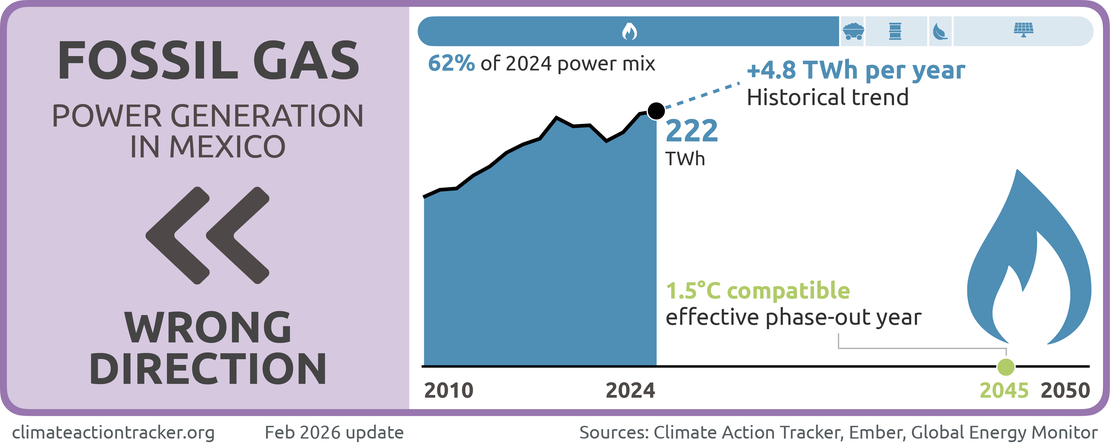
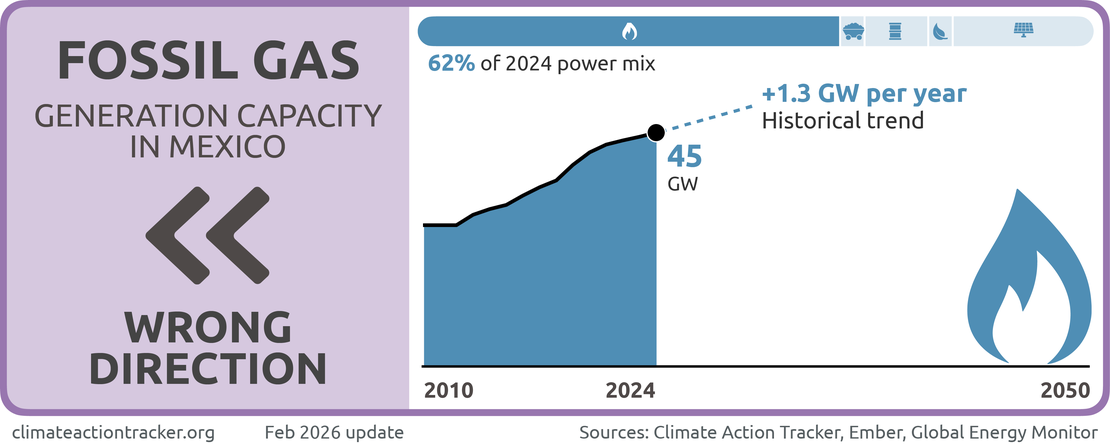
To achieve 1.5˚C compatibility, Mexico would need to start displacing fossil fuels now, with a total phase-out by 2045 (NewClimate Institute and Climate Analytics, 2023). Achieving this target would require the early retirement of around 35% of the existing operating fleet (NewClimate Institute, 2024).
However, the country is currently moving in the “Wrong Direction”. In 2023, fossil gas accounted for 62% of electricity generation, remaining the dominant source in the power sector, with its share increasing since the pandemic (Ember, 2025). The government’s designation of certain fossil gas plants as “clean energy sources” (which they are not) allows them to contribute to national clean energy targets, and their capacity is expected to increase until 2040, according to PLADESE projections (SENER, 2025).
Mexico’s heavy reliance on fossil gas also has important geopolitical and energy security implications. Mexico is the main importer of fossil gas from the United States, and more than 50% of the electricity generated in the country is generated using US fossil gas (EMBER, 2025). US imports reached a historical high in March 2025 (US EIA, 2025). Dependence on US fossil gas is viewed as potentially precarious, with fears that the United States will use this as a pressure tool (Forbes, 2025). Continued dependence on imported gas not only weakens Mexico’s energy security but also risks higher electricity prices, with significant impacts on consumers and social development (Diego et al., 2023; S&P global, 2023; EMBER, 2025).
This reliance has also shaped domestic planning, with PEMEX – the national oil company – expected to increase fossil gas production and exploration over the coming years to improve energy security, as defended by Sheinbaum (Gobierno de México, 2025h).
Policy decisions in the coming years will be critical in shaping Mexico’s energy transition. Early retirement of fossil gas plants could help the country reduce emissions, limit energy security risks, and unlock the economic opportunities associated with low-cost renewables.
Current policies, however, continue to allow the expansion of fossil gas capacity under the guise of clean energy, indicating a misalignment with the country’s climate goals. Without a clear and enforceable plan to phase out fossil gas, Mexico is likely to remain dependent on fossil fuel generation well into the 2030s, making it increasingly difficult to meet 1.5°C-compatible targets.
Coal
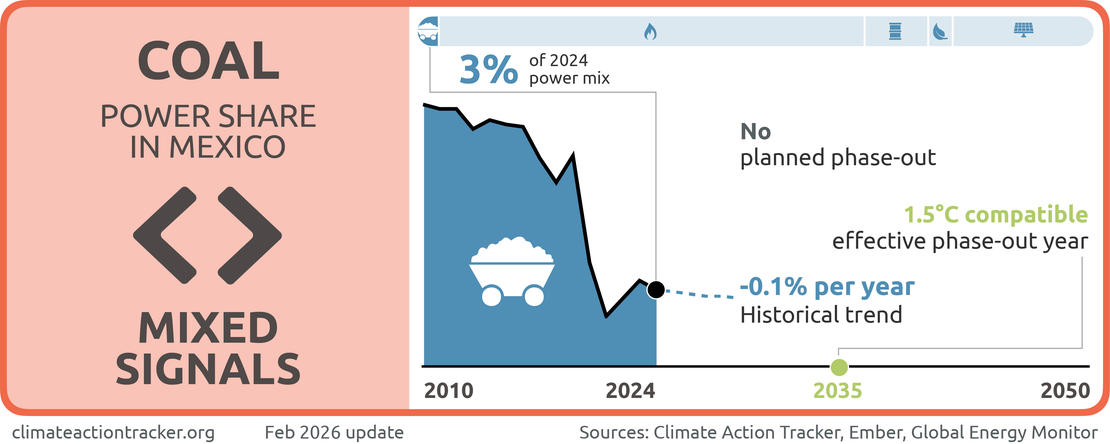
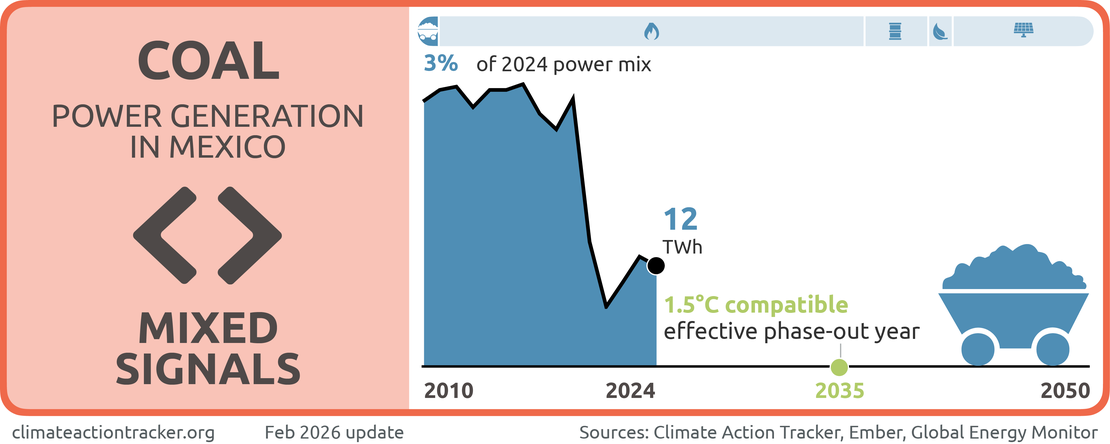
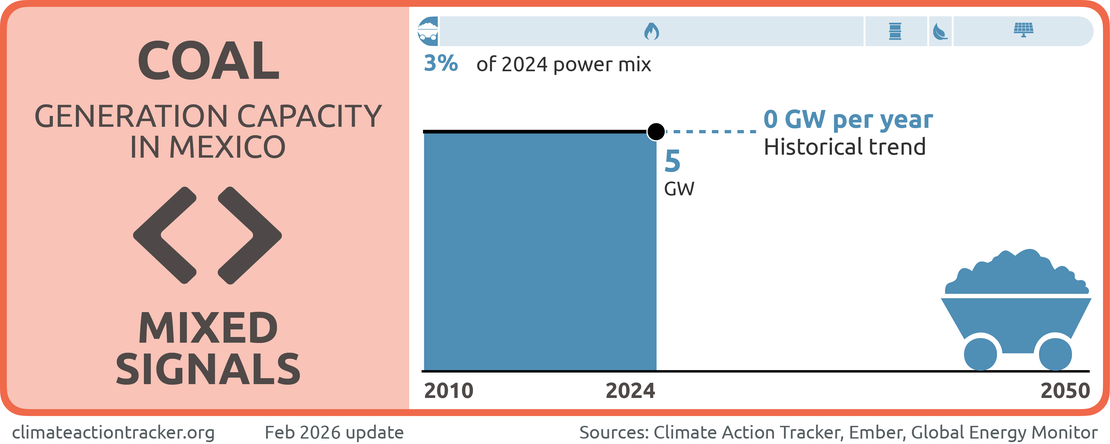
Mexico is sending “Mixed Signals” on coal. The share of coal in the power mix has been slowly declining in the last five years, dropping from 9% in 2019 to 3% in 2024 (Ember, 2025). For 1.5°C compatibility, Mexico would need to phase out coal from its electricity sector by 2030 at the latest (Climate Action Tracker, 2023).
However, Mexico has taken no action to phase out coal, despite signing up to the Power Past Coal Alliance. The government does not have plans to add more coal capacity in the coming years but is planning to modernise existing coal plants to maintain a relatively constant production of electricity from coal until 2039 (SENER, 2025). Mexico has neither signed the Powering Past Coal Glasgow initiative, which seeks to transition away from unabated coal power by the 2030s or 2040s, nor has it adopted the coal exit.
Negative impacts of coal mining are significant. These include deaths and injuries caused by lax safety rules, as well as pollution and ecosystem damage caused by illegal open-pit mining, reducing access of vulnerable communities to clean water and other resources (Fonseca et al., 2021).
Renwables
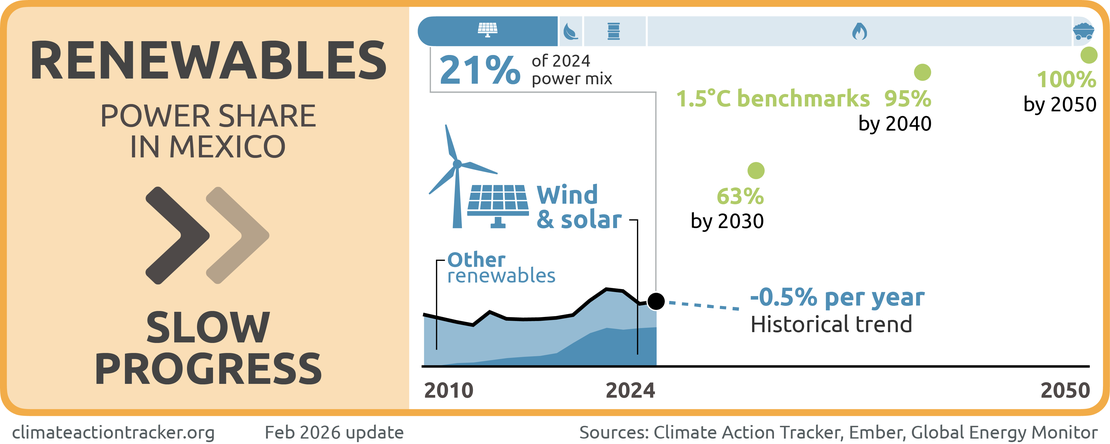
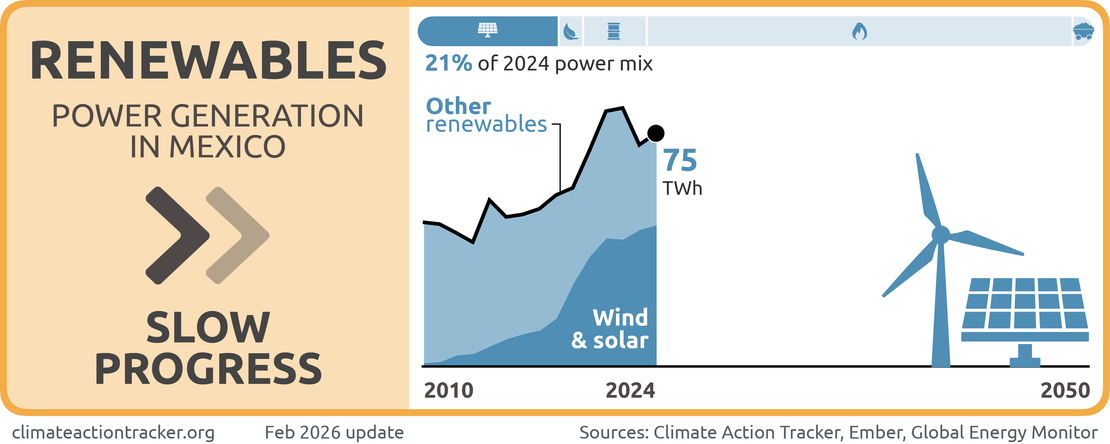
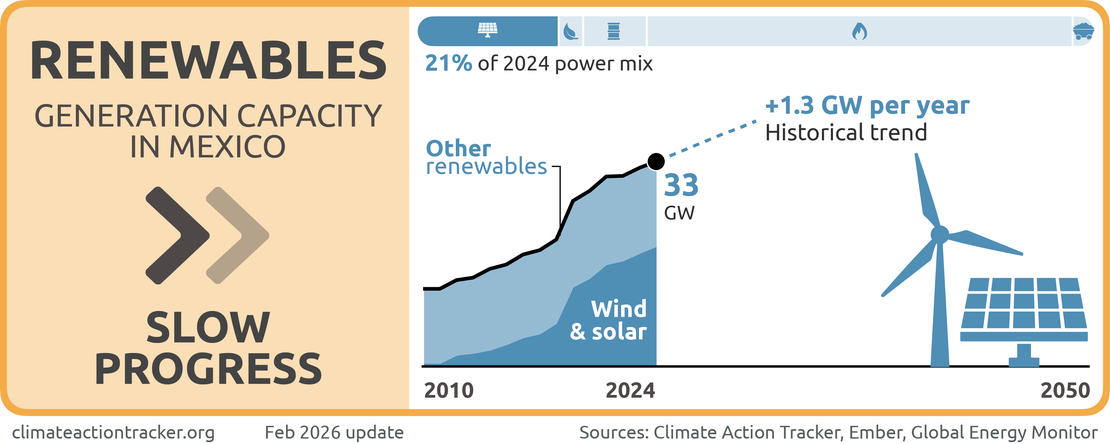
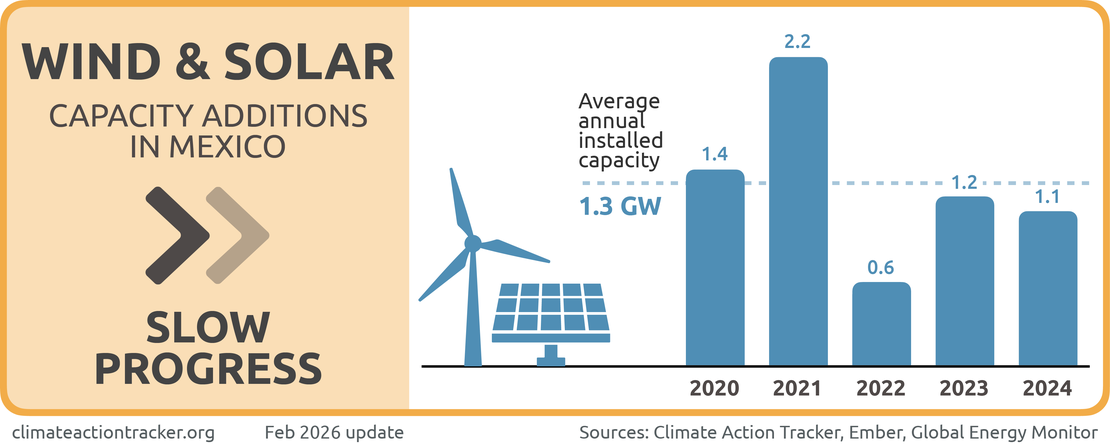
Mexico is making “Slow Progress” in deploying renewables, with its share increasing over the past five years from about 17% in 2019 to 21% in 2024. The same year, wind and solar provided approximately 13% of Mexico’s electricity (Ember, 2025). Despite Mexico’s substantial technical potential for wind, solar, geothermal, and hydropower — including 24,900 GW of solar photovoltaics, 3,700 GW of wind, 2.5 GW of conventional geothermal, and 1.2 GW of additional hydropower capacity (Bracho et al., 2022) – planned deployment remains below levels required for a 1.5°C-compatible pathway. A recent analysis by the CAT shows that aligning Mexico’s power sector with a 1.5°C pathway would require renewables to supply 63% of electricity generation by 2030 and 95% by 2040. To meet this trajectory, Mexico would need to add on average 7.7 GW of solar capacity per year through 2030, alongside significant expansion of wind power. Solar and wind capacity would need to reach a combined 97 GW of installed capacity by 2030.
The build-up of renewable capacity is closely linked to the phase-out of fossil gas, as increasing renewables could diversify the energy supply, reduce electricity costs, and lower dependence on imported fuels. However, investment remains constrained by high perceived risk and a lack of political will, despite the rapidly declining costs of renewable technologies (NewClimate Institute, 2024). Expanding renewables would also require significant grid infrastructure investments to connect dispersed generation sources, typically located far from existing power plants.
The Energy Transition and Planning Law (Ley de Planeación y Transición Energética) published in March 2025, indicates the new administration’s willingness to increase renewable penetration in the power sector (Gobierno de México, 2025f). However, specific targets or detailed implementation measures for the deployment of wind, solar, and other renewable technologies have not yet been established. PLADESE – Plan for Power Sector Development published in 2025 – projects that 38.5% of electricity generation will come from “clean energy” by 2030 and 43.3% in 2035, but this definition includes fossil gas-based generation, which is not "clean", limiting the climate impact of these targets (SENER, 2025).
Oil
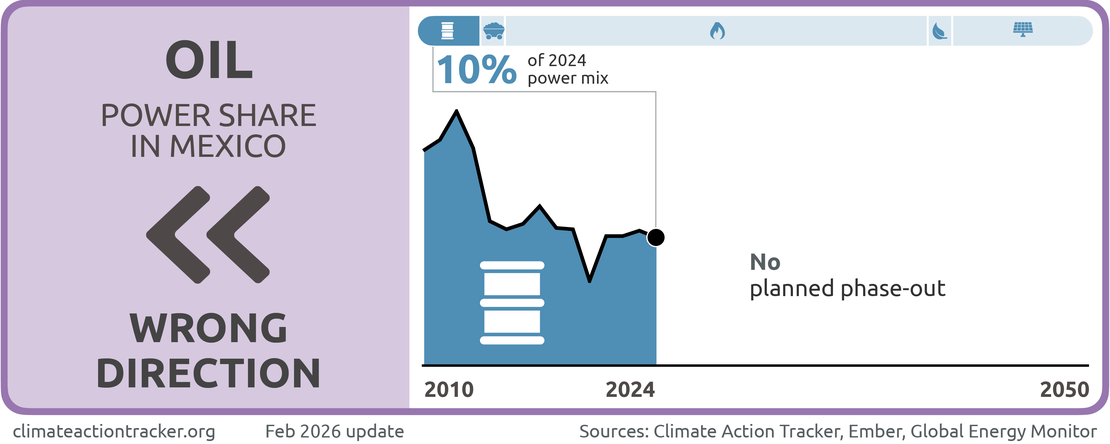
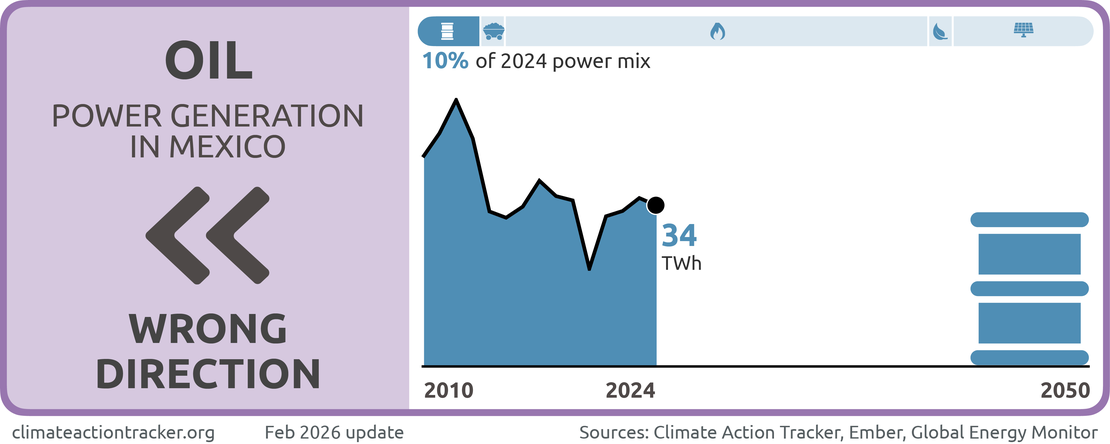
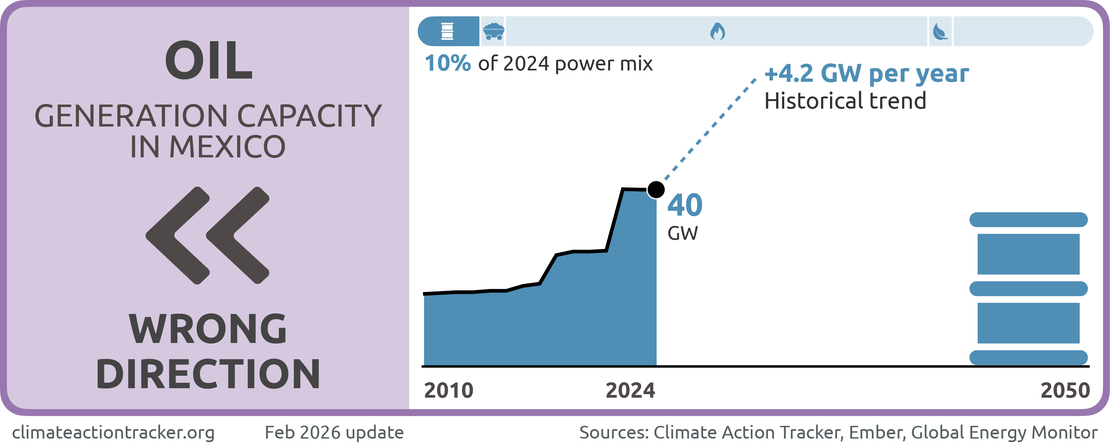
Mexico is moving in the “Wrong Direction” on oil. While its share in the power mix declined over the last two decades, it has remained broadly stable over the last five years, at around 10% of total generation (with only a temporary dip in 2020 due to the COVID-19 pandemic). There is currently no government plan to phase out oil-based power generation.
Hydrogen
Green hydrogen is not currently produced in Mexico. However, USD 20bn worth of investments have been funnelled into projects estimated to produce 7 GW (Parkes, 2024). There is a proposal in place to issue guidelines for its production and develop a National Low-Emission hydrogen Strategy (Karin Dilge, 2024).
Many projects involve the production of clean hydrogen through electrolysis, storage and injection into fossil gas networks or pipelines, taking advantage of the country’s pipeline infrastructure. They also focus on electricity generation and the replacement of grey hydrogen in the industrial refining processes of Pemex.
Industry
In 2023, Mexico’s industry sector emitted 76 MtCO2e of GHG, equivalent to ~10% of total emissions (excluding LULUCF) – only considering industrial processes and product use (Gütschow et al., 2024). The current government plans to expand the national industry through the expansion of state-controlled energy and fossil fuel supply and the relocation of industries in the country (Gobierno de México, 2025i).
In 2025, the government introduced a legal change to the status of PEMEX – the national oil and gas company – and CFE – the state-owned electric utility – from productive state enterprises to public state enterprises. This change entails that both companies will now prioritise energy sovereignty over profitability (Gobierno de México, 2025k). Current government priorities to ensure energy security include continued exploration and production of oil and gas (Gobierno de México, 2025h).
The new president, Sheinbaum, has stated plans for relocating some of the industrial production of key strategic sectors for the country, such as automotive, textile, or chemicals. In that mould, the programme for Economic Development Hubs for Well-Being Economic was approved by the government (Gobierno de México, 2025c).
This industrial strategy, which seeks to increase production and competitiveness, may also pose challenges for emissions. Given the characteristics of current production systems and the sector’s continued reliance on fossil fuels, emissions are likely to increase. In this context, the 2035 NDC outlines several measures aimed at reducing emissions in the industrial sector, including energy efficiency, material circularity, the use of clean and renewable energy, substitution with biogenic sources and alternative fuels, and the progressive incorporation of innovative solutions(Gobierno de México, 2025a). However, these measures need to be enacted and operationalised through clear government planning or enshrined in law.
The government has also expressed its interest in increasing lithium extraction and refinement – defining lithium as a strategic development area for Mexico (Gobierno de México, 2025k), although it is not clear yet the resources available of that mineral in the country and how to obtain them (Mongabay, 2025).
In 2017, the Voluntary Agreements Programme came into force, where energy-intensive industries commit to undertake energy audits, foster the adoption of Energy Management Systems, and set plans to reduce their consumption (Gobierno de México, 2018a).
Oil & gas production
In 2023, Mexico ranked as the 11th largest global oil producer (IEA, 2023a). The new Olmeca refinery in the port of Dos Bocas in Tabasco is now operational in 2024 (Gobierno de México, 2024f). This new oil refinery is expected to emit 2.1 MtCO2e per year (Alire Garcia and Hilarie, 2024). This, in addition to the country’s six existing refineries, will expand the country’s crude oil refining capacity by more than 40% compared to previous years.
President Sheinbaum has presented a plan to financially stabilise the state-owned oil company PEMEX, which continues to experience declining production (IEA, 2025b). The strategy, covering the period 2025 to 2030, emphasises the need to increase oil and gas production and expand petrochemical and fertiliser production capacity (Gobierno de México, 2025h). This is in line with the projects started by previous President López Obrador to foster fossil fuels in Mexico, heavily critised by environmental groups both nationally and internationally (Gobierno de México, 2024f).
Transport
In 2023, the transport sector made up 23% of total emissions (excluding LULUCF) (SEMARNAT, 2025). 93% of passenger transport and 75% of freight transport is by road, which accounts for over 90% of transport sector emissions (Climate Bonds Initiative, 2021).
The national vehicle fleet has grown from 15.6 million in 2000 to over 60 million in 2024 (INEGI, 2024a). Mexico is making progress towards the electrification of transport, though it still lacks a comprehensive strategy and regulatory framework (Gobierno de México, 2022a). There has been a steady but slow growth rate of EV sales which made up 3.4% of total vehicle sales in 2025 (INEGI, 2024b).
The Mexico Plan – the new government's economic strategy for 2030 – will aim to contribute to reducing emissions from the sector by implementing several measures, such as providing efficient, accessible and low-emission public transport options through ten electric mobility projects for several regions in Mexico, and the manufacturing of electric vehicles in the country, to increase the production of - and demand for - EVs (Gobierno de México, 2025i). In September 2024, new EV-charging regulations were published, regulating how EV/PHEV charging installations should be connected to the national electric grid, setting up the country's first EV regulatory framework (Gobierno de México, 2024b).
Mexico presented the National Electric Mobility Strategy (ENME, in Spanish) in 2018, establishing bases and guidelines alongside tentative goals for 2030, 2040, and 2050, which allow electric mobility to be promoted and positioned nationally as a viable and sustainable mobility alternative. In 2023, a draft text set targets for 100% of passenger vehicle sales to be electric or plug-in-hybrid by 2040 and 100% electric by 2050 in line with the 100% EV (Gobierno de México, 2023a). However, the final ENME has not yet been published, and any targets would need to be translated into binding regulations to ensure effectiveness.
In 2013, Mexico was the first Latin American country to establish fuel-efficiency/CO2 standards for light vehicles (NOM-163). After the initial phase covering model years 2014-2016, no strengthened phase entered into force during 2017-2019; estimates show this gap led to additional cumulative emissions compared with a continued policy-scenario (Mariscal Jurado et al., 2021). The NOM-163 was re-established in July 2024 (Gobierno de México, 2024e), which covers conventional and electrified light vehicles and includes credits for car manufacturers that produce and sell hybrid, electric, and fuel cell cars in Mexico. But much more will be needed to further strengthen the decarbonisation of the transport sector in the country.
Buildings
Mexico’s building-related emissions made up 4% of the total GHG emissions in 2023 (SEMARNAT, 2025). The sector represents 18% of national electricity consumption (WRI, 2024), emphasising the importance of considering the sector as a key enabler to reach emission reduction targets.
In 2017, the Mexican government presented a roadmap for reducing energy consumption in the buildings sector by 35% (through efficiency measures) and the construction of only net-zero buildings by 2050 (Gobierno de México, 2017). In 2020, new targets were defined in terms of energy efficiency with the goal of an annual rate of 3.7% reduction in energy consumption between 2031–2050 (Gobierno de México, 2020b). However, these long-term objectives have not yet been translated into national-level regulations.
There is no energy retrofitting strategy for existing buildings. The Low Carbon Buildings criteria became available in Mexico in 2019, setting out what property assets are eligible for certification under the Climate Bonds Standard (Climate Bonds Initiative, 2019). Mexico approved the Kigali amendment on hydrofluorocarbons (HFCs) in 2018, which plans to allow peak HFC consumption in 2024 then to gradually phase down (UNEP, 2019).
Programmes like INFORNAVIT’s green mortgage and SHF’s EcoCasa incentivise efficient construction (Mackres and Fairuz Loutfi, 2020). The green mortgage offers extra credit for eco-friendly upgrades to homes, such as insulation, energy-saving lamps, and solar water heaters. Mexico has passed regulations and incentives to open the market to distributed renewable energy, like metering for on-site solar photovoltaic systems up to 500 KW which allows owners of renewables to sell their energy into the grid (Secretaría de Energía, 2018).
While more developed than other emerging economies, it’s still in its early stages compared to other country’s buildings sector overall (Mackres and Fairuz Loutfi, 2020). The country needs to develop a roadmap for the decarbonisation of the building sector through regulation and reliable data to enable informed decision-making processes (WRI, 2024).
Agriculture
Agriculture emissions in Mexico increased by 16% between 1990 and 2023 (Gütschow et al., 2024). In 2023, emissions in this sector– most of which are methane – reached 131 MtCO2e, equivalent to 18% of total emissions (excl. the LULUCF) (SEMARNAT, 2025).
Since 2012, Mexico has been a member of the Climate & Clean Air Coalition that seeks to reduce emissions from short-lived climate pollutants, such as methane. Under this initiative, in 2025 the new government began developing a national strategy to mitigate methane emissions from livestock – which represent more than 50% of all methane emissions (Gobierno de México, 2025d). However, this strategy is not yet available.
The 2030 NDC targets to reduce agriculture emissions by 8% from the BAU scenario, but actions directed at achieving this are not widespread (Guerrero and Dalila Cervantes-Godoy, 2022). The agricultural sector strategy promotes agricultural practices adapted to climatic and environmental conditions, such as soil conservation and reduced burning of residues, considering community and scientific knowledge, and adopting agroforestry, agroecology, and biodigesters on livestock farms (Gobierno de México, 2023b).
The agriculture sector in Mexico is one of the sectors most vulnerable to climate change, due to increasing temperatures, which are expected to lower agricultural yields and increase heat stress for workers (Inter-American development bank, 2020). Under a high-emissions scenario, the value in losses in selected crops is expected to be twice the current national agricultural production (Estrada et al., 2022).
Forestry
The land use, land-use change and forestry (LULUCF) sector has been a stable sink in Mexico over the last 20 years (SEMARNAT, 2025). The deforestation rate has been gradually decreasing in Mexico over the last two decades, however there continues to be a net loss of forestry area (Pronatura, 2024). Between 2015 and 2025, Mexico had a net annual loss of forest area of approximately 130 kha (FAO, 2025). The main causes of tree cover loss are dominated by permanent agriculture activites such as shifting to cropland and cattle pastures (Global Forest Watch, 2024)
In 2025, the National Restoration Environmental Programme was released, aiming to provide a national and institutional framework to restore degraded ecosystems across Mexico with a strong emphasis on integration, environmental justice, and participatory governance (Gobierno de México, 2025l). The programmes sets key targets such as restoring 25,000 ha of forest by 2025, 100,000 ha by 2030 and contributing to the goal of net-zero deforestation for 2030, also set in the 2030 NDC.
In March 2024, a policy brief for a National Blue Carbon Strategy was set up. This will work to protect mangroves, national seagrasses and marshes; important reservoirs of carbon currently threated by unsustainable economic activities (ICCF, 2024). There has been an increase in community forest management practices, commercial forest plantations, forest restoration, payment for environmental services, and an increase in areas under protection (natural protected areas) (SEMARNAT, 2023).
Mexico’s REDD+ National Strategy 2017–2030 (ENAREDD+) established strategic action lines to promote continued reduction of LULUCF emissions and achieve the net zero deforestation target by 2030 (Gobierno de México, 2019).
In 2018, the Sembrando Vida (Sowing Life) programme began paying farmers to plant fruit or timber trees on small plots of land to encourage industry in deprived rural areas (Gobierno de México, 2022e). Its goal is to plant one billion trees. However, its impact is still unclear, as planting big swathes of commercial species, sometimes on land that held native forests, can potentially result in increasing deforestation rates (de Haldevang, 2021). Although it was developed as a social programme, the government now refers to it as a strategy against climate change.
Waste
In 2023, emissions in the waste sector represented 9% of total emissions (excl. the LULUCF) and, between 1990 and 2023, have grown from 16 MtCO2e to 68 MtCO2e, making this the sector with the highest relative emissions increase over this period (325%) (Gütschow et al., 2024).
The Mexico Plan – the new government's 2030 economic strategy – commits to reduce waste in the country and move towards a circular model with several targets proposed, to use recycled materials in the textile industry and footwear, and substitute 20% of single-use plastics for recycled materials (Gobierno de México, 2025i). The government has announced that it has begun working on a national policy for a circular economy, establishing the new goals and objectives for the country, contributing to the transition of the economy towards recycling and circularity (Gobierno de México, 2025e).
In 2021 a General Law on Circular Economy was approved, establishing a general regulatory framework for a transition to a circular model that encourages re-design, recycling, and reutilisation of products in industry (Gobierno de México, 2021).
The shift from a linear to circular model presents significant challenges. Mexico has initiated the foundational steps, but there is a large gap due to a widespread lack of understanding of the concept by a large portion of the population, unfavourable environmental conditions, and limited communication of successful projects (Cuta Gómez, 2023).
Methane
Mexico’s estimated 2022 methane emissions were 167 MtCO2e, though studies from satellite measurements suggest emissions could be significantly higher (Zavala-Araiza et al., 2021; Gütschow et al., 2024). This ranked Mexico as the 10th highest methane emitter globally (IEA, 2023b). The agricultural sector is responsible for the majority of Mexico’s methane production, followed by waste and energy (SEMARNAT, 2025).
In mid-2025, the government initiated a formal process to develop a national strategy to mitigate methane emissions from livestock. This project comprises creating a national baseline of methane emissions from bovine production systems, formulating a roadmap for mitigation, capacity building, and financial mechanisms to support producers’ transition to low-emission practices. As of January 2026, the full strategy document has not yet been published, and no official sector-wide methane reduction target has been made public (Gobierno de México, 2025d).
In 2018, Mexico published a set of guidelines to reduce methane emissions from the oil and gas industries (Gobierno de México, 2018b). In 2022, Mexico announced it is spending USD 2bn to reduce methane emissions from oil & gas exploration by 98% (Gobierno de México, 2022b).
In recent years, multiple reports of methane leaks from PEMEX oil and gas platforms have been documented. In 2023, UNEP International Methane Emissions Observatory launched a programme to notify energy companies of large methane emissions, with the goal that once leaks are flagged, they will be fixed (UNEP, 2024). The PEMEX Zaap-C platform leaks continued even after the UN alert. PEMEX denied the leaks, claiming the programme mistook nitrogen for methane. (Eschenbacher and Martell, 2024). Reducing leaks from oil and gas infrastructure is one of the cheapest and most effective ways to slow climate change in the short term (Global Methane Initiative, 2022).
Mexico has been a member of the Global Methane Initiative since 2004 and signed the methane pledge at COP26.
Further analysis





Latest publications



Stay informed
Subscribe to our newsletter