
Brazil
Policies & action
Brazil’s current policies are “Insufficient” when compared to their fair-share contribution to climate change mitigation. Under current policies, Brazil’s emissions (excluding emissions from the land use, land use change and forestry sector) have steadily increased over the past decades but are expected to essentially plateau. Yet, Brazil would need to significantly cut its emissions this decade to be 1.5°C compatible.
The “Insufficient” rating indicates that Brazil’s climate policies and action in 2030 need substantial improvements to be consistent with limiting warming to 1.5°C. If all countries were to follow Brazil’s approach, warming would reach over 2°C and up to 3°C.
Further information on how the CAT rates countries (compared to modelled domestic pathways and fair share) can be found here.
Policy overview
In October 2022, Luiz Inácio Lula da Silva (Lula) was elected president of Brazil for the third time, defeating former president Jair Bolsonaro. He assumed the presidency in January 2023, quickly moving away from the previous administration’s policies and reconstructing the country’s environmental policy, which had suffered from significant budget cuts and rollbacks (Nature, 2023). Since taking office, the government has launched multiple policies and programmes aimed at enabling climate-aligned development, and has integrated environmental considerations into landmark industrial development strategies. At the same time, sectoral implementation remains uneven, with substantial progress in forestry and renewables contrasting with continued support for fossil fuel expansion.
Our calculations show that, under current policies, Brazil's total emissions (excl. LULUCF) will reach between 1,230 MtCO2e and 1,320 MtCO2e in 2030 and between 1,180 MtCO2e and 1,340 MtCO2e in 2035.
In our previous analysis, we estimated emissions to be around 1,170 MtCO2e in 2030 and relatively stable through to 2035. The updated projections, based on newly available data from the National Mitigation Strategy (ENM), show a steady increase in emissions over this period, reflecting both higher recent emissions and an upward revision of future trends. In order to limit warming to 1.5°C, Brazil needs to peak and then rapidly decrease emissions, while strengthening policy implementation and accelerating mitigation action in all sectors—including a reversal of present plans to expand fossil fuel production.
Forestry – Brazil’s largest emission source – has shown positive developments during Lula’s third term. The return of declining deforestation rates in the Amazon (down 31% in 2024), as well as the decline in deforestation rates in the Cerrado (26%) in five years, is a notable achievement driven by the government’s reinstatement of monitoring and conservation frameworks (Ministry of Environment and Climate Change, 2024).
Brazil's presidency of the G20 summit in 2024, BRICS presidency, and role of COP30 host in 2025, highlight its renewed engagement with the international community on climate issues, as well as its commitment to shaping international climate policy and the global governance landscape. The Brazilian government committed to developing roadmaps to transition away from fossil fuels, as well as combat deforestation. As 2025 marked the deadline for countries to submit updated and more ambitious 2035 climate targets under the Paris Agreement, the COP presidency and the Brazil’s ministries played an important role by engaging internationally to increase overall ambition.
Following the resubmission of its NDC in October 2023, the Interministerial Council on Climate Change began reviewing the National Climate Change Policy (PNMC). The revised PNMC is guided by a net-zero target for 2050 and includes interim emissions ceilings for 2025 (1.32 GtCO2e), 2030 (1.2 GtCO2e) and 2035 (0.85 to 1.05 GtCO2e), with explicit references to just transition considerations. The National Adaptation Strategy (ENA) was released for public consultation at the end of 2024, followed by the sectoral adaptation plans in early 2025, and the preliminary National Mitigation Strategy (ENM) in mid-2025. Brazil also submitted its National Adaptation Plan to the UNFCCC in February 2026.
Around the same time, the government released the executive summary of the National Climate Plan (“Plano Clima”), an overarching framework that consolidates Brazil’s climate planning architecture and aims to coordinate the country’s mitigation and adaptation strategies (Government of Brazil, 2026b).
The summary confirms the sectoral mitigation pathways presented in the ENM and indicates that Brazil’s emissions reductions to 2035 will heavily rely on large-scale reductions in deforestation and land-use change, with the land-use and forestry sector projected to become a net sink by 2030 and a substantial sink by 2035. In contrast, other sectoral targets indicate that agriculture emissions would remain broadly stable (599–653 MtCO2e by 2035), while emissions are projected to increase in energy (by up to 44%) and industry (by 13–34%) over the same period. The transport sector also projects only marginal change, indicating limited decarbonisation outside the land-use sector.
Among other policy developments, Brazil also introduced a national emissions trading system through legislation in December 2024, although it remains in an early design phase, with key rules still under development (ICAP, 2026). Notably, the system does not cover the agriculture sector.
Brazil continues to plan for fossil fuel expansion, in stark contrast to the risks highlighted in its National Adaptation Strategy. The government justifies this approach in terms of economic development and poverty reduction, emphasising the revenues of oil extraction. Brazil's Novo PAC – a USD 350 bn growth acceleration programme aimed at mobilising private and public investments in infrastructure, development and environmental projects – allocated 64% of its budget to fossil gas and oil production and development, compared to only 12% for clean energy sources (Government of Brazil, 2023d, 2023c). The Ten-Year Energy Expansion Plan (PDE) (Ministry of Mines and Energy, 2022) projects continued growth in oil and gas production through 2030 and 2031. This includes the exploration of new oil reserves in the Amazon Basin, for which the government has repeatedly pressured the environmental authority (IBAMA) to approve drilling projects, ultimately succeeding less than one month ahead of COP30 (Climate Home News, 2025).
Further concerns have been raised by the adoption of PL 2,159 (Bill No. 2159/ 2021, 2025), also known as the “Devastation Bill,” which significantly relaxes environmental licensing rules and poses a substantial risk to efforts to curb deforestation. The bill allows projects deemed to be of “national interest” to undergo fast-tracked and simplified licensing, including oil and gas developments, highway paving in the Amazon, and mining projects—even those framed as essential to the energy transition (WWF, 2025).
Despite significant growth in wind and solar capacity over recent years, Brazil remains a major producer of fossil gas and oil and has yet to put forward a timeline for phasing them out, with questions remaining as to how it will achieve a just and equitable energy transition. For more details, see the Power sector section below.
Power sector
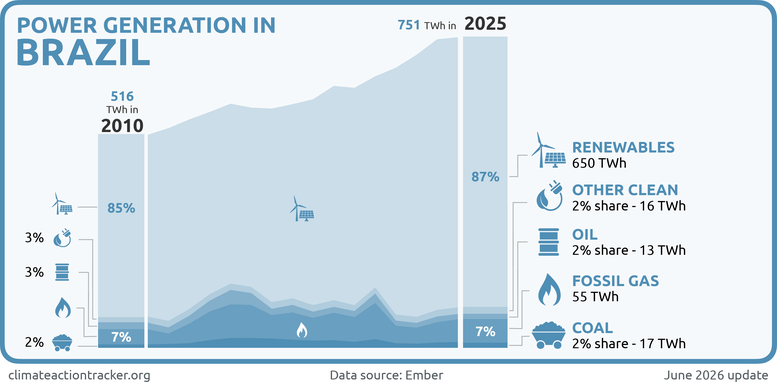
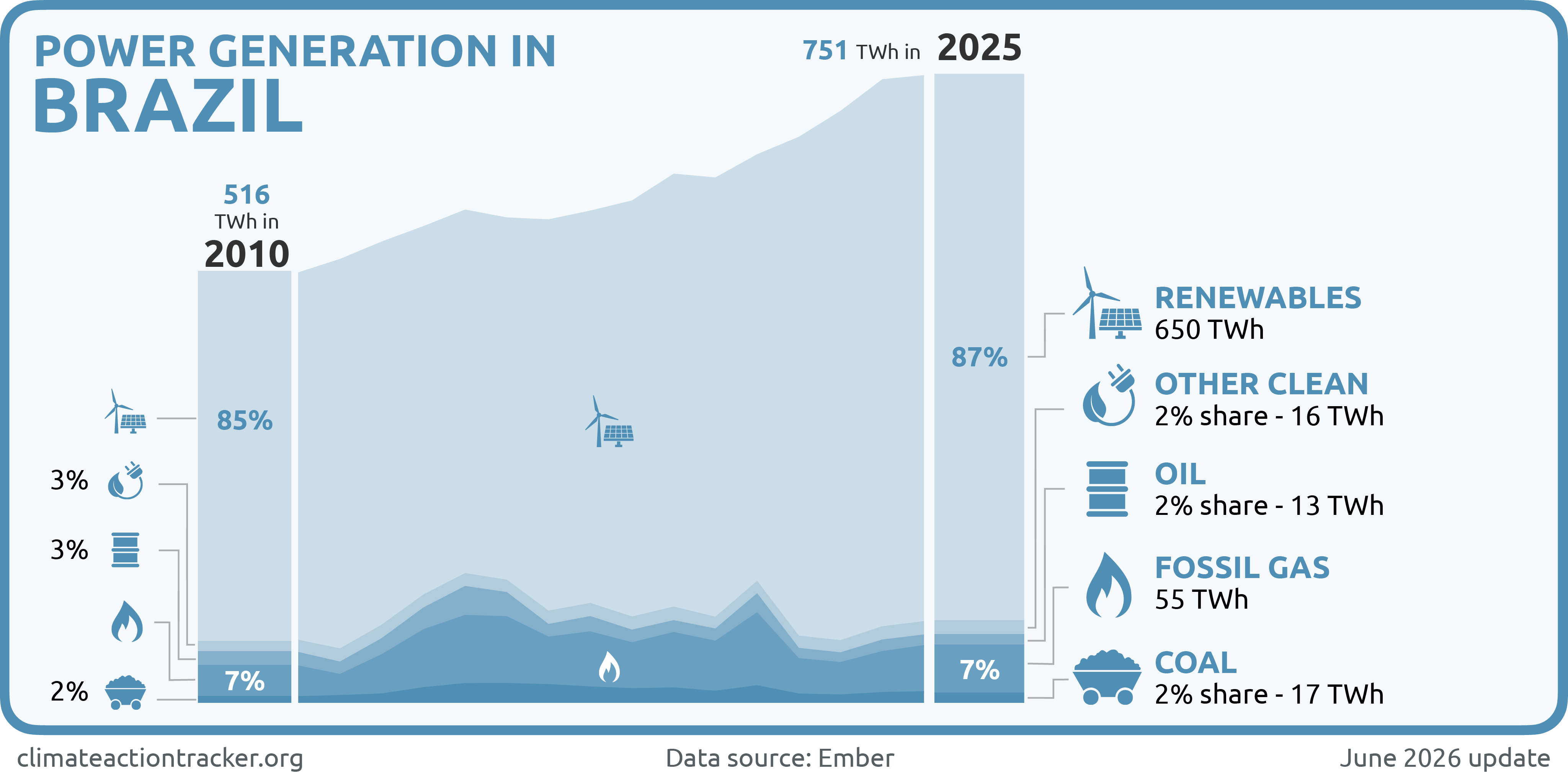
Brazil's power sector accounted for around 11% of CO2 emissions in 2023 (IEA, 2026b). The sector is dominated by renewables, which represented 87% of electricity generation in 2025, with fossil gas and coal making up 11%, and nuclear the remaining 2% (Ember, 2026). This high share of renewables is primarily due to significant hydroelectricity generation (52%), making Brazil's power grid one of the world's cleanest in terms of emissions intensity. However, heavy reliance on hydropower has also created vulnerabilities, as Brazil has experienced historic droughts that led to decreased clean power generation and increased fossil fuel use (Talanoa, 2023).
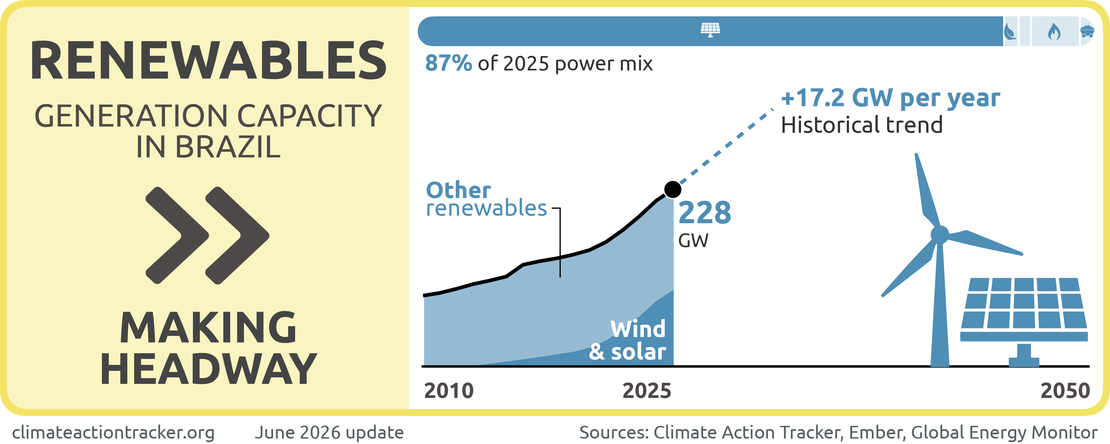
The expansion of wind and solar energy continued in 2024, which is a positive development for the diversification of the power system. Solar capacity reached 53 GW, accounting for 22% of the installed electricity capacity mix, while wind reached 33 GW, representing 13% of installed capacity (Ember, 2026). Further deployment of wind and solar energy could reduce reliance on hydropower and limit fossil fuel back-up generation during dry years.
According to the Ten-Year Energy Expansion Plan (PDE 2031), hydropower capacity in Brazil's electricity system would steadily decrease from 83% in 2000 to 46% by 2031, with plans to diversify through investment in other renewables (wind, biomass, and solar), but also complemented by fossil gas power plants (Ministry of Mines and Energy, 2022). Such planning indicates a shift away from hydropower dominance but also risks locking in fossil fuels in the power sector.
Coal
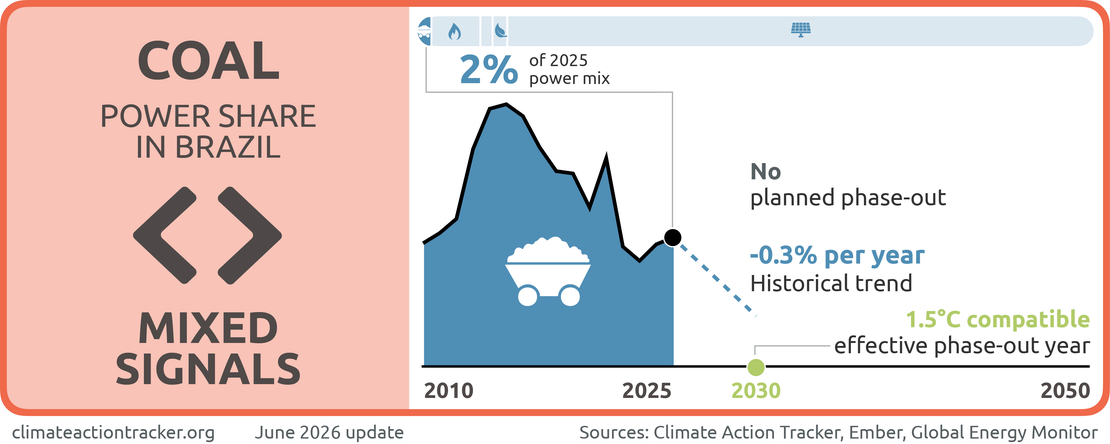
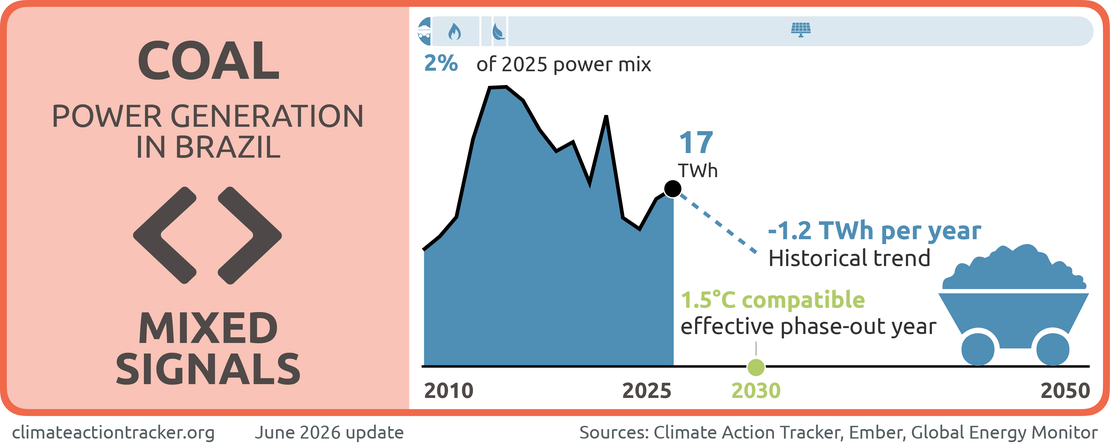
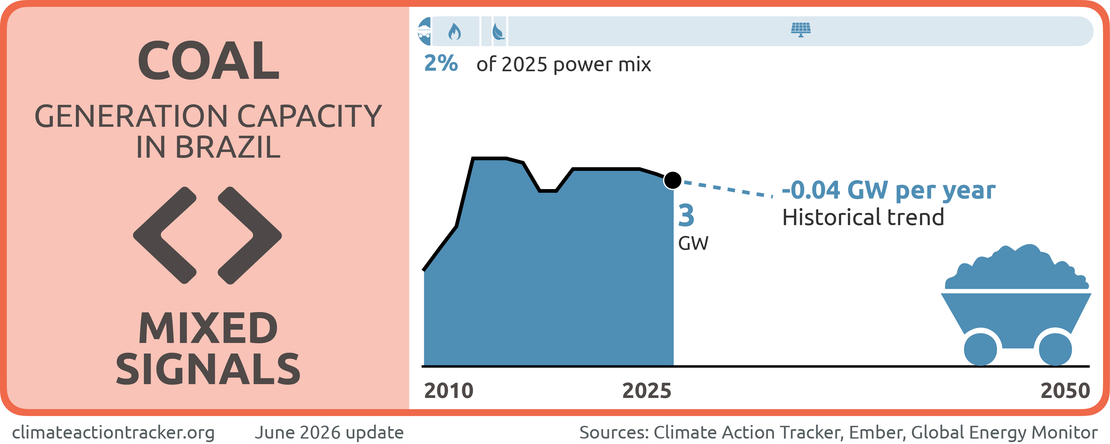
Coal currently represents 2-3% of Brazil's electricity generation and has been declining in recent years, reaching its lowest share in a decade in 2023. The country does not have a coal phase-out target and has not adopted the COP26 initiative to transition away from unabated coal power by the 2030s or 2040s and to cease building new plants. To be 1.5°C compatible, Brazil would need to phase out coal in power generation by 2030 (Climate Action Tracker, 2023).
At COP28, Brazil joined the Global Renewables and Energy Efficiency pledge which highlights the need for a phase down of unabated coal power, in particular ending investment in unabated new coal-fired power plants. Despite this pledge, Brazil remains the second-largest user of coal for power generation in the region (IEA, 2024a).
Brazil's Ten-Year Energy Expansion Plan includes modelling studies showing that most coal capacity could exit the system in 2027 and 2028, as power contracts and subsidies expire. However, the plan also includes assumptions of continued coal capacity additions of around 350 MW per year between 2028 and 2031, through the modernisation of the existing plants or their replacement with more modern ones. This would bring back an overall 1.4 GW of coal capacity into Brazil's energy mix by 2031 (Ministry of Mines and Energy, 2022). Furthermore, the 2024 National Energy Transition Policy (PNTE) defines Just Transition as minimising negative impacts also for companies, which raises concerns that it may enable a longer lifespan for coal-fired power plants (Talanoa, 2024).
We evaluate progress in this sector as sending "Mixed signals" due to the combination of decreasing coal generation and the planned expansion of capacity in the near future.
Fossil gas
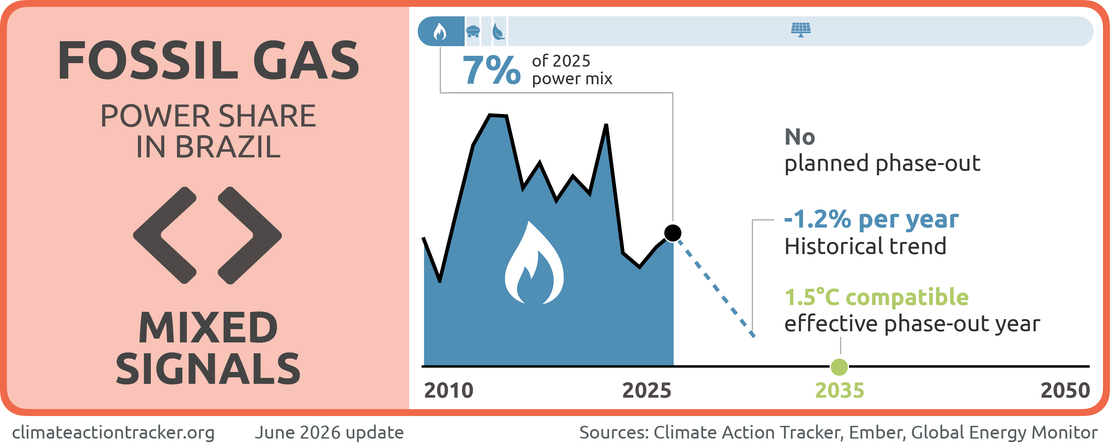
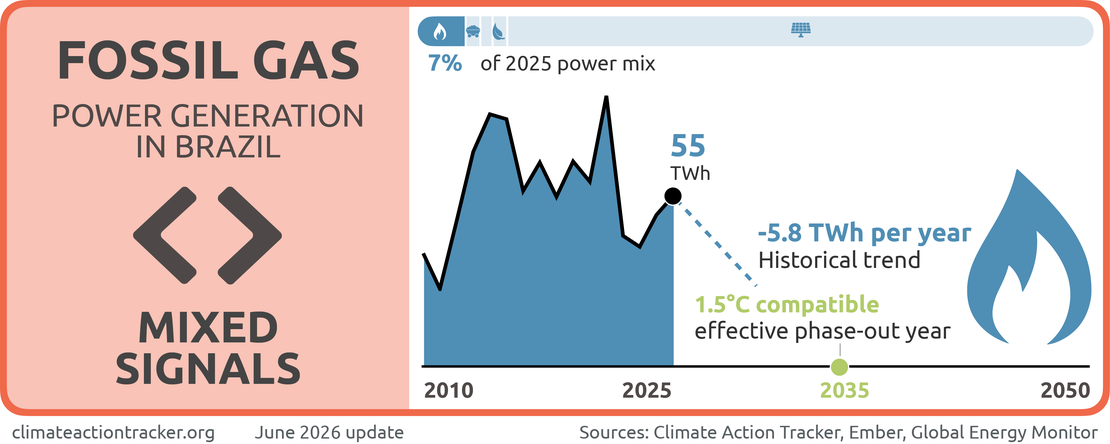
Fossil gas is the primary fossil fuel used for power generation in Brazil, with its share in the power mix at around 6.5% in 2024, down from nearly 14% in 2014 (Ember, 2026). Brazil does not have a fossil gas phase-out target and relies on it for flexibility in periods of reduced hydro output. The share of oil for power generation has been steadily decreasing over the years from a high of 5.8% in 2014 to around 1.8% in 2024 (Ember, 2026).
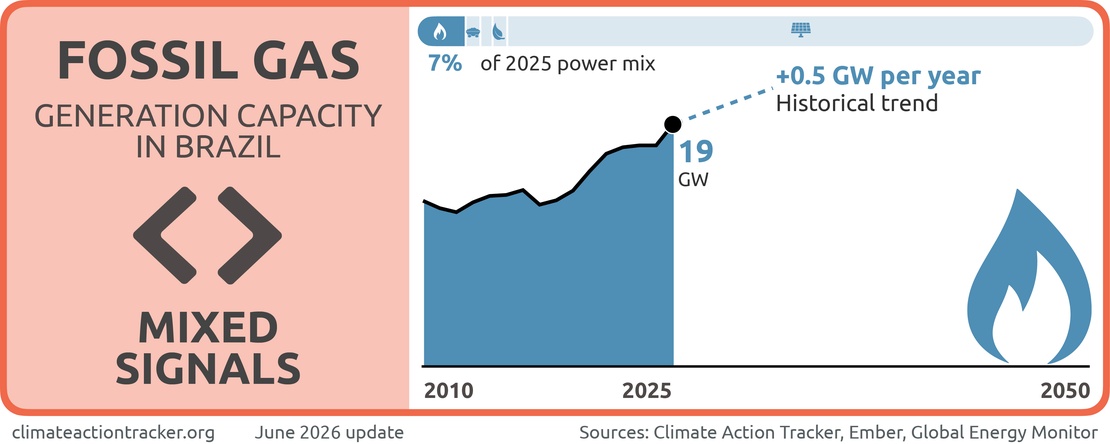
Despite declining fossil gas and oil generation, Brazil is planning to substantially expand its fossil gas fleet. Around 44 GW of fossil gas and oil capacity has been announced or is in pre-construction, compared to about 27 GW currently installed and 3 GW under construction (Global Energy Monitor, 2026). The 2031 Ten-Year Energy Expansion Plan (PDE) proposes the diversification of Brazil's energy matrix, complementing investments in renewable sources with fossil gas power plants to reduce dependence on hydropower and exposure to drought-related variability (Ministry of Mines and Energy, 2022).
PDE 2035, estimates investments of around USD 0.55 tn (BRL 3.5 tn) over the next decade to expand energy supply. Of this total, 80% is concentrated in the oil and natural gas industry, with the remainder going to clean electricity and biofuels (Ministry of Mines and Energy, 2026).
In August 2024, the president signed a decree to increase the supply of fossil gas as part of the program “Gás para Empregar”. The Energy Research Enterprise estimates that investment in natural gas should reach USD 17 bn (BRL 94.6 bn) in the coming years (Government of Brazil, 2025c). The programme (wrongly) frames fossil gas as a transition fuel, and links its deployment to supporting low-carbon solutions.
This planned expansion of fossil fuel production is not aligned with 1.5°C compatibility, which would require oil, coal and gas to be phased out of Brazil's power sector by 2030 (Climate Action Tracker, 2023). Recent scientific literature highlights that there is no room for investment in new oil, gas, and coal activities if global warming is to be limited to 1.5°C (Green et al., 2024), making Brazil's continued investment in oil and fossil gas infrastructure inconsistent with global climate goals.
We evaluate progress in this sector as sending “Mixed signals” due to the combination of decreasing fossil gas generation and the planned expansion of capacity.
Renewables
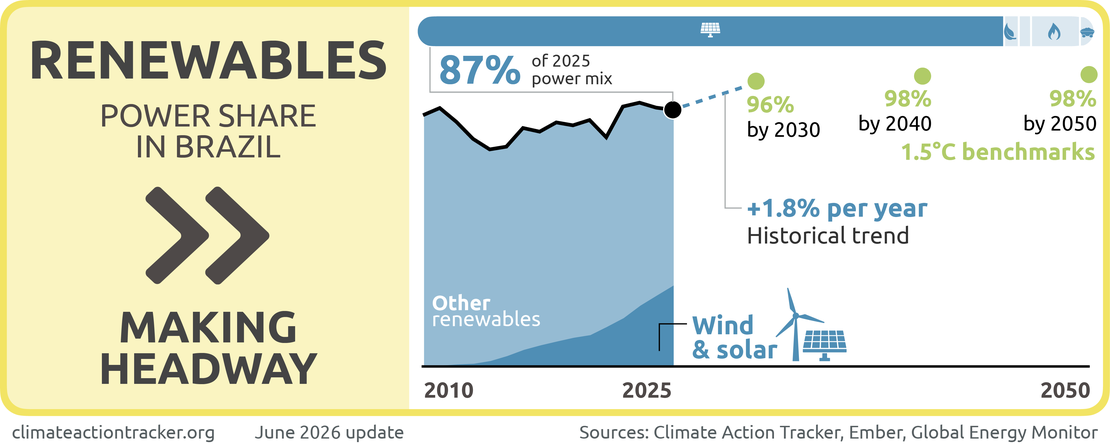
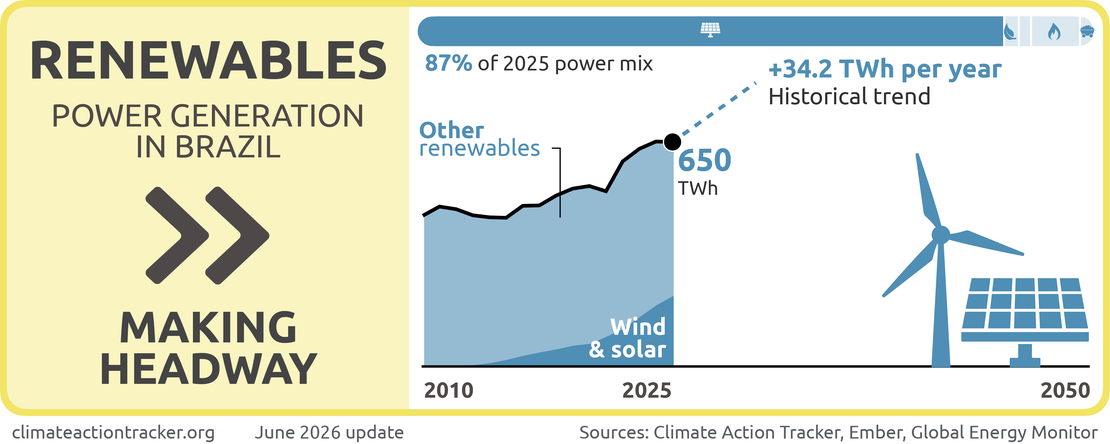
Electricity generation from wind and solar in Brazil has increased rapidly over the last five years, with their combined share reaching around 24% of the power mix in 2024. This growth adds to Brazil’s already large share of hydropower, resulting in renewables consistently accounting for over 80% of electricity generation, reaching around 87% in 2024 (Ember, 2026).
This makes Brazil's electricity mix one of the cleanest in the world (IEA, 2024a). However, some of the large hydropower projects have been associated with social conflicts, as they have displaced indigenous peoples (WWF, 2024). But heavy reliance on hydropower has also created vulnerabilities, as Brazil has experienced historic droughts that led to decreased clean power generation and increased fossil fuel use (Talanoa, 2023).
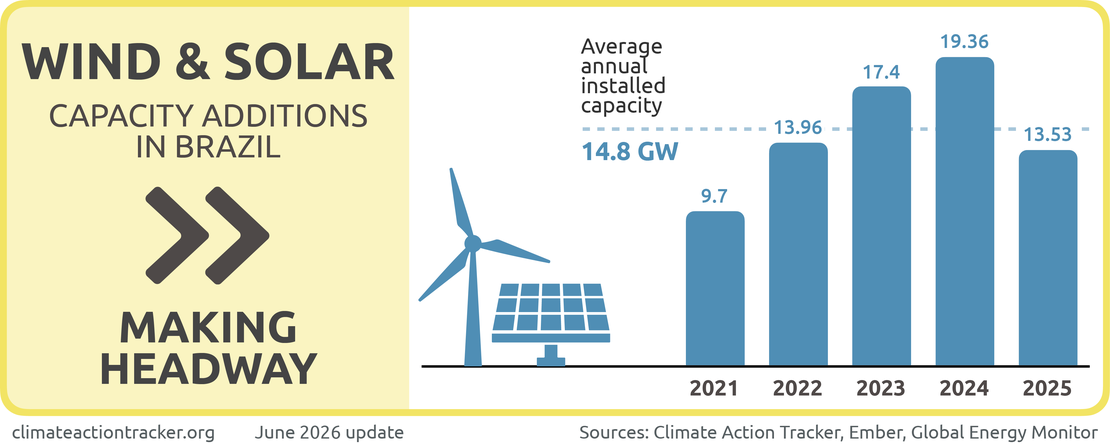
The deployment of wind and solar energy is accelerating very quickly, with their installed capacity reaching around 53 GW for solar and 33 GW for wind by the end of 2024. Together wind and solar capacity grew by around 28% in 2024 alone (Ember, 2026).
A recent analysis by the CAT shows Brazil should reach 89 GW of solar and 46 GW of wind capacity by 2030 to remain aligned with a 1.5°C-compatible pathway and meet growing electricity demand (Climate Action Tracker, 2026). Current deployment trends are broadly in line with these benchmarks, suggesting that maintaining the current pace of annual wind and solar capacity additions will be sufficient to stay on track, provided no new fossil fuel capacity is added.
Renewables are highly competitive in Brazil. Brazil's Novo PAC aims to have 80% of the added electricity capacity coming from renewable sources, yet only around 12% of total investments in the plan are allocated to renewable energy. Looking ahead, the Ten-Year Energy Expansion Plan projects renewables to account for around 86% of the electricity mix by 2034, indicating little change from current levels. This is close but still below the 1.5°C-compatible benchmark for Brazil of 97-98% renewables share in electricity generation by 2035 (Climate Action Tracker, 2026).
While renewable expansion is progressing well, sustaining this expansion will require continued policy support and a phase-out of fossil fuel generation to be fully compatible with 1.5°C pathways. We evaluate progress in this sector as "Making headway" due to the fast and increasing pace of renewable capacity deployment.
Biofuels
Biofuels account for 8% of electricity generation in Brazil, exceeding the combined contribution of coal and oil in the power sector (Ember, 2026)(IEA, 2024b). It is produced predominantly through industrial combined heat and power (CHP) plants, particularly in the sugar and ethanol sector (IEA Bioenergy, 2024). The Ten-Year Energy Expansion Plan (PDE 2034) expects about 3.2% of estimated investments for the ten-year period to go to biofuels, with two thirds of that going to ethanol, and one to biodiesel (Ministry of Mines and Energy, 2024). This makes bioenergy a relatively stable source of electricity, but it is closely tied to industrial activity and land-use change for feedstock.
While bioenergy contributes to a lower emissions-intensity electricity mix, its ability to deliver additional mitigation in the power sector is constrained by sustainability considerations. Robust safeguards are required to avoid emissions linked to land-use change, prevent conflicts with food production, safeguard biodiversity, and uphold the rights of Indigenous peoples connected to the land (Energy Transitions Commission, 2021).
Just Energy Transition
Brazil’s Ecological Transformation Plan (Government of Brazil, 2023e) states that “fossil fuels will still play an important role in ensuring the energy security necessary for economic and social development”.
This narrative is difficult to reconcile with Brazil’s historically high shares of renewable energy in the electricity mix, alongside near-universal electricity access (World Bank, 2023). Brazil currently exports over half of the oil it produces (AEPET, 2024), a share that is likely to increase as production expands. Despite high access rates, Brazil faces a significant just transition challenge of affordability and inequality. National statistics indicate that while in 2023 only 0.2% of households did not have access to electricity, 36% of households spent more than half of their total income on electricity and cooking gas (Portal da Câmara dos Deputados, 2024). This is particularly pronounced in the North and Northeast of the country. There is potential in using renewable energy to increase energy security, particularly in isolated regions of Brazil (Ineep, 2025).
Several targeted initiatives address these challenges, including the Social Energy Tariff, providing electricity bill discounts for low-income households and vulnerable groups: Light for All, aiming to provide free electricity in rural and remote areas, and More Light for the Amazon, providing off-grid photovoltaic systems with storage in isolated communities, to reduce dependence on fossil fuel generators.
Brazil has significant renewable energy potential, with opportunities to expand solar, wind and bioenergy, as well as green hydrogen across the transport and buildings sectors. While the government presents fossil fuel revenues as means to finance the transition, it risks locking in carbon-intensive infrastructure and diverting incentives and subsidies away from renewable energy deployment.
Industry
In 2023, the industry sector accounted for around 21% of Brazil’s CO2 emissions (IEA, 2026a). Policies to reduce emissions in energy-intensive industries remain limited and largely oriented toward economic development objectives. According to the National Mitigation Strategy, industrial emissions are projected to increase by 13–34% by 2035. Brazil’s government frames industrial development under the concept of "neo-industrialisation", emphasising the urgency to lay new foundations for the sector's growth, focusing on development as a key priority.
The Ecological Transformation Plan (PTE) represents the central framework for climate-aligned industrial policy, particularly through its technological densification axis, which sets out the transition to a low-carbon economy as an opportunity for industrial development and innovation, increasing value-added across supply chains (Government of Brazil, 2023e). The plan articulates productivity and employment alongside sustainability and social justice as its main objectives. However, the PTE is primarily an enabling and coordination framework and on its own does not establish binding sectoral decarbonisation pathways.
Priority sectors currently being explored by the government include the processing of strategic minerals, supported through instruments such as infrastructure and incentivised debentures, which include income tax exemptions for financing individuals and tax discounts for companies, both at the investment and issuance level (Government of Brazil, 2024b). Data centres have also become a growing focus as electricity demand linked to AI increases, with many developments happening in the Northeast of the country, alongside the launch of the National Data Centre Policy (PNDC). There is particular focus on ensuring fiscal benefits are grounded on clear sustainability indicators and energy is sourced exclusively from renewable sources (Government of Brazil, 2025e).
Brazil has also begun to structure a policy environment to foster the development of a low-carbon hydrogen economy. The National Hydrogen Program (PNH2) and the Law No. 14.948/2024, establish incentives for the production, certification, and commercialisation of green hydrogen (Government of Brazil, 2024c). The law aims to ensure traceability of hydrogen’s low-carbon origin, create fiscal and financial instruments, and support its integration into industrial and transport decarbonisation pathways.
Complementary initiatives include the identification of hydrogen hubs in ports and industrial zones, partnerships with research institutions for technological development, and alignment with Brazil’s National Energy Transition Policy (PNTE). While signalling longer-term decarbonisation potential for hard-to-abate sectors, these initiatives are at an early stage and are not expected to deliver near-term emissions reductions.
Oil and gas industries
As outlined in multiple federal government planning documents, Brazil intends to expand its oil production until at least 2029 while fossil gas production is expected to maintain its high levels well into the next ten years (Talanoa, 2023). The 2050 National Energy Plan projects an increase in demand for oil derivatives, indicating that Brazil will remain a major producer of oil and fossil gas. At the same time, Brazil’s growth acceleration programme (Novo PAC) has earmarked more than 60% of the investments for “energy transition and security” to oil and gas, specifically for the production and development of these fossil fuel industries (Nature, 2023).
In 2024, Brazil was the world’s ninth-biggest oil producer and the eighth-largest consumer of petroleum products. It is also the largest producer in Latin America. The country has policies in place that aim to make it the world’s fourth-largest oil producer by the end of this decade (Nature, 2023). In January 2025, Brazil joined OPEC+, underlining the necessity of oil production for economic growth and job creation (Enerdata, 2025; OPEC, 2025). According to the National Agency for Petroleum, Natural Gas and Biofuels (ANP), Brazil lifted an average of 4.9 m barrels of oil equivalent per day in June 2025. This is the largest volume of hydrocarbons that Brazil has ever pumped.
The country is actively expanding its offshore oil exploration and production, and added significant new reserves in 2023 — mainly from deep and ultra-deep water offshore fields — with the potential for over 12 years of production at current levels (EPE, 2024). An increase in oil output of over 30% is expected by 2034 compared to 2023 levels (EPE, 2024). This expansion is particularly concerning in light of plans to initiate drilling in the Amazon Basin, with auctions having taken place in June 2025, and channelling investments to fossil fuels instead of transitioning away from them.
According to the IEA’s latest net-zero roadmap, which outlines pathways to achieve net-zero emissions by 2050, there is no room for any new oil, fossil gas, and coal exploration if global warming is to be limited to 1.5°C (IEA, 2023). Therefore, Brazil’s oil and gas industry developments are in stark contrast with the 1.5°C temperature limit of the Paris Agreement and with Brazil’s aspiration to position itself as a climate leader.
Petrobras, Brazil’s state-owned oil and energy company founded in 1953, plays a central role in Brazil’s energy system and remains a key actor shaping future emissions trajectories. It is also a major investor in research and development (WIPO, 2025). However, the company’s 2025–2029 Business Plan projects USD 111 bn in investments over the next few years, of which only USD 9.1 bn will be allocated to low-carbon energy (Climate Observatory, 2025). Petrobras currently plans to invest USD 77 bn in oil and gas exploration and production, and an additional USD 15 bn to expand refining capacity — investments that deepen dependence on fossil fuel infrastructure well into mid-century. In contrast, less than 15% of the total planned investments are allocated to cross-cutting energy transition activities, including emissions mitigation (USD 5.3 bn), R&D in low-carbon technologies (USD 1 bn), and a Decarbonization Fund (USD 1.3 bn) (Climate Observatory, 2025).
Petrobras is well-placed to be a key agent in driving the energy transition. The Climate Observatory report “A Petrobras de que precisamos” highlights its potential to expand the development of low-carbon hydrogen and biofuel technologies, particularly second- and third-generation fuels, green diesel (HVO), aviation bio-kerosene (SAF), as well as biorefinery, biogas, and biomethane projects (Climate Observatory, 2025). However, the company’s current planning and capital allocation signals a continuation of the fossil fuel paradigm rather than its transformation.
Transport
Transport makes up just over 50% of Brazil’s energy sector emissions, which have been steadily increasing since 2018, mainly due to increased vehicle ownership (SEEG, 2024). Under Brazil’s National Mitigation Strategy, transport emissions are projected to remain broadly stable or increase slightly by 2035.
As part of its energy transition goals, Brazil enacted the Fuels of the Future Programme in October 2024 (Government of Brazil, 2025b). The law establishes national programs for green diesel, sustainable aviation fuel (SAF), and biomethane, in addition to increasing the required blend of ethanol and biodiesel in transportation fuels. In mid-2025, the government announced plans to increase the ethanol blend in gasoline to 30% and the biodiesel blend to 15%. Key instruments under the Fuels of the Future Programme include:
- ProBioQAV (National Program for Sustainable Aviation Fuel) — starting in 2027, requiring reductions in GHG emissions for domestic flights via use of sustainable aviation fuel; starting with 1% and rising to 10% by 2037.
- Programa Nacional de Diesel Verde (Green Diesel Program) — CNPE (National Council for Energy Policy) will set yearly minimum volumes of green diesel to be blended with fossil diesel.
- Programme for Decarbonisation of Natural Gas Producers and Importers and for Promotion of Biogas — to support increased use of biogas and biomethane.
Brazil remains one of the world’s largest producers and consumers of biofuels, ranking second globally in ethanol and fourth in biodiesel production, accounting for around 27% and 12% of global output, respectively. Biofuels are framed by the government as a central pillar of the energy transition and an area of economic specialisation with expected growth in demand.
It is essential to ensure that biomass used in future energy systems is sustainably sourced. This means preventing upstream emissions from land-use changes, avoiding competition with food crops, protecting biodiversity, and respecting the rights of indigenous peoples in that land (Energy Transitions Commission, 2021). Furthermore, while biofuels may have reduced the emissions intensity of the road transport sector in Brazil, the potential for further reductions in emissions by biofuel blending is limited (ICCT, 2023). Instead, full decarbonisation of the transport sector will require fast uptake of electric vehicles (EVs). Brazil has not yet set a specific target for electric vehicles and has not joined the COP27 Accelerating to Zero coalition (A2Z), which states that 100% of new car and van sales in 2040 should be electric vehicles, 2035 for leading markets.
EV uptake has increased in recent years, rising from around 2.5% of light-duty vehicle sales in 2022 to 6.5% in 2024 (IEA, 2025; Revista Pesquisa FAPESP, 2023), with approximately 125,000 electric cars sold in 2024. This growth has been largely driven by government tax incentives, including the MOVER programme, as well as the strong market participation from manufacturers such as the Chinese company BYD (Government of Brazil, 2024e; Reuters, 2025a). While increasing, the current shares of EVs in Brazil remain comparatively low to global average shares of about 18% in 2023. Increasing electrification of the transport sector would also reduce Brazil’s dependency on biofuels, particularly those produced from soy, thereby reducing pressure on Brazilian land for soy farming (PNME, 2023).
Agriculture
Agriculture is the second biggest contributor to Brazil’s GHG emissions after the land use sector (LULUCF), with emissions consistently growing over the years and reaching its highest reported levels in 2023 at around 630 MtCO2e. Excluding LULUCF emissions, agriculture and livestock represent just over half of the country’s emissions. Almost 75% of the sector’s emissions are methane and nitrous oxide from livestock alone (SEEG, 2024). If the indirect emissions of the agricultural sector (mostly related to deforestation resulting from the expansion of agricultural land) were considered, the sector would be by far the single largest emissions source in Brazil.
Brazil’s National Mitigation Strategy projects agricultural emissions to remain broadly stable through 2035, indicating limited plans to reduce emissions in the sector. This reflects the current lack of effective policies to reduce agricultural emissions. The main policy instrument in Brazil is the Agricultural Plan (Plano Safra), which provides credit lines to support crop production and product marketing (CPI, 2023). For 2025/2026, the Plano Safra allocated BRL 516 bn (around USD 98 bn) for agricultural financing, but only 8% of this funding is earmarked for low-carbon measures under the Renovagro plan (Política Por Inteiro, 2025).
Renovagro, formerly known as ABC+ Plan, supports low-carbon agriculture by financing practices such as land restoration, integrated crop-livestock-forest systems, and the production of bio-fertilisers, through an interest rate reduction for rural producers (Government of Brazil, 2023f). The Plan aims to prevent over one billion tonnes of carbon emissions between 2021–2030, primarily through restoring degraded pastures and planting forests.
The Pronaf program, dedicated to family agriculture, will allocate USD 17 bn (BRL 89 bn) to small farmers in its 2025/2026 round, with a stronger focus on the climate crisis. New credit lines now support agroecology, sustainable irrigation, and adaptation to climate change (Government of Brazil, 2025d).
Scaling up investments to decarbonise agriculture and incentivise sustainable practices is crucial. Climate impacts have already reduced yields. In September 2025, the government authorised over BRL 12 bn (USD 2.3 bn) in emergency funding to help producers, especially family farmers in the flood-affected South, renegotiate climate-related debts (Reuters, 2025b; Kotz et al., 2025).
The Brazilian agricultural sector is heavily dependent on fertilisers. In November 2023, the government approved the revised National Fertiliser Plan 2050 aiming to reduce the country’s dependence on fertiliser imports – currently at 87% of total demand – and meet 45% to 50% of the demand domestically by 2050. The plan outlines strategies such as reactivating idle factories, incentivising new industrial plants, and investing in sustainable nutrient production to achieve the goal. The National Fertiliser Plan 2050 does not include measures to reduce fertiliser consumption and, by extension, demand.
Expanding the agricultural frontier through deforestation is unnecessary to increase productivity. Brazil has considerable potential to add value and productivity to already available but currently underutilised land by investing in more sustainable and efficient agriculture methods, recovery of degraded land, as well as sustainable intensification of production (Observatório do Clima, 2019; Stabile et al., 2020; Imazon, 2024). Overall, the sector remains a substantial challenge given strong political interest and shows mixed progress.
Forestry
The land use, land use change and forestry sector has been by far the largest source of GHG emissions in Brazil since the early 1990s and, despite reaching its lowest share in recent years, still accounts for around 42% of total emissions in 2024 (SEEG, 2024). This is largely driven by deforestation, linked to a historical process of horizontal agricultural expansion, land grabbing and weak land tenure systems.
After deforestation rates in the Brazilian Amazon peaked at 27,800 km2 in 2004, the government recognized the urgent need for a comprehensive and integrated response and launched the Action Plan for Prevention and Control of Deforestation in the Amazon (PPCDAm), which proved effective in reducing deforestation rates. However, this progress was reversed in the following years amid weakened environmental governance under the previous administration.
In response, the current government launched a new edition of the PPCDAm in June 2023, with a target to reach zero deforestation by 2030 and to decrease projected deforestation in the Amazon region by 75–80% by 2027. With this updated plan, Brazil aims to reverse the alarming trends observed, including the loss of 13,000 km2 of forest in 2021, which marked a 15-year high in deforestation rates (Government of Brazil, 2023a; Talanoa, 2023). Preventing and combating deforestation remains the biggest challenge for Brazil’s government.
In particular, the Action Plan to Prevent and Control Deforestation and Fires in the Cerrado (PPCerrado) includes a goal to reach zero deforestation in the Cerrado by 2030. This is where the country’s agricultural land is expanding and it is also the source of numerous major river basins, vital to the nation's water resources. In 2024, deforestation rates fell by 31% in the Amazon and, for the first time in five years, dropped by 26% in the Cerrado. This substantial success is due to the government’s re-enactment of monitoring and conservation frameworks (Ministry of Environment and Climate Change, 2024).
In 2021, Brazil signed the COP26 declaration to halt and reverse forest loss and land degradation by 2030. The creation of new conservation units and the designation of more public land as protected areas have marked important milestones in curbing land grabbing and deforestation, but these areas require strict monitoring to prevent illegal deforestation. Brazil must also clearly communicate the scope of its zero-deforestation target. For example, the National Mitigation Strategy defines this goal as eliminating illegal deforestation by 2030, while allowing limited legal removal of native vegetation, to be offset through restoration efforts.
Brazil is also launching major restoration initiatives. The Arc of Restoration – a partnership between the Ministry of the Environment and Climate Change and the BNDES (Brazil’s national development bank) – aims to finance the restoration of 24 million hectares of deforested or degraded areas in the Amazon by 2050, supporting biodiversity recovery and expanding natural carbon capture (Brazil, 2024). In addition, the National Plan for Restoration of Native Vegetation (PLANAVEG) targets the restoration of 12 million hectares by 2030. Restoration and afforestation efforts are increasingly important as ongoing degradation and climate change continue to erode the carbon sink potential of Brazilian forests (Flores et al., 2024).
At the same time, some recent regulatory changes risk undermining these efforts in the sector. In particular, Brazil's so-called "Devastation Bill" (Bill PL 2159/2021, enacted as Law No. 15,190/2025), passed by Congress in July 2025, is a critical rollback of environmental protection regulations in the country. It weakens Brazil's environmental licensing system by allowing high-impact industries, including agribusiness, mining, and construction, to self-approve projects with minimal regulatory oversight. President Lula signed the bill into law in August 2025 while vetoing 63 provisions, but Congress overturned all of his vetoes in November 2025, restoring the full original text. This new law jeopardises Brazil's commitment to zero deforestation by 2030, undermines its Paris Agreement targets, and sends a deeply contradictory message to the global community.
Together, sustained deforestation reduction and forest restoration, supported by effective governance, are essential for meeting Brazil’s NDC, enabling the land use sector to transition towards scenarios where it not only reduces its emissions contribution but also actively removes carbon from the atmosphere (Government of Brazil, 2023a; Talanoa, 2023). This is particularly important given that the National Mitigation Strategy relies heavily on emissions reductions and removals from the LULUCF sector to meet NDC targets, whereas emissions in other sectors are expected to remain stable or increase.
Waste
The waste sector is addressed across multiple Brazilian policies, with progress closely linked to efforts to expand access to basic sanitation. The sector represents about 5% of Brazil’s total emissions and is a significant source of methane (Ministry of Science, Technology and Innovation, 2024).
Key initiatives to reduce waste emissions include closing open dumpsites (over 3000 nationwide) under the National Plan for Solid Waste (Planares) and converting them into sanitary landfills, supported by the Ministry of Environment’s “Humanised Pact” programme. This has the potential to significantly reduce methane emissions, with estimates suggesting a 60-80% reduction (Tong et al., 2025). The original goal was to complete this transition by 2024, though this target has not been met and progress has been modest. In 2025, there are still over 2500 open dumpsites running, receiving over 40% of generated waste or around 87 thousand tonnes/day (GNPW Group, 2026).
Planares also aims to increase waste recovery by 50% over the next 20 years. To support this objective, Brazil is developing policies to reduce solid waste disposal and promote recycling in urban areas, including the National Circular Economy Policy (Government of Brazil, 2024d). These efforts include phasing out inappropriate disposal practices, reducing the volume of waste sent to landfills, expanding recycling, particularly for construction waste. While primarily aimed at improving waste management systems, these measures may also contribute to emissions reductions.
Methane
Brazil signed the Global Methane Pledge at COP26, where countries committed to reducing methane emissions by 30% by 2030. At the time of joining the pledge, Brazil stood as the world's fourth-largest emitter of methane (EDGAR, 2025). Close to 30% of Brazil’s total GHG emissions including LULUCF are from methane, with more than 75% coming from agricultural activities (Ministry of Science, Technology and Innovation, 2024), followed by the energy and waste sectors. At the time of signing the Global Methane Pledge (2022), Brazil emitted 21.3 Mt of methane or 595 MtCO2e (SEEG, 2024). The pledge would represent a reduction of 6.4 Mt of methane or about 180 MtCO2e.
In March 2022, the federal government launched the ‘Zero Methane’ programme, in support of Brazil’s pledge under the Global Methane Pledge. The programme’s objective is to reduce methane emissions from organic waste (urban and rural) by promoting the capture and use of methane as biogas or biomethane, rather than letting it escape to the atmosphere (Ministério do Meio Ambiente, 2022). Despite the name, the programme does not include a commitment to literally reach zero methane emissions in the waste sector.
The livestock sector offers the greatest potential for methane emission reductions by improving animal feed, reducing slaughter time for beef cattle, and investing in genetic improvements of beef and dairy herds, alongside other strategies that promote system productivity (Climate Observatory, 2025). Existing initiatives, such as the low-methane milk (LEBAM) programme, could be further supported and scaled up through targeted public policies.
To date, Brazil lacks a public policy roadmap to guide its efforts in achieving the necessary methane reduction to fulfil its international commitment.
Further analysis





Latest publications




Stay informed
Subscribe to our newsletter