
USA
Policies & action
The CAT rates the US’ policies and actions as “Highly Insufficient”. The “Highly Insufficient” rating indicates that US policies and action in 2030 are not at all consistent with limiting warming to 1.5°C. If all countries were to follow the US approach, warming could reach over 3°C and up to 4°C.
The CAT projects GHG emissions under current policies, partially accounting for the impact of OBBB, will reach between 5.7–6.0 GtCO₂e in 2030 and 5.3– 5.7 GtCO₂e in 2035 (excluding emissions from land use, land use change and forestry, or LULUCF). Emissions will be reduced by 20%–25% in 2030 and 24%–30% in 2035 from 2005 levels (excl. LULUCF).
In comparison to the CAT’s projections under the Biden Administration in 2024, emissions under the Trump Administration are projected to be 14%-15% higher in 2030 and 13%-18% higher in 2035 (excl. LULUCF).
The Trump Administration is continuing to implement the most aggressive, comprehensive, and consequential executive and legislative rollback of climate policies and actions that the CAT has ever analysed.
Under the direction of the Trump Administration, the EPA has dismantled the federal framework for regulating GHG emissions by rescinding the 2009 Endangerment Finding in February 2026. The finding’s rescission enabled the EPA to repeal emissions standards for all new vehicles in the transport sector. In September 2026, the EPA repealed emissions standards for new and existing fossil fuel-fired power plants that the Biden Administration strengthened in 2024. At the same time, the EPA proposed rescinding all remaining power plant emissions standards, citing the overturning of the Endangerment Finding.
Passed in 2025, the One Big Beautiful Bill Act (OBBB) represents a major setback for US climate policy. The OBBB undermines much of the potential of the 2022 Inflation Reduction Act (IRA) by cutting federal incentives for clean energy and technologies. The IRA mobilised historic investment in clean energy, driving clean energy technology deployment, creating hundreds of thousands of jobs, and attracting private sector funding.
Further information on how the CAT rates countries (against modelled domestic pathways and fair share) can be found here.
Policy overview
The Climate Action Tracker’s analysis shows the Trump Administration’s policies and actions are not at all compatible with limiting warming to 1.5°C.
In comparison to the CAT’s last assessment from September 2025, the projected emissions range is narrower, but the median is higher through 2030. The narrowing of the projections reflects greater clarity around the federal government’s executive and legislative actions, particularly those actions that directly clash with market forces that are driving out coal and scaling up renewables.
In most consequential climate policy rollback since the CAT’s last assessment, the Trump Administration’s Environmental Protection Agency (EPA) used contentious pseudoscientific evidence to rescind the 2009 Endangerment Finding in February 2026. The Endangerment Finding determined that greenhouse gas emissions endanger public health and welfare and served as the EPA’s legal basis for regulating greenhouse gas emissions under the Clean Air Act, the federal government’s primary law for protecting environmental and human health from air pollution. The finding’s rescission significantly constrains future administrations’ ability to regulate greenhouse gas emissions under existing law.
Enabled by the Endangerment Finding’s rescission, the EPA repealed its vehicle emissions standards for light, medium, and heavy-duty vehicles. The Biden Administration made the standards more stringent in 2024, and would have resulted in auto manufacturers producing up to 50% battery electric vehicles after 2030.
In September 2026 the EPA in September 2026 repealed emissions standards for new and existing fossil fuel-fired power plants, standards the Biden Administration had strengthened in 2024. Citing the Endangerment Finding’s rescission, the EPA also proposed eliminating all remaining emissions standards for fossil fuel-fired power plants.
President Trump signed the OBBB into law in July 2025. The OBBB rolls back most of the tax credits for clean electricity, fuels, vehicles, and industry introduced and expanded by the 2022 Inflation Reduction Act (IRA). The OBBB will significantly slow the deployment of renewable energy after 2030: cumulative capacity additions for wind and solar will be halved by 2035 compared to levels projected under the Biden Administration.
The OBBB will also substantially curb demand for EVs and, in doing so, undermine automakers' investments in domestic EV and battery manufacturing that were supported by IRA. Prior to the OBBB’s passage, the IRA was set to inject USD 370bn into the US economy until 2032 and, in doing so, mobilised historic private investment in the US energy transition, accelerating the buildout of renewable energy and the production and adoption of clean energy technologies.
The Trump Administration directed the US Department of Justice to identify and challenge all state laws that “address ‘climate change’ or involve ‘environmental, social, and governance’ initiatives, ‘environmental justice,’ carbon or ‘greenhouse gas’ emissions, and funds to collect carbon penalties or carbon taxes.”
The US is also putting pressure on other countries and multilateral organisations to change course on climate action. Using the threat of tariffs, the administration is coercing trading partners into importing more US-made LNG. The administration is also seeking to deter other countries from signing international climate agreements, most notably the International Maritime Organization’s (IMO) 2025 Net-Zero Framework.
Alongside withdrawing from the Paris Agreement, the US has also exited the United Nations Framework Convention on Climate Change (UNFCCC) and the Intergovernmental Panel on Climate Change (IPCC), moves that will come into force in February 2027, and will create significant gaps in global emissions accounting. At the same time, the US is pushing the International Energy Agency (IEA), the International Monetary Fund (IMF) and the World Bank to promote and prioritise fossil fuels over renewable energy.
Power sector
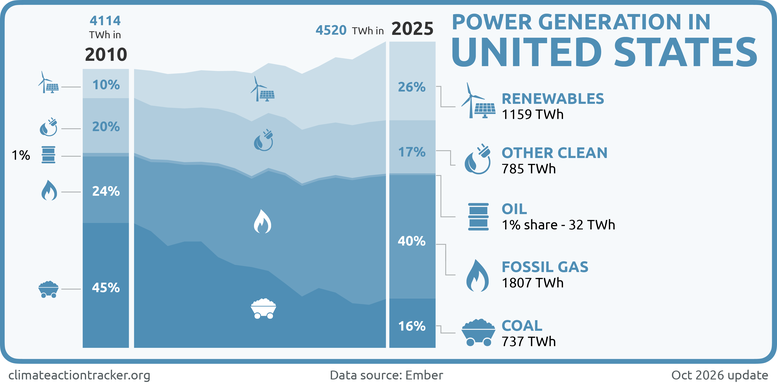
The power sector contributed 24% of total US GHG emissions in 2024 (Desai et al., 2026). Total annual emissions in the power sector have declined steadily since 2010, mainly driven by a shift from coal to fossil gas and renewables.
Electricity production from renewables overtook production from coal and nuclear power in the US for the first time in 2022, making renewables the country’s second largest source of electricity generation after fossil gas (U.S. Energy Information Administration, 2023b). Coal is now the least relevant generation source in the US.
The Trump Administration—which abandoned the Biden Administration’s target for a carbon-free electricity system by 2035—has implemented measures to prolong coal power generation, expand fossil gas power generation, and reduce renewable power generation. At the same time, the administration is eliminating emissions regulations from coal and fossil gas-fired power plants. The administration’s policies and actions will substantially decelerate emissions reductions in the power sector.
In January 2026, the Trump Administration extended the national energy emergency, which it first declared in January 2025 (The White House, 2025a, 2026a). Under the national energy emergency, the administration directs all federal agencies to expedite the development of energy production and generation capacity. The national energy emergency appears to be a pretext for expanding fossil fuel extraction and combustion, as the declaration applies to the expansion of all domestic fossil fuel sources, but not to wind and solar energy.
US electricity demand is rising for the first time in more than a decade, reversing years of flat growth (U.S. Energy Information Administration, 2026a). Between 2020 and 2025, demand increased by an average of 2.1% per year. Demand is forecast to continue growing by up to 1.3% per year through 2030 and up to 1.7% per year through 2035. The rapid emergence and expansion of large-scale artificial intelligence (AI) data centres is the primary driver of growth (U.S. Energy Information Administration, 2026c). Electricity demand from data centres, which accounted for nearly 5% of total electricity demand in 2024, is expected to grow to approximately 12% by 2030, accounting for 33% of total demand growth (S. Smith et al., 2026).
- Considering historical trends, alongside current policies and government plans for development in the power sector, the CAT finds the US is:
- Making “Slow progress” on renewables,
- Moving in the “Wrong direction” on fossil gas, and
- Making “Slow Progress” on coal.
For a detailed overview of the methodology for the CAT’s power sector evaluation, please see here.
Renewables
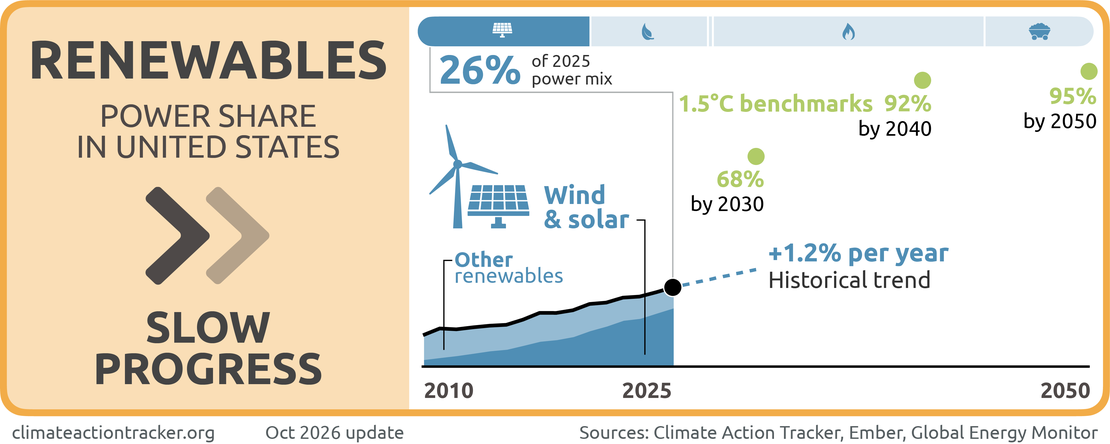
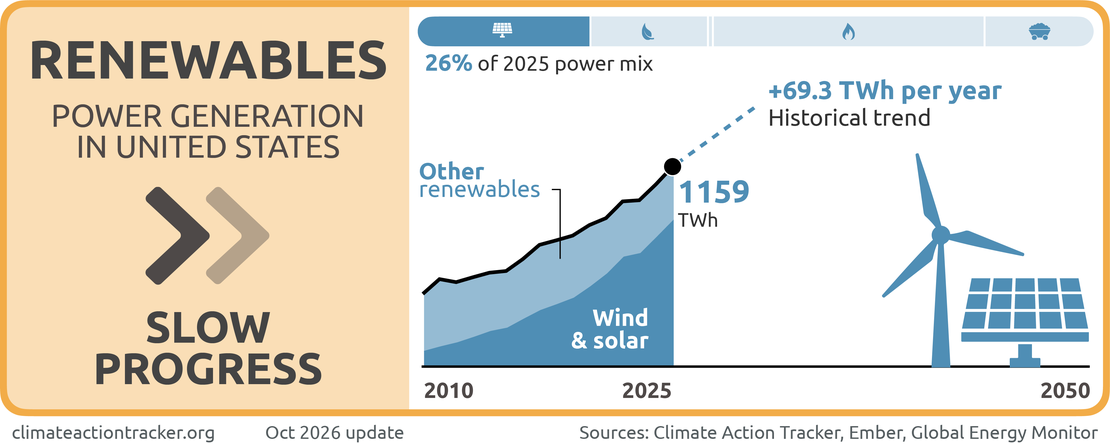
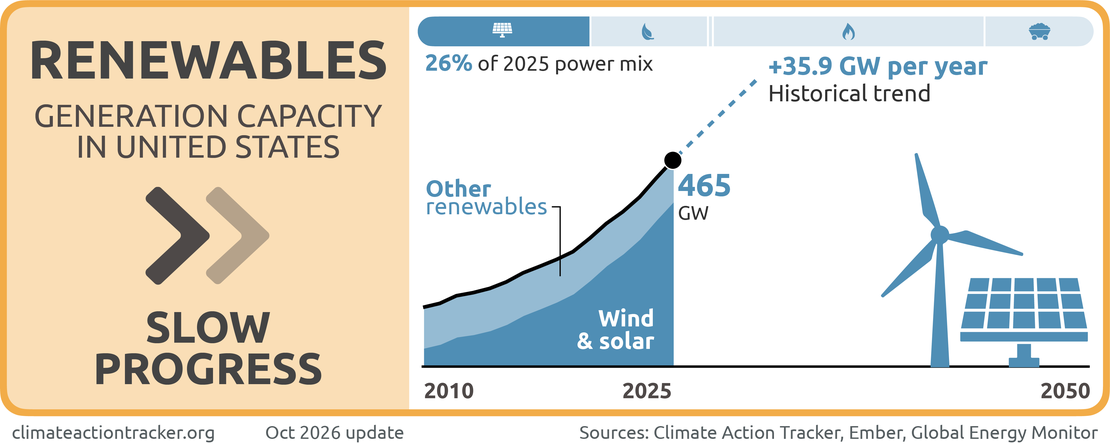
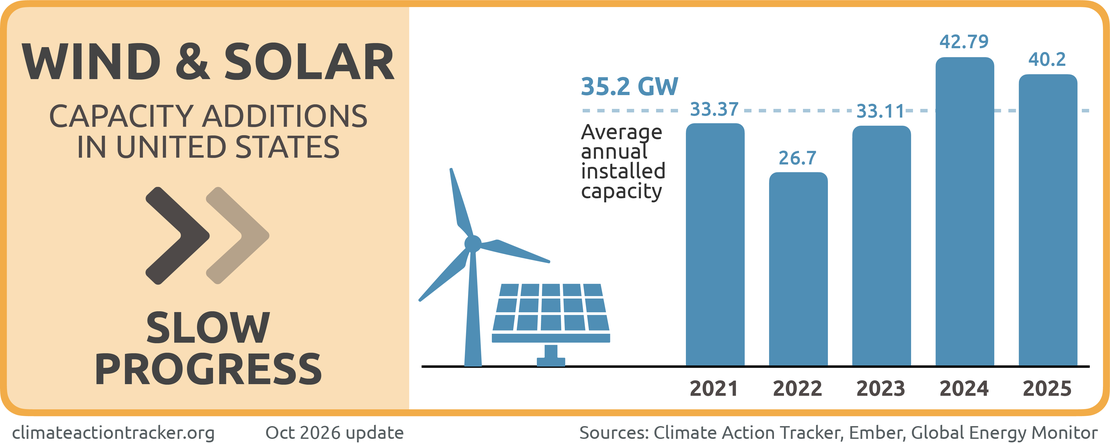
The US is making “Slow Progress” on deploying renewables. Although the share of renewables in electricity generation has gradually increased to account for approximately 26% of total generation in 2025, the long-term outlook for renewable energy has severely worsened under the Trump Administration, which has initiated executive and legislative actions that obstruct deployment of renewables in favour of fossil fuels (Ember, 2026).
The OBBB will substantially slow the deployment of renewables after 2030, especially for wind and solar. Before 2030, however, wind and solar capacity additions are forecast to surge. Near-term wind and solar capacity additions are being propelled by developers accelerating projects to claim federal tax credits terminated by the OBBB from 2030, alongside rapidly rising electricity demand from AI-driven data centre expansion. Beyond the OBBB, the Trump Administration has acted to restrict wind development on federal land and revoke approval for wind projects under active construction.
Under the Biden Administration, increasingly cost-competitive renewables, in combination with federal- and state-level measures, resulted in renewables accounting for over 90% of new generation capacity in the US in 2024 (Orvis et al., 2025).
The deployment of renewables needs significant acceleration over the next three decades to be compatible with 1.5°C. To align with 1.5°C, the share of renewables in the US would need to increase to 68% by 2030, to 92% by 2040, and to 95% by 2050 (Climate Action Tracker, 2026). Meeting this trajectory would require average annual additions of around 89 GW of solar and 40 GW of wind capacity to 2030. Combined wind and solar capacity would need to reach about 1,370 GW by 2030.
Renewable energy incentives
The OBBB modifies federal tax credits for utility-scale renewable energy deployment that are particularly expected to reduce the buildout of wind and solar energy after 2030. The OBBB makes several changes to the Clean Electricity Production Tax Credit (PTC) and the Clean Electricity Investment Tax Credit (ITC)—introduced by the IRA as technology-neutral, emissions reductions-based incentives for domestic clean energy development—that specifically restricted eligibility for new wind and solar projects (One Big Beautiful Bill Act, 2025).
The OBBB terminates the PTC and ITC for wind and solar projects that enter service after 2027. However, new wind and solar facilities that began construction before July 4, 2026, are eligible for the credits if placed in service by the end of 2030. Before the OBBB’s passage, wind and solar projects were eligible for PTC and ITC until 2033 (Castaño et al., 2025). For non-wind and solar renewable energy sources, including geothermal and hydropower, the PTC and ITC are preserved until 2033 without modification (Cockerham & Katz, 2025).
The OBBB’s fast-tracked termination of the PTC and ITC is expected to spur an influx in wind and solar project development until 2030, while hollowing out the wind and solar project pipeline beyond then. Developers are expediting construction of new wind and solar projects to claim the PTC and ITC before July 4, 2026 (Kolus et al., 2026). As a result, new wind and solar capacity additions reached record levels in 2025, totalling 7.7 GW and 32.5 GW, respectively (U.S. Energy Information Administration, 2025c).
Between 2026 and 2030, wind and solar capacity additions are expected to increase by an average of approximately 28 GW, totalling nearly 140 GW of new capacity additions (Kolus et al., 2026). However, after the PTC and ITC are phased out for wind and solar, capacity additions are expected to drop sharply through 2035. Between 2031 and 2035, wind and solar capacity additions will average 15 GW per year and reach a cumulative total of 76 GW installed capacity. Before the OBBB’s enactment, installed wind and solar capacity was forecasted to accelerate significantly and increase to an average of nearly 70 GW per year until 2035 (Jenkins et al., 2025).
The OBBB also introduces complex prohibited foreign entity (PFE) restrictions for the PTC and ITC, which seek to limit the involvement of certain foreign companies, especially Chinese companies (One Big Beautiful Bill Act, 2025). Coupled with the accelerated phase-out of the credits, the PFE rules present an additional barrier for developers to construct and operationalise new wind and solar capacity by 2030.
The OBBB also targets domestic manufacturing for wind energy components. In 2028, wind energy components will no longer be eligible for the Advanced Manufacturing Tax Credit, which will likely result in constrained supply chains for domestically manufactured wind energy components (Lorch et al., 2025; One Big Beautiful Bill Act, 2025). Investments in wind energy component manufacturing are already decreasing: investments fell by nearly 60% between Q2 2025—before the OBBB was enacted—and Q2 2026 (Tavarez et al., 2026). Coupled with the OBBB’s strict PFE restrictions for wind energy development, the restricted supply of US-made wind energy components will only further obstruct wind capacity additions.
Renewable energy permitting
The Trump Administration has taken executive action to hamper domestic solar and wind development. Specifically, the US Department of the Interior (DOI) has issued a set of rule changes that jointly create a policy environment that deters the buildout of solar and wind, especially offshore wind, on federal lands and waters. Research estimates that federal lands offer potential for 5,750 GW of utility-scale solar energy and 875 GW of land-based wind energy (Mai et al., 2025).
In January 2025, the DOI temporarily paused approvals for new renewable energy developments on federal lands and waters in January 2025 (U.S. Department of the Interior, 2025f). Following this temporary pause, the DOI moved in May 2025 to increase fees for new solar and wind projects on federal lands and waters, which were decreased by the Biden Administration to encourage greater variable renewable energy deployment (U.S. Department of the Interior, 2025c).
In July 2025, the DOI introduced new centralised, bureaucracy-intensive review procedures for approving new wind and solar projects on federal lands (U.S. Department of the Interior, 2025b). The review process will likely result in months to years-long project delays and introduce additional uncertainty for investors. As of August 2025, the DOI began approving energy projects based on their “capacity density,” a metric that considers installed capacity, capacity factors and project area (U.S. Department of the Interior, 2025e). The metric effectively disqualifies wind and solar projects, which tend to have lower capacity densities compared to fossil gas and coal plants.
In April 2026, the US District Court for the District of Massachusetts issued a preliminary injunction to temporarily halt some of the DOI’s rule changes for a set of renewable energy trade associations, who sued the DOI in December 2025 (Driggs et al., 2026). Although only applicable to renewable energy developers with membership in the suing trade associations, the ruling allows their projects to resume development. The Trump Administration will likely appeal the injunction.
The Trump Administration has mounted a particularly concerted effort against offshore wind development. In May 2025, the DOI effectively prohibited new offshore wind developments by reinstating a restrictive rule to limit all offshore activities (U.S. Department of the Interior, 2025g). The reinstated rule also requires the DOI to reevaluate all previously approved offshore wind developments. In August 2025, the US Department of Transportation (DOT) pulled nearly USD 700m in federal funding for offshore wind projects (U.S. Department of Transportation, 2025b).
Alongside obstructing new offshore wind development, the administration is also reviewing and, in some cases, revoking permits for offshore wind developments that were issued under the Biden Administration, creating significant uncertainty and risk for project developers. As of August 2026, the Trump Administration has terminated leases for 12 offshore wind developments (Plumer, 2026). To terminate these leases, the administration spent nearly USD 4bn to reimburse developers, including USD 1.2bn to developer RWE, which agreed to build out fossil gas infrastructure in exchange for the administration’s reimbursement (RWE, 2026).
In several cases, offshore wind developers have succeeded in challenging the Trump Administration in court. Most notable is the case of Revolution Wind, a USD 6bn wind energy project that was 80% completed when the administration tried twice to revoke its permit in 2025 (Plumer & Friedman, 2025). A federal court ruled to overturn the administration’s actions, enabling the project’s continued construction (Storrow, 2026).
Before the Trump Administration, permitting and siting were already major barriers for the buildout of renewable energy capacity. Utility-scale wind and solar project build times average four years (Bird & McLaughlin, 2023). In addition to complex permitting processes, renewable energy developers continue to face higher interest rates, outdated transmission infrastructure, and thin supply chains (Bird & Womble, 2024).
State-level efforts for renewable energy deployment
States can play an important role in facilitating the buildout of renewable energy. At the state level, renewable portfolio standards (RPS) and clean energy standards (CES) have been major drivers for growth in renewables. As of March 2026, 33 states have enacted RPS or CES legislation (Climate XChange, 2026). Of these, 15 states and D.C. have adopted 100% clean electricity goals via legislative or executive action (U.S. Energy Information Administration, 2026h).
States oversee permitting and siting processes within their jurisdiction. California and Massachusetts have implemented promising approaches for streamlining the permitting process for clean energy projects that could be replicated by other states (Bird & McLaughlin, 2023).
Fossil gas
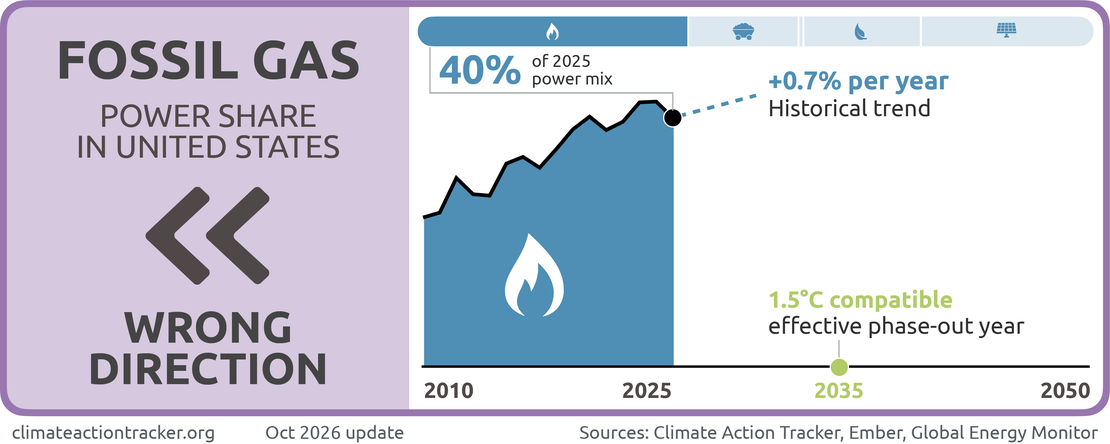
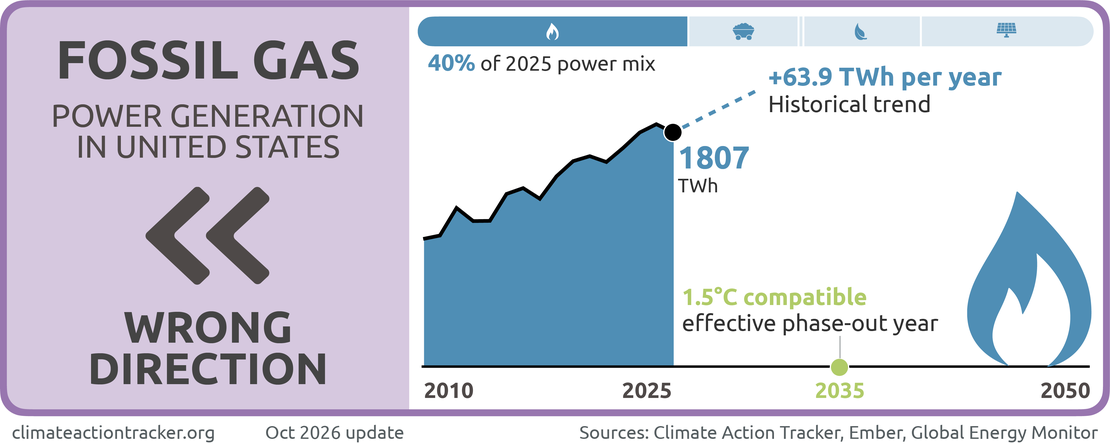
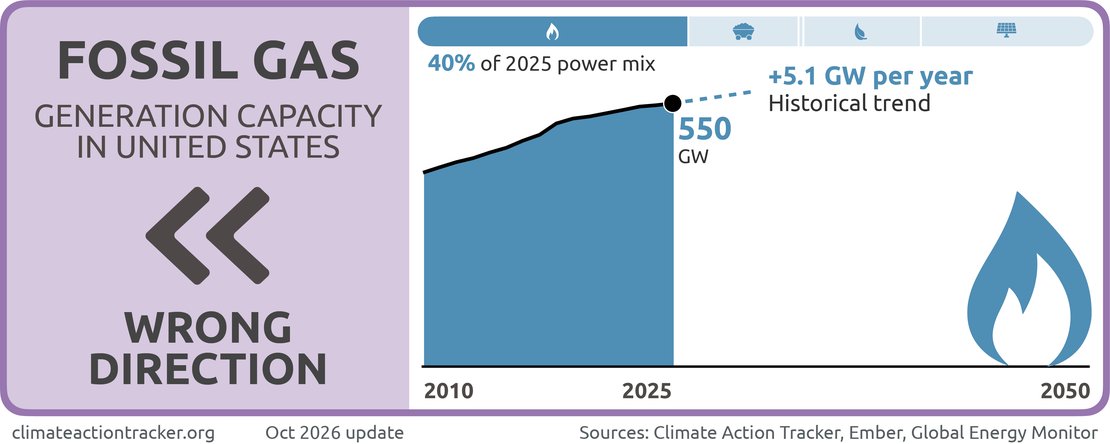
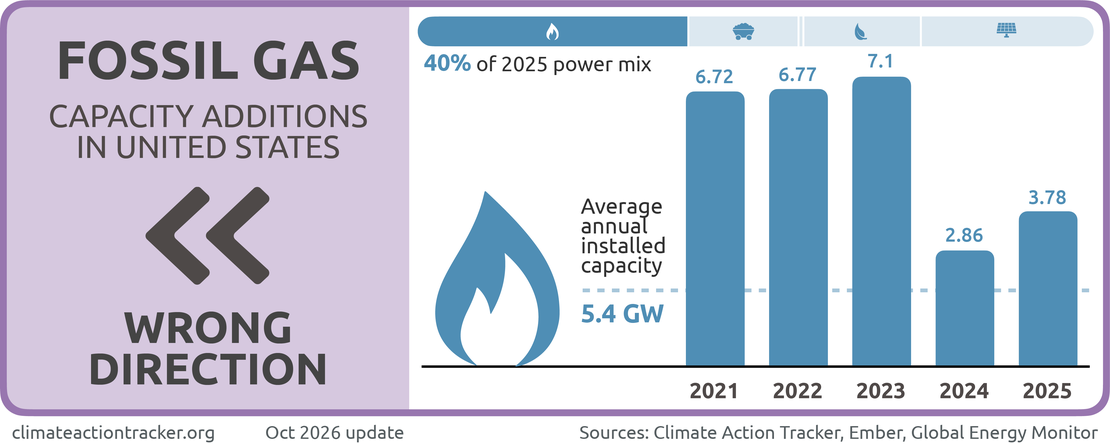
The US is headed in the “Wrong Direction” on fossil gas. In 2025, fossil gas was the largest source of electricity, generating 40% of all electricity (Ember, 2026)Click or tap here to enter text.. Over the last five years, the share of fossil gas in total generation increased by an average of 0.7% per year. Under the Trump Administration, the US is poised to accelerate the expansion of fossil gas generation capacity, which was already increasing under the Biden Administration.
Emissions standards for fossil gas-fired generation
Under the direction of the Trump Administration, the EPA is repealing emission standards for new and existing fossil fuel-fired power plants. In September 2026, the EPA overturned the Carbon Pollution Standards (CPS) for existing fossil gas-fired power plants, which had been strengthened by the Biden Administration in 2024 (U.S. Environmental Protection Agency, 2026f). The EPA also rescinded many CPS provisions for new and reconstructed fossil gas-fired power plants, which the Biden Administration required to capture 90% of emitted CO₂ using carbon capture and storage (CCS) technologies by 2032 (U.S. Environmental Protection Agency, 2024c).
Alongside the repeal of the Biden Administration’s emission standards, the EPA proposed rescinding all remaining emissions standards for fossil fuel-fired power plants (U.S. Environmental Protection Agency, 2026h). The proposal cites the Endangerment Finding’s rescission, arguing that emissions from fossil fuel-fired power plants do not endanger public health and welfare and, therefore, cannot be regulated under the Clean Air Act.
Pipeline for new fossil gas-fired generation
Under the Trump Administration, the pipeline for additional fossil gas generation capacity has more than doubled (Maguire, 2025). As of January 2026, the US is developing more gas plants than any other country in the world: over 250 GW of new fossil gas capacity is under development, which will result in additional emissions of 400 MtCO₂ per year on top of the current fossil gas plant fleet’s emissions of over 880 MtCO₂ per year (Global Energy Monitor, 2026b)Click or tap here to enter text.. In addition to the nearly 550 GW of existing fossil gas generation capacity, at least 55 GW of new fossil gas generation capacity is expected to be operational by 2030 (Kolus et al., 2026).
It is important to note that much of the new fossil gas capacity is being developed off grid to support artificial intelligence (AI) data centre buildout. As of April 2026, nearly 90 GW of off-grid generation capacity—mostly fossil gas-fired—is planned for data centre expansion (Thomas, 2026). The surge in development of data centres and fossil gas-fired power plants has resulted in long lead times and supply shortages for typical heavy-duty gas turbines (Halper, 2026). As a result, data centre developers are repurposing less-efficient, more emissions-intensive engines and aircraft turbines (Martos, 2026).
To be 1.5°C compatible, the US needs to phase out fossil gas by 2035 (Climate Action Tracker, 2026). However, research suggests that lifespans for new fossil gas-fired plants average 30 years (Global Energy Monitor, 2024). The longevity of gas-fired power plants jeopardises the ability of future US governments to phase out fossil gas by 2035 and, therefore, invites the deployment of CCS.
Critically, CCS technologies are neither commercially viable nor proven at scale, despite large public subsidies for research and development globally. Heavy reliance on unproven CCS for power generation prolongs the use of fossil fuels, diverting resources away from the transition to renewable energy generation that drives down emissions.
The use of CCS should be limited to industrial applications where there are fewer options to reduce process emissions; not to reduce emissions from the electricity sector where renewables are cost-effective mitigation alternatives, not least because CCS does not remove 100% of emissions from power plants.
Coal
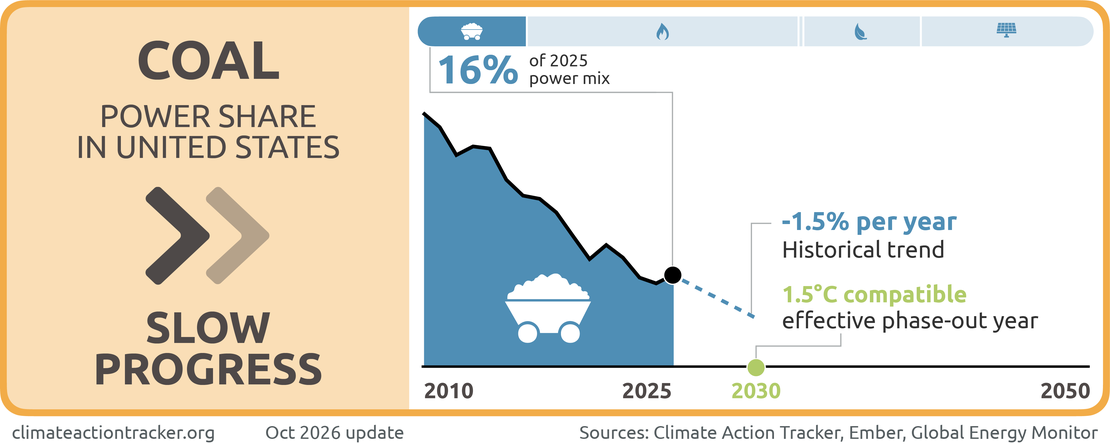
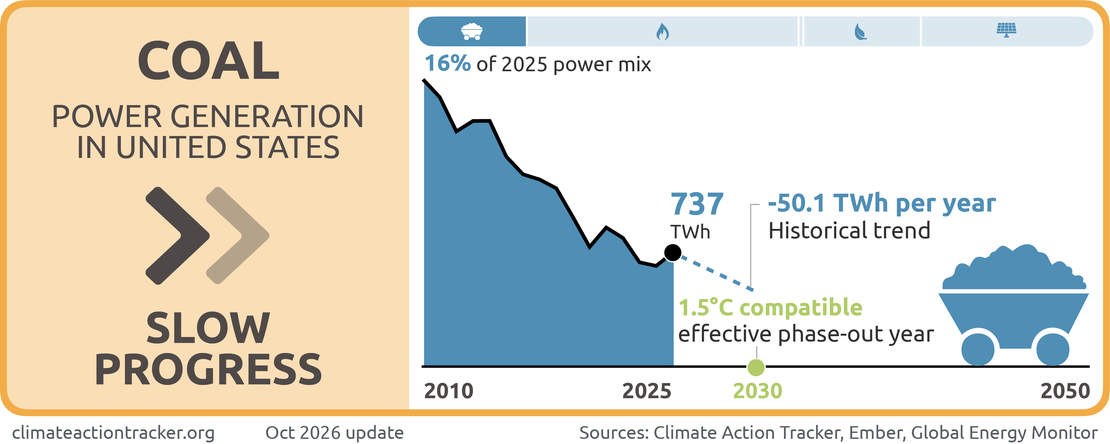
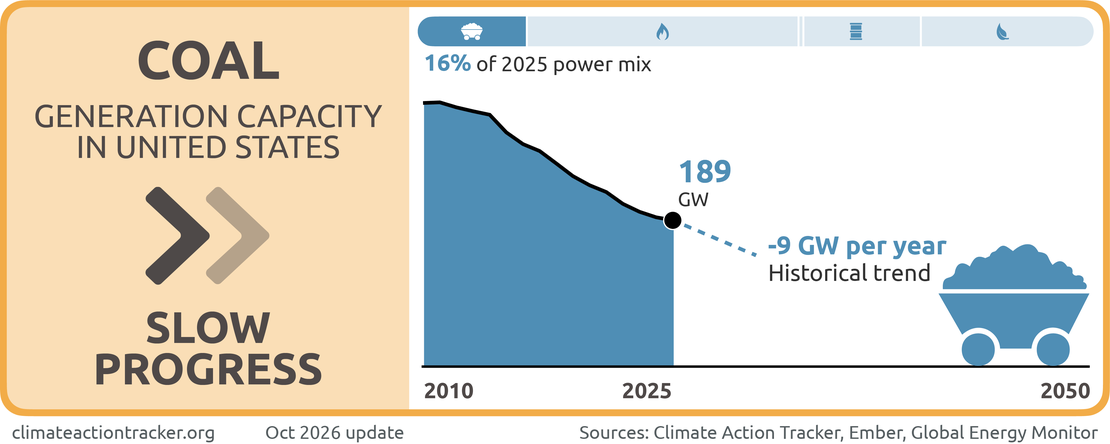
The US is making “Slow Progress” on reducing the share of coal in its power mix. For the past five years, the share of coal in electricity generation has decreased by 1.5% per year (Ember, 2026). The decline is largely the result of the increasingly unfavourable economics of coal generation amid the buildout of fossil gas and renewable generation. In an attempt to counteract market forces, the Trump Administration is mounting a policy push to prolong the use of coal for power generation in the US.
Emissions standards for coal-fired generation
The EPA repealed the Carbon Pollution Standards (CPS) in September 2026, which the Biden Administration had made more stringent in 2024. In doing so, the EPA voided all emissions standards for existing coal-fired power plants (U.S. Environmental Protection Agency, 2026f). The CPS would have accelerated coal-fired power plant retirements through 2040, resulting in an additional 22 GW of coal-fired capacity going offline by 2035 (U.S. Environmental Protection Agency, 2024c).
In combination with repealing the Biden Administration’s revised CPS, the EPA has proposed terminating all remaining emissions standards for fossil fuel-fired power plants, citing the Endangerment Finding’s rescission (U.S. Environmental Protection Agency, 2026h).
Legislative and executive actions on coal
The Trump Administration has taken a series of executive actions to expand domestic coal production and consumption, including by preventing ageing coal-fired power plants from retiring.
In April 2025, the Trump Administration exempted over 60 coal-fired power plants from EPA regulations on mercury and other toxic air pollutants (Gearino, 2025). In the same month, the administration also lifted a ban on coal leasing on federal lands, expedited permitting processes for new coal mines on federal lands, reclassified coal as a strategically “critical mineral,” and instructed all relevant federal agencies to remove regulatory barriers for coal extraction and combustion (The White House, 2025c).
The OBBB responded to the administration’s reversal of the ban on coal leasing on federal lands by mandating that millions of acres of federal lands be made available for coal mining and by reducing the royalty rate for coal companies on federal lands (One Big Beautiful Bill Act, 2025). In September 2025, the DOI tripled the OBBB’s federal land mandate, opening over 13m acres for coal mining (U.S. Department of the Interior, 2025d).
The Trump Administration’s actions are extending the operating lifetimes of existing coal-fired power plants. The US Department of Energy (DOE), under the administration’s direction, issued over 65 separate emergency orders to temporarily postpone the retirement of coal-fired power plants in 2025 and 2026 (U.S. Department of Energy, 2025a, 2026a). In 2025, approximately 8 GW of coal-fired capacity, or 5% of the US coal fleet, was set to retire (U.S. Energy Information Administration, 2025b). However, as a result of the DOE’s emergency orders, only 2.6 GW retired in 2025 (U.S. Energy Information Administration, 2026f). In comparison, annual coal retirements averaged 11 GW between 2015 and 2020 (U.S. Energy Information Administration, 2023a). In June 2026, the DOE committed USD 425m to extend the operation of 13 coal-fired power plants with a combined capacity of 14 GW (U.S. Department of Energy, 2026c).
Several of the DOE’s emergency orders on coal-fired power plants have been challenged in court. In September 2026, a federal appeals court overturned the DOE’s order requiring the continued operation of a coal-fired power plant in Michigan (Farah, 2026). The ruling may have implications for other pending legal challenges.
The administration’s efforts to stall the retirement of ageing fossil-fired power plants are extremely costly. Research suggests that the delayed retirement of coal- and gas-fired assets that were scheduled to retire by 2029 could cost between USD 3-6bn per year (Goggin, 2025).
Despite these executive and legislative interventions, persistent structural market pressures continue to undermine coal's competitiveness relative to renewables and fossil gas, making a large-scale revival of coal-fired power unlikely. As of July 2026, approximately 4 GW of new coal capacity is under development, approximately 3 GW of which were commissioned after the Trump Administration announced USD 350m in funding to build and restart coal-fired power plants in June 2026 (Global Energy Monitor, 2026a; U.S. Department of Energy, 2026c). However, no new coal-fired capacity has yet been installed in the US since 2013, while over 145 GW of coal-fired capacity has been retired (Global Energy Monitor, 2026a).
Oil and fossil gas extraction
The US is the world’s largest oil and fossil gas producer
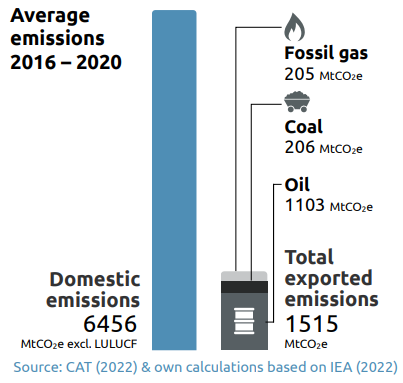
The US is the world’s largest producer of crude oil and fossil gas. The Trump Administration has made the deregulation of fossil fuel production and the expansion of fossil fuel exports central pillars of its “energy dominance” agenda. As a result of executive and legislative actions, oil and gas production, as well as liquified natural gas (LNG) exports, reached all-time highs in 2025. The US-Israel war on Iran and the resulting closure of the Strait of Hormuz—through which 20% of global LNG trade transits—have further increased demand for US LNG in 2026, as countries turn to the US to replace disrupted LNG shipments from the Middle East.
Oil and fossil gas production and export volume
The US has been the world’s largest producer of crude oil since 2018 (U.S. Energy Information Administration, 2018). US crude oil production reached a record of 13.6m barrels per day in 2025 (U.S. Energy Information Administration, 2026j). Although production increased, exports decreased slightly from 4.1m barrels per day in 2024 to 4.0m barrels per day in 2025 (U.S. Energy Information Administration, 2026b).
Refined petroleum product exports also reached an all-time high in 2025: 6.7m barrels per day were exported (U.S. Energy Information Administration, 2026i). Since 2020, growth in propane exports has driven growth in overall petroleum product exports; approximately 1.8 million barrels were exported per day in 2025.
The US became the world’s largest LNG exporter in 2022. LNG exports continue to increase year after year. In 2025, LNG exports increased by 26% relative to 2024, reaching a record 15bn cubic feet per day and accounting for over one quarter of the world’s LNG exports (U.S. Energy Information Administration, 2026e).
In February 2026, the US-Israel war on Iran resulted in the effective closure of the Strait of Hormuz. As a result, global demand for LNG from outside of the Middle East has surged (U.S. Energy Information Administration, 2026l). US LNG exports are forecast to increase by another 15% in 2026 and 23% in 2027 compared to 2025 (U.S. Energy Information Administration, 2026g).
Recent growth in LNG exports has been driven by demand in Europe and Asia. In 2025, European demand increased by over 60% relative to 2024 and accounted for nearly 70% of all US LNG exports (U.S. Energy Information Administration, 2026e). Although exports to Asia decreased by nearly 40% from 2024 to 2025, data from the first half of 2026 show that Asian imports of US LNG have doubled since 2025 following the closure of the Strait of Hormuz (U.S. Energy Information Administration, 2026k).
LNG export capacity additions
The Trump Administration lifted the Biden Administration’s pause on the development of new LNG export terminals in January 2025. The Biden Administration imposed a moratorium on new LNG export infrastructure in January 2024 (Daly, 2024). The pause did not impact operational or approved LNG terminals. The pause only affected one quarter of planned LNG export capacity and, as a result, did not significantly impact US LNG export capacity, which is projected to double by 2028 (Rozansky, 2024).
By the end of the Biden Administration’s term, the US had eight operational LNG export terminals, while an additional five terminals were under construction (U.S. Energy Information Administration, 2025d). As of August 2026, the Trump Administration approved 12 new LNG export terminals, of which three are already under construction (Federal Energy Regulatory Commission, 2026). Nine additional export terminals have been proposed. Together with projects already under construction, these approvals and proposals are set to substantially increase US LNG export capacity over the coming decade and further cement in the US position as the world’s largest LNG exporter.
Fossil fuel production subsidies
Direct and indirect federal subsidies for fossil fuels have - and will continue to - spurred the expansion of fossil fuel projects in the US. The OBBB further increases the government’s direct subsidies to the fossil fuel industry.
Before the OBBB’s passage, the US fossil fuel industry received approximately USD 30bn per year in direct subsidies from the government. The OBBB introduces an additional USD 4bn in annual fossil fuel production subsidies (Rees et al., 2025).
The OBBB reinstated the ‘expensing of intangible drilling costs’ (IDC) subsidy for oil and gas production; one of the government’s largest and longest standing direct fossil fuel subsidies that had been reduced by the IRA in 2022. (Inflation Reduction Act, 2022; One Big Beautiful Bill Act, 2025) Research indicates that the IDC subsidy, alongside the ‘percentage depletion’ subsidy, increased the expected value of new oil and gas projects by upwards of USD 20bn over the past two decades (Erickson & Achakulwisut, 2021). By restoring full tax deductibility for IDCs, the OBBB provides immediate tax relief and encourages further capital investment in oil and gas extraction.
New fossil fuel auctions and project approvals
In response to the Trump Administration’s declaration of a national energy emergency, the DOI updated its permitting procedures to accelerate review and approval for the development of fossil energy sources on federal lands and waters (U.S. Department of the Interior, 2025a). The expedited permitting procedures apply to oil, gas, coal, and petroleum projects, but, notably, do not apply to wind and solar projects.
The DOI’s new permitting procedures aim to cut a what has been a multi-year process down to a maximum of 28 days. The DOI also proposed shortening the public-comment period from 90 days to 10 days for new oil and gas permits in June 2026, significantly limiting public participation on new fossil fuel infrastructure development (U.S. Department of the Interior, 2026).
In January 2025, the Trump Administration reopened the entire Atlantic and Pacific coasts, as well as much of the Arctic Ocean, to offshore oil and gas drilling; coastal areas where the Biden Administration had previously barred oil and gas leasing (The White House, 2025d). During the first Trump Administration, a similar move was deemed unlawful in 2017 (Frazin, 2025).
The OBBB requires oil and gas lease sales on certain federal lands and waters. The Act mandates at least 36 new oil and gas leases in the Gulf of Mexico and off the Alaskan coast until 2040, overriding the Biden Administration’s stricter rules for offshore oil and gas leasing from 2023 (Bureau of Ocean Energy Management, 2023; One Big Beautiful Bill Act, 2025). The OBBB also reduces royalty rates for oil and gas exploration and production, which were increased under the IRA.
Before the OBBB’s passage, the IRA already provided concessions to the fossil fuel industry. The IRA required the federal government to offer an annual minimum area of specified public lands for oil and gas drilling (Inflation Reduction Act, 2022). The Act also required prioritisation of oil and gas auctions over renewable energy on federal lands and offshore developments. As a result, the Biden Administration approved several large oil and gas projects on public lands.
State-level action to end fossil fuel production
California is the only oil and gas producing state that plans to end oil and gas production. The state banned new fracking permits from 2024 and plans to phase out oil production by 2045 (Governor of California, 2021). California is a founding associate member of the Beyond Oil and Gas Alliance (BOGA), launched at COP26. Washington state joined BOGA at COP27 in 2022 and has implemented measures to ban new fossil infrastructure, including oil refineries. The US is not a member of BOGA.
Transport
In 2024, the transport sector was the largest contributor to total US GHG emissions, accounting for 30% of total US GHG emissions (Desai et al., 2026). Total sector emissions increased by over 20% between 1990 and 2024, driven by increased motorised transport demand. Road transport is responsible for most of the sector’s emissions: light, medium, and heavy-duty vehicles accounted for nearly 80% of total sectoral emissions in 2024.
Progress towards reducing emissions from transport—especially from road transport—is projected to slow significantly under the Trump Administration. The US Environmental Protection Agency (EPA) repealed all GHG emission standards for new vehicles, while the US Department of Transportation (DOT) has laid the groundwork to overturn its fuel economy standards for new vehicles.
The One Big Beautiful Bill Act (OBBB) will substantially slow the sale of electric vehicles (EVs). In combination, these executive and legislative actions will prolong the production and sale of emissions-intensive internal combustion engine (ICE) vehicles and obstruct the US transition towards EVs, which was accelerating under the Biden Administration through the 2021 Bipartisan Infrastructure Law (BIL) and the 2022 Inflation Reduction Act (IRA). Before the OBBB’s enactment, the IRA was expected to reduce transport sector emissions by 15%–35% in 2035 relative to 2005 (U.S. Environmental Protection Agency, 2023).
Transport decarbonisation targets
In January 2025, the Trump Administration eliminated the Biden Administration’s target of 50% of all new vehicles sold in 2030 to be battery electric vehicles (BEVs), plug-in hybrid electric vehicles (PHEVs), and fuel cell electric vehicles (FCEVs) (The White House, 2021a). It is important to note that the Biden Administration’s target was not aligned with limiting warming to 1.5°C. To be compatible with limiting warming to 1.5°C, the CAT finds that 95–100% of new light-duty vehicle sales in the US must be EVs by 2030 (Climate Action Tracker, 2020).
The Trump Administration has categorically abandoned the Biden Administration’s commitment to achieving net zero emissions across all sectors by 2050 (U.S. Department of Energy, 2025d). In doing so, the US has discarded the previous administration’s Long-Term Strategy’s (LTS) emissions reductions target for the transport sector, which sought to reduce the transport sector’s emissions by 80–100% by 2050 below 2005 levels (U.S. Department of State, 2021).
Electric vehicle incentives
The US has repealed standards for vehicle tailpipe emissions and fuel efficiency, which were strengthened under the Biden Administration.
Under the direction of the Trump Administration, the EPA, in July 2026, revoked all GHG regulations for light, medium, and heavy-duty vehicles and engines by rescinding the 2009 Endangerment Finding, which served as the government’s legal basis for regulating greenhouse gas emissions from stationary and mobile sources (U.S. Environmental Protection Agency, 2026c).
The EPA’s rescission of the Endangerment Finding eliminates the Multi-Pollutant Emissions Standards for passenger cars, light-duty trucks, and medium-duty vehicles, which were made more stringent under the Biden Administration in 2024 (U.S. Environmental Protection Agency, 2024b). The standards were planned to phase in from 2027 through 2032 and set progressively stricter fleet-wide CO₂ emissions targets for auto manufacturers.
If the standards had remained in effect, 30–56% of new vehicles sold in 2032 would have been BEVs to meet the average emissions target. The Endangerment Finding’s repeal also nullifies the Greenhouse Gas Emissions Standards for heavy-duty vehicles, which were also strengthened under the Biden Administration in 2024 (U.S. Environmental Protection Agency, 2024a).
In December 2025, the DOT’s National Highway Traffic Safety Administration (NHTSA) proposed lowering the light-duty vehicle Corporate Average Fuel Economy (CAFE) standards (National Highway Traffic Safety Administration, 2025b). The CAFE standards, which establish fleet-wide fuel economy targets for auto manufacturers, function as a key regulatory driver for improving vehicle efficiency, lowering consumer costs, and reducing GHG emissions.
The NHTSA’s proposal builds on an interpretive rule issued in June 2025 (National Highway Traffic Safety Administration, 2025a). The interpretive rule reframes its authority and methodology for setting standards through 2030. Most notable is that the NHTSA will no longer consider EVs and their contribution to improving fleet-wide fuel economy in future standards. As a result, the proposal would enable the NHTSA to reissue lower, less stringent fuel economy standards.
In the final proposal, the NHTSA explicitly excludes EVs from the standard setting methodology and, as a result, significantly decreases the fuel economy targets for light-duty vehicles for model years through 2030. The proposed rule will decrease average fleet fuel economy from an expected 50 miles per gallon to less than 35 miles per gallon by 2031, increasing emissions from transport and costs for consumers (National Highway Traffic Safety Administration, 2023; U.S. Department of Transportation, 2025a).
The NHTSA’s interpretive rule similarly reconsiders the medium and heavy-duty fuel efficiency (MDHD) standards. In January 2026, the NHTSA announced its intent to officially lower the MDHD standards (National Highway Traffic Safety Administration, 2026b). Under the Biden Administration, the NHTSA raised the CAFE and MDHD standards’ ambition. In combination, the revised standards would have reduced emissions by over 710 MTCO₂ by 2050 (National Highway Traffic Safety Administration, 2024).
Irrespective of the NHSTA’s proposed changes to the CAFE standards, the OBBB compromises the existing CAFE standards’ implementation by removing non-compliance penalties for auto manufacturers (One Big Beautiful Bill Act, 2025). By removing penalties, carmakers are no longer fined for producing light-duty vehicles that do not meet the CAFE standards. The penalties previously incentivised auto manufacturers to produce more fuel-efficient vehicles, which simultaneously reduce GHG emissions and consumer costs. Between model years 2010 and 2020, the NHSTA collected over USD 1bn in non-compliance fines (National Highway Traffic Safety Administration, 2026a).
Electric vehicle incentives
The OBBB eliminates key federal purchase incentives for EVs, which will substantially decrease light-duty EV sales and increase GHG emissions from road transport (One Big Beautiful Bill Act, 2025). The OBBB discontinues three tax credits for EVs that were expanded by the IRA: the New Clean Vehicle Credit, the Qualified Commercial Clean Vehicle Credit, and the Used Clean Vehicle Credit.
All three tax credits were set to expire in 2032 but instead phased out in September 2025 (Internal Revenue Service, 2025). The three credits, which are described in more detail in the CAT’s US assessment from November 2024, drove growth in EV sales, which tripled between 2021 and 2024. In 2025, EVs accounted for nearly 10% of all new light-duty vehicle sales (U.S. Energy Information Administration, 2026d). By phasing out the credits, the OBBB introduces significant instability into the US regulatory framework for EVs, jeopardising consumer demand for EVs and industry investment in EV production.
The termination of the IRA’s EV tax credits will effectively halve the share of EVs in the new light-duty vehicle sales in 2030. Following the OBBB’s passage, EVs are projected to make up approximately 20%-30% of new light-duty vehicle sales in 2030 (Jenkins et al., 2025; Kolus et al., 2026; Orvis et al., 2025). Before the OBBB’s passage, the US Energy Information Administration forecast that battery electric vehicles (BEVs), plug-in hybrid electric vehicles (PHEVs), and fuel cell electric vehicles (FCEVs) would account for 50% of new light-duty vehicles sales by 2030; achieving the Biden Administration’s target for electric vehicle sales in 2030 (U.S. Energy Information Administration, 2025a). Other research suggests that, if the IRA’s tax credits had remained in place, EVs could have made upwards of 60% of new light-duty vehicle sales in 2030 (King et al., 2024).
Beyond eliminating demand-side tax credits for EV sales, the OBBB also modifies supply-side tax credits for EV component manufacturing (One Big Beautiful Bill Act, 2025). The Advanced Manufacturing Production Tax Credit, expanded by the IRA, spurred domestic production of clean energy components for energy and transport, including EV batteries.
The OBBB does not eliminate the credit for battery production, but introduces strict domestic manufacturing requirements. Theoretically, such requirements could stimulate capital investment in US-based battery manufacturing. However, given that the OBBB eliminates the tax credits that are driving domestic demand for EVs, the introduction of stringent domestic production requirements will more likely decrease, rather than increase, battery manufacturing capacity additions in the US.
Before the OBBB was enacted, the Advanced Manufacturing Production Tax Credit, in combination with the Clean Vehicle Tax Credits’ domestic production requirements, mobilised over USD 100bn in capital investment in EV assembly and battery manufacturing plants in the US and created over 100,000 jobs (Jenkins, 2025; Turner, 2026). Domestic EV assembly capacity was projected to double by 2030 if the OBBB had not become law.
The OBBB phases out the Alternative Fuel Vehicle Refueling Property Credit, which will likely directly slow growth in the deployment of EV recharging points and indirectly slow growth in the deployment of EVs (One Big Beautiful Bill Act, 2025). The tax credit, which was set to expire in 2032, was eliminated in June 2026. Since the IRA’s passage in 2022, the number of publicly accessible EV recharging points has more than doubled: the US has over 255,000 EV recharging points as of July 2026 (Joint Office of Energy and Transportation, 2026).
The OBBB rescinds USD 4.7bn in federal funding for decarbonisation initiatives in the transport sector (One Big Beautiful Bill Act, 2025). Most notable is the rescission of unobligated funding for the Low-Carbon Transportation Materials Program and the Clean Heavy-Duty Vehicles Program. The Clean Heavy-Duty Vehicles Program provided USD 1bn in grants to subnational governments to offset the costs of replacing heavy-duty vehicles with zero-emissions alternatives and installing related recharging and refuelling infrastructure.
State-level transport decarbonisation efforts
The OBBB’s elimination of federal incentives for EVs is partially offset by state-level purchase and tax incentive schemes. In 2026, approximately a dozen US states provided purchase and tax incentives for light-duty EV purchases, while nearly all states offer incentives for EV rechargers (Alternative Fuels Data Center, 2026). State governments also provide additional incentives for heavy-duty EVs.
State-level vehicle emissions standards and EV sales targets can further counteract regulatory changes at the federal level. However, the federal government is seeking to limit states’ abilities to regulate vehicle emissions and scale EV uptake.
In May 2025, the Senate revoked California’s ability to enforce its Advanced Clean Cars II (ACC II) regulation, which progressively strengthens vehicle emissions standards and ultimately phases out light-duty ICE vehicles in 2035 (Rotondi et al., 2025). The Senate’s rejection of the ACC II regulation not only impacts California: 12 other states duplicated and adopted the ACC II regulation, resulting in over one-third of all LDV sales in the US being subject to the 2035 ICE vehicle phase out target (California Air Resources Board, 2026; International Energy Agency, 2024). The Senate’s revocation means that California, as well as the other 12 states that have adopted the ACC II regulation, cannot enforce the phase-out of ICE vehicles.
Many US subnational and non-state actors, including states, cities, and automakers, signed the 100% EVs declaration at COP26 (UK COP 26 Presidency, 2022). Notably, the US did not sign the declaration. Signatories agreed that by 2040, 100% of new car and van sales should be electric vehicles.
Aviation decarbonisation
Emissions from commercial aviation in the US are projected to double by 2050 without ambitious policy action and technological improvement. Sustainable aviation fuels (SAFs) can support the decarbonisation of aviation in the short term. The IRA introduced the Clean Fuel Production Credit and the Sustainable Aviation Fuel Tax Credit to encourage the production and adoption of sustainable fuel technologies in the aviation industry (Inflation Reduction Act, 2022).
The Clean Fuel Production Credit encourages the production of clean transport fuels, including SAFs. The OBBB makes several amendments to the Clean Fuel Production Credit (Cockerham & Katz, 2025; One Big Beautiful Bill Act, 2025). Positively, the OBBB extends the credit from 2027 until 2029. However, the act also reduces the tax credit value, introduces new domestic production requirements, and excludes indirect land use change emissions when calculating fuel lifecycle emissions. The exclusion of indirect land use change emissions—a critical measure for understanding the unintended emissions impact of biofuel production—significantly undermines the credibility of the credit’s lifecycle emissions analyses.
The Sustainable Aviation Fuel Tax Credit, which phased out at the end of 2024, incentivised the sale and use of sustainable aviation fuels (SAFs) that reduced lifecycle GHG emissions by at least 50% compared to petroleum-based jet fuel (U.S. Department of Energy, 2024c).
Industry
Direct GHG emissions from industry accounted for 23% of total US emissions in 2024, making it the third largest contributor to US GHG emissions after the transport and power sectors (Desai et al., 2026).
Industrial emissions have remained largely stable over the past decade, even as the US economy transitioned from a manufacturing to a service-based economy and as industrial processes have become more energy efficient and shifted to less emissions-intensive fuels.
Under the Biden Administration, the US implemented a diverse patchwork of financial incentives to research and develop critical technologies for industrial decarbonisation. However, the Biden Administration did not introduce instruments to facilitate the commercialisation of many of the technologies needed in hard-to-abate industrial subsectors.
The 2025 One Big Beautiful Bill Act (OBBB) modifies federal incentives—many of which were established by the 2022 Inflation Reduction Act (IRA)—to encourage energy- and emissions-intensive industry in the US and abroad. The Climate Action Tracker incorporates the OBBB’s effects on non-CO₂ emissions into its current policy projections (see the Assumptions section).
Carbon capture incentives
The OBBB revised the main federal subsidy for carbon capture technologies to incentivise the utilisation of captured CO₂ for fossil fuel extraction (One Big Beautiful Bill Act, 2025). The OBBB alters the Tax Credit for Carbon Sequestration so that CO₂ storage and utilisation, including for enhanced oil recovery (EOR) and natural gas recovery, receive the same tax credit. Before the OBBB, geologically storing captured carbon received a larger tax credit than commercially utilising captured carbon. By providing the same tax credit for CO₂ storage and CO₂ utilisation, the OBBB may encourage further fossil fuel extraction.
It is important to note that carbon capture technologies, despite decades of large subsidies for research, development, and implementation, have yet to demonstrate commercial viability or operational scalability. Continued federal support for unproven carbon capture technologies coincides with sustained lobbying efforts by fossil fuel interest groups, which spent nearly USD 1bn on lobbying legislative and executive government officials on carbon capture policy between 2005 and 2024 (Gulden & Harvey, 2025).
Steelmaking coal incentives
The OBBB incentivises the emissions-intensive extraction of metallurgical coal, a type of coal used for steel production. The US Department of Energy (DOE) reclassified metallurgical coal as a “critical mineral” in May 2025, which enabled the OBBB to extend coverage of the IRA’s Advanced Manufacturing Production Credit to subsidise metallurgical coal’s production (One Big Beautiful Bill Act, 2025; The White House, 2025c). The credit, worth 2.5% of production costs, applies to metallurgical coal production, regardless of whether the production occurs in the US.
Through the tax credit, the US coal industry is expected to receive an annual tax benefit of USD 200-300m. Even before the OBBB’s passage, the US coal industry was increasingly shifting its focus towards metallurgical coal because of growing export demand (Hedgepeth & Lavelle, 2025). Approximately 75% of all metallurgical coal produced in the US is exported to foreign markets, where it is used in emissions-intensive steel production (Buffie et al., 2025).
Hydrogen production incentives
Hydrogen played a central role in the Biden Administration’s strategy for decarbonising hard-to-abate industrial processes and replacing fossil fuel-based feedstock with cleaner alternatives. The IRA established the Hydrogen Production Tax Credit to incentivise domestic production of clean hydrogen (The White House, 2023). The OBBB accelerates the phase out of the credit from 2033 to 2028 (One Big Beautiful Bill Act, 2025).
Fluorinated gas regulations
In July 2026, the US Environmental Protection Agency (EPA) weakened the Technology Transitions Rule; a key rule that underpins the American Innovation and Manufacturing (AIM) Act, which seeks to phase down the production and imports of hydrofluorocarbon (HFC) emissions by 85% by 2036 (U.S. Environmental Protection Agency, 2021, 2026g). The AIM Act was enacted under the first Trump Administration in 2020. Nevertheless, the second Trump Administration instructed the EPA to reconsider the rule as part of its broader deregulatory agenda. The revised rule extends deadlines for transitioning to less HFC emissions-intensive technologies, while increasing the limit for HFC emission intensity in the interim (Leopold & Aber, 2026).
If the Technology Transitions Rule had not been amended, the AIM Act would have reduced emissions by 4.7 GtCO₂e by 2050 (U.S. Environmental Protection Agency, 2021). In 2024, the US reduced HFC emissions by 40% below 2020 levels (Haroldsen, 2024).
Buildings
In 2024, direct GHG emissions from buildings accounted for 13% of total US GHG emissions; 7% came from commercial buildings and 6% from residential buildings (Desai et al., 2026). When including indirect, electricity-related emissions, the buildings sector made up nearly one third of US total GHG emissions in 2024. To be 1.5°C compatible, the CAT estimates that emissions from buildings in the US should be 60% lower in residential buildings and 70% lower in commercial buildings by 2030 compared to 2015 (Climate Action Tracker, 2021, 2025).
Fossil fuels remain the most common heating source in the buildings sector: fossil gas, propane, and oil are used by nearly 60% of households. Electricity, including both older electric resistance heaters and modern heat pumps, is used to heat 40% of homes (Muyskens et al., 2025).
The Trump Administration is undermining measures to improve efficiency and reduce emissions in the buildings sector; a sector in which emissions reductions are challenging due to the long lifetimes of buildings and their technologies, as well as highly diverse, context and climate-specific needs for buildings. Executive and legislative actions have undercut federal support for building retrofits, heat pumps, building codes, and energy performance standards. Reduced federal support will likely slow emissions reductions in the sector, as key mitigation technologies and measures are not yet cost-competitive or have high upfront costs.
Building emissions reduction incentives
Under the Trump Administration, federal incentives to reduce emissions from buildings have been undone. The One Big Beautiful Bill Act (OBBB) eliminated two key federal tax credits for building decarbonisation: the Energy Efficient Home Improvement Credit (EEHIC) and the Residential Clean Energy Credit (RCEC) (One Big Beautiful Bill Act, 2025). Both credits were phased out at the end of 2025 (Internal Revenue Service, 2025). Before the OBBB’s enactment, the credits were set to expire in 2033 and had been expanded by the Inflation Reduction Act (IRA) in 2022 (Inflation Reduction Act, 2022).
The EEHIC offered homeowners a tax credit for installing heat pumps, as well as for energy efficiency improvements, including insulation and window replacements (Internal Revenue Service, 2026a). The RCEC reduced the cost of installing residential solar panels and wind turbines, as well as geothermal heat pumps and battery storage solutions (Internal Revenue Service, 2026b). Preliminary data show that over 1.2m taxpayers claimed the RCEC in 2023, with most using the credit to support investments in solar panels and water heaters (Buffie, 2026).
Several states and municipalities offer their own tax credits and rebates and have made low-interest loans available for electrification projects. Washington's building codes, for example, mandate the installation of heat pumps for space and water heating in new residential and commercial buildings. Colorado implemented the first Clean Heat Standard in the US, which requires heating fuel providers to gradually increase the amount of clean heat provided (BDC, 2024)
Building energy efficiency incentives
Before the Trump Administration, two primary policy instruments supported energy efficiency improvements in buildings: financial incentives and building codes. The 2021 Bipartisan Infrastructure Law (BIL) and the 2022 Inflation Reduction Act (IRA) allocated substantial funding through tax credits and rebate programmes to promote energy efficiency gains in the sector (Bipartisan Infrastructure Law, 2021; Inflation Reduction Act, 2022). However, many of these initiatives have been scaled back or eliminated under the Trump Administration.
The OBBB rescinds much of the federal funding that was allocated under the IRA’s Home Efficiency Rebates program and the High-Efficiency Electric Homes Rebate Act, both of which incentivised households to invest in energy efficiency improvements (One Big Beautiful Bill Act, 2025). In doing so, the OBBB undermines the ability of states to implement these rebate schemes effectively.
Building codes are a key driver of energy efficiency improvement in new construction and renovations. Although building codes are primarily developed and enforced at state and local levels, the federal government contributes financial and technical support. Under the Trump Administration, there has been a significant reduction in federal leadership and support.
The BIL allocated USD 225m to support state and local implementation of energy codes, facilitating code adoption, enforcement, training, and technical assistance. The Biden Administration's National Initiative to Advance Building Codes unlocked an additional USD 1bn in IRA grants to help subnational governments adopt modern building and energy efficiency standards, with support from multiple federal agencies (The White House, 2022). The Trump Administration directed one of these agencies, the Federal Emergency Management Agency (FEMA), to halt its effort to promote stronger disaster-resilient codes (Sommer, 2025). At the same time, the OBBB rescinded significant grant funding originally allocated to these programmes (One Big Beautiful Bill Act, 2025).
Building codes typically only apply to new construction, or are triggered by major structural changes during renovation projects. As a result, the majority of existing buildings remain unaffected by building codes, since no regulatory instruments mandate minimum energy efficiency standards or require renovations. Moreover, there is no overarching framework that outlines a clear roadmap with concrete measures for achieving an energy-efficient building stock.
Product and appliance energy efficiency incentives
The US Department of Energy (DOE) sets out mandatory minimum energy performance requirements for a wide range of products under the Energy Policy and Conservation Act (EPCA). Products that do not meet these standards cannot be sold in the US. According to a 2023 review, standards for consumer products and appliances in the US are generally ambitious: most meet or exceed international best practice (Mavandad & Malinowski, 2023).
However, while more stringent standards for refrigerators and freezers, air conditioners, clothes washers and dryers were finalised by the DOE in 2023 and 2024—expected to reduce emissions by an average of 20 MtCO₂e per year (U.S. Department of Energy, 2023a, 2023b, 2024b)—the agency announced it will withdraw several products from the EPCA’s covered products list (U.S. Department of Energy, 2025b). Furthermore, energy conservation and efficiency standards, as well as test procedures, for several products have been revoked (U.S. Department of Energy, 2026b).
In August 2026, the Trump Administration abruptly transferred the ENERGY STAR programme from the EPA to the DOE’s management, which risks undermining the programme’s efficacy (U.S. Environmental Protection Agency, 2026a). The ENERGY STAR programme is a voluntary labelling initiative designed to identify and promote products that meet high energy efficiency standards set by the EPA. The programme has saved over 5 trillion kWh of electricity and 4bn MTCO₂e since 1992 (ENERGY STAR, 2023).
Embodied carbon emissions
The construction of buildings contributes significantly to embodied life-cycle carbon emissions. Recent estimates suggest that the building construction industry is responsible for 6% of total US emissions (Huynh et al., 2023).
The Trump Administration has weakened federal measures to mitigate embodied carbon emissions. The OBBB rescinded USD 100m allocated by the IRA to support the development of standardised labels for low-embodied carbon building materials (Inflation Reduction Act Tracker, 2026). The Trump Administration also abandoned the 2022 Buy Clean Initiative, which sought to reduce emissions associated with key building materials by promoting the use of low-carbon alternatives in federal procurement (Chase, 2024). In response to the administration’s move, multiple states have aligned their own sustainable procurement policies with the initiative (U.S. Climate Alliance, 2025).
Commercial and public services buildings
The Trump Administration has terminated many programmes offering financial incentives to improve the energy efficiency of commercial and public buildings. In December 2025, the DOE rescinded the Biden Administration’s National Definition of a Zero Emissions Building (U.S. Department of Energy, 2025c). In May 2025, the DOE began reconsidering its emissions standards for federal buildings (Columbia University, 2026). The standards, revised under the Biden Administration, mandated federal buildings to reduce on-site fossil fuel use in new construction and major renovations by 90% between 2025 and 2029 (U.S. Department of Energy, 2024a).
These setbacks in both financial support and regulation are significant, as the federal government is the largest energy consumer in the US, and federal buildings represent a notable share of its emissions (Council on Environmental Quality, 2024).
Agriculture
Greenhouse gas emissions from the agriculture sector made up 11% of US emissions in 2024 (Desai et al., 2026). Between 1990 and 2024, agriculture emissions increased by 8%, driven by the growth of the livestock sector and the intensification of farming practices. Nitrous oxide emissions from soils accounted for half of the sector’s emissions. Enteric fermentation and manure management from livestock are other significant sources. Emissions from agriculture are forecast to continue increasing through 2030.
Under the Trump Administration, the federal government has reversed, restructured, and deprioritised climate change measures and funding in the agriculture sector (Lilliston, 2025). The administration cancelled sectoral climate initiatives created under the Biden Administration, including the USD 3bn Partnerships for Climate-Smart Commodities programme, which supported innovate emissions reductions projects (U.S. Department of Agriculture, 2025). The administration has also disincentivised renewable energy development on farmland by halting funding from the Rural Energy for America Program (REAP), which previously offered grants and loans for energy efficiency and renewable energy projects (Horn-Muller et al., 2026). REAP invested nearly USD 5bn in energy projects in rural communities between 2012 and 2025 (Pipa & Aley, 2025).
The One Big Beautiful Bill Act (OBBB) shifts federal agricultural support away from targeted emissions reductions, which had been expanded by the Inflation Reduction Act (IRA). The IRA allocated USD 19.5bn to support sectoral emissions reductions, primarily through the existing Environmental Quality Incentives Program (EQIP) and Conservation Stewardship Program (CSP) (Inflation Reduction Act, 2022; Monke et al., 2022).
While increasing the baseline for EQIP and CSP, the OBBB rescinds the IRA’s dedicated mitigation funding (National Sustainable Agriculture Coalition, 2025; One Big Beautiful Bill Act, 2025). Increased baseline funding could expand participation, but access to both programmes has historically been constrained by high demand and limited institutional capacity (Happ, 2023; Tham, 2023). Given the programmes’ existing access issues, additional funding will likely disproportionately primarily benefit large, better-resourced monoculture producers.
Critically, existing conservation programmes have delivered limited direct emissions reductions. Only 30% of total EQIP spending in 2023 supported practices that directly reduce emissions (Schechinger, 2025). A significant share of funding supports manure management practices, including biodigesters that convert manure into marketable biogas. By generating an additional revenue stream from manure, the EQIP may encourage farmers to maintain or expand herd sizes rather than reduce livestock-related emissions (Happ, 2024; Schechinger, 2024).
The Farm Bill, the federal government’s flagship agriculture and food policy that significantly shapes farmers’ production decisions, was last revised in 2018 and was extended through 2026. The bill’s revision has stalled in Congress. Meanwhile, the OBBB has effectively reauthorised key measures from the Farm Bill and bypassed the traditional political channels by embedding major agricultural provisions under broader budgetary measures (Faber & Hayes, 2025).
The US lacks regulations to limit emissions from animal production or incentives to reduce herd sizes (Center for Biological Diversity, 2020). Instead, concentrated animal feeding operations (CAFOs), which are detrimental to animal and environmental welfare, continue to be subsidised by the government (Happ, 2024). The US has one of the highest rates of meat and dairy consumption in the world. Historically, the meat industry has lobbied against key demand-side policies, such as changes to dietary guidelines, which constitute the basis of federal nutrition programmes and policy (Evich, 2016; Sebastian, 2024).
The US generates an exceptionally high volume of food waste. Approximately one third of available food is lost or wasted, accounting for up to 6% of the country’s total GHG emissions when considering embodied emissions (Harwood et al., 2023). In 2015, under the Obama Administration, the EPA set a goal to halve food loss and waste by 2030. However, the US is not on track to meet this target due to insufficient federal and state-level policies (U.S. Environmental Protection Agency, 2025b). Increased immigration enforcement under the Trump Administration has heavily impacted the US agricultural labour force and has led to widespread crop loss and food waste (Rahman & Gooding, 2025).
Forestry
In 2024, the net CO₂ removals from the land use, land-use change and forestry (LULUCF) sector corresponded to roughly 15% of total US GHG emissions (Desai et al., 2026). The US forest sink is already weakening, and recent policy changes under the Trump Administration risk accelerating this trend.
Between 1990 and 2024, the net carbon removal in the sector decreased by 12% due to the declining rate of net carbon accumulation in forests and on cropland, as well as an increase in emissions from urbanisation. The declining sink is attributed to ageing forests and increasing fire-related emissions.
The Trump Administration has shifted federal policy from carbon sink conservation and preservation to “active management” of carbon sinks, which involves the rapid expansion of timber production under the pretext of wildfire suppression (The White House, 2025b).
In August 2026, the US Forest Service officially proposed revoking the 2001 Roadless Rule, which protects over 23 Mha of undeveloped national forests from most logging, large-scale mining, and road building activities (U.S. Forest Service, 2026a). The proposed repeal of the Roadless Rule’s protections would enable logging and roadbuilding in large portions of Alaska’s Tongass National Forest, which accounts for over one-fifth of the US’ total forest carbon stocks (Dellasala et al., 2022). At the same time, the US Forest Service proposed to revise the 2005 Travel Management Rule (U.S. Forest Service, 2026b). The proposal allows motor vehicle access to public lands that had previously been prohibited and, if adopted, risks adverse consequences for ecosystems on public lands.
In parallel, the OBBB puts the US forest carbon stock further at risk by mandating a 25% increase in logging on federal lands and locking in long-term timber contracts (Little-Saña, 2025; One Big Beautiful Bill Act, 2025). The IRA initially provided support programmes, including further investments in the National Forest Service and Forest Legacy Program (Inflation Reduction Act, 2022; The White House, 2023). However, the OBBB rescinded all unobligated funding from the IRA and other climate-specific forestry programmes, redirecting resources to generic conservation programmes.
The OBBB additionally cuts staffing and federal oversight measures for new forest projects, including environmental reviews and public consultation procedures (One Big Beautiful Bill Act, 2025). Doing so enables the expansion of logging while undermining its transparency and safeguards (Little-Saña, 2025). Furthermore, the OBBB encourages tree burning and using forest feedstocks for “sustainable aviation fuel” by subsidising new biomass and biofuel facilities (D. Smith, 2025).
Even without considering the Trump Administration’s rollbacks in the forestry sector, research from the US Forest Service raises concerns about the potential of US forests to store carbon in the long term. Increased land conversion, timber demand, and climate change-induced natural disturbances are reducing the capacity of the ageing US forests to absorb emissions. Under a high wood demand scenario, US forests could even become a carbon source by 2070 (U.S. Forest Service, 2023).
Waste
The waste sector only made up less than 3% of national emissions in 2024 but contributed to nearly 20% of total anthropogenic methane emissions (Desai et al., 2026). Therefore, reducing methane emissions from landfills is key to reducing overall methane emissions.
Under the Biden Administration, the EPA finalised emissions standards to ensure that large municipal landfills significantly reduce their methane emissions (U.S. Environmental Protection Agency, 2026e). The agency also developed the Landfill Methane Outreach Program to support methane collection and distribution at smaller, unregulated landfills (U.S. Environmental Protection Agency, 2026d). As of September 2026, both the standards and program remain in place under the Trump Administration.
Methane
Methane is an important source of GHG emissions in the US, representing over 10% of total GHG emissions in 2024, which are split between the energy (37%), agriculture (36%), waste (20%), and land use, land-use change and forestry (LULUCF) (7%) sectors (Desai et al., 2026).
The Trump Administration is backtracking on the Biden Administration’s progress towards reducing methane emissions. In March 2025, the government annulled the US Environmental Protection Agency’s (EPA) Methane Emissions Reduction Program, which sought to reduce methane emissions by charging a fee for methane emissions from oil and gas projects (Sabin Center for Climate Change Law, 2025). The EPA’s programme was established by the Inflation Reduction Act (IRA), which also provided 1.5bn in financial and technical assistance to monitor and reduce emissions from petroleum and natural gas facilities (Inflation Reduction Act, 2022; The White House, 2023).
Beyond weakening domestic methane regulations, the Trump Administration is also pressuring the EU to weaken its methane emissions regulations. Since early 2025, the administration has repeatedly publicly pushed for the EU to scale back its flagship Methane Regulation (EUMR), which aims to reduce fugitive methane emissions from oil and gas production and will apply to oil and gas imported into the EU starting in 2027 (Gavin & Lefebvre, 2025; Weise & Munster, 2026). The EU appears poised to reduce the EUMR’s stringency based on a leaked revision in May 2026 (Munster, 2026). Following the leak, the US, alongside several other major fossil fuel exporters, sent an open letter to the EU in June 2026 calling for the EUMR’s expedited overhaul (U.S. Department of Energy, 2026d).
Further analysis





Latest publications




Stay informed
Subscribe to our newsletter