Canada
Policies & action
Canada’s current policies are rated “Critically Insufficient" compared to the modelled domestic pathway. Our 1.5°C modelled domestic pathway is based on global least-cost mitigation and defines the minimum level of emissions reductions needed at home to be 1.5°C compatible. It should be taken as the floor, and not the ceiling for domestic ambition. The “Critically insufficient” rating indicates that Canada’s policies and actions in 2030 reflect minimal to no action and are not at all consistent with limiting warming to 1.5°C. If all countries were to follow Canada’s approach, warming would exceed 4°C.
Canada’s emissions reduction progress is stalling, as governments roll back policies and emission reductions plateau. In 2024, national emissions were 685 MtCO2e—a 10% reduction below 2005 levels, but only a 0.3% reduction from 2023 levels. Since 2020, emissions have largely remained flat, with small year-to-year fluctuations and no sustained downward trend, putting Canada’s emission reduction targets increasingly at risk.
The latest emissions projections for 2030 are now higher than in our previous assessment (now 13% compared to 15% below 2005 levels by 2030)—widening the gap between current policies and Canada’s 2030 target. This shift is driven by continued policy setbacks, including the cancellation of the Electric Vehicle Availability Standard, and the proposed weakening of industrial carbon pricing, the Clean Electricity Regulations, and oil and gas methane regulations under the Canada-Alberta Memorandum of Understanding.
The gap between current policies and Canada’s 2030 target is therefore widening, as climate policies are becoming fewer and weaker, while those that remain in place face mounting challenges and delays.
In previous updates, planned policies were projected to help close this gap. However, according to the latest emissions projections, planned policies show little to no improvement beyond current policies and could potentially make matters worse, with the projections accounting for additional emissions expected from the proposed new West Coast oil pipeline. Increased action is urgently needed—not only to meet Canada’s stated targets, but also to achieve the deeper reductions required to align with the 1.5°C temperature limit.
Further information on how the CAT rates countries (with modelled domestic pathways and fair shares) can be found here.
Policy overview
The speed and scale of Canada’s climate policy implementation continue to fall short of what is needed to urgently address the climate crisis. Under current policies, emissions in 2030 are projected to be 662 MtCO2e (excl. LULUCF) or 13% below 2005 levels. This is a far cry from the 431–498 MtCO2e level Canada needs to reach to meet its NDC target, equivalent to a 35 to 45% reduction from 2005 levels, excluding LULUCF.
Planned policies do little to close this gap. Emissions in 2030 are projected to be 655-662 MtCO2e (excl. LULUCF) or 13 to 14% below 2005 levels. In 2035, our projections indicate that emissions under planned policies could be higher than under current policies, as fewer and weaker policies fail to offset rising emissions from expanded oil production.
In March 2022, under the previous Liberal government, Canada released its 2030 Emissions Reduction Plan, building on earlier strategies released in 2016 and 2020 (Environment and Climate Change Canada, 2020a, 2022a; Government of Canada, 2016b).
Under Prime Minister Justin Trudeau, Canada implemented a suite of policies to curb emissions, including the consumer-facing carbon price, the federal industrial carbon pricing system, clean fuel regulations, clean technology investment tax credits, a zero-emissions vehicle sales mandate, and a number of targeted funding and subsidy programmes. Additional measures were still in development when Trudeau left office in 2025, including enhanced regulations for the oil and gas sector, landfill methane regulations, and a proposed cap on oil and gas emissions.
Official government projections and independent assessments found that this suite of implemented and announced policies, if enforced fully and effectively, could have brought Canada close to the lower end of its 2030 target – between 34% and 36% below 2005 levels (or between 27% and 30%, excluding LULUCF), compared to the target of 40% to 45% (Climate Action Tracker, 2024; Sawyer et al., 2023).
Mark Carney was sworn in as prime minister on 14 March 2025 and subsequently led the Liberal Party to victory in the federal election held on 25 April 2025 (Elections Canada, 2025). While Prime Minister Mark Carney was known during his financial career for being forward-looking on the risks posed to the economy by climate change, his actions and messaging as Canada's prime minister signal a clear downgrading of climate change and emission reductions on the federal policy agenda.
In one of its first major decisions, the Carney government removed the consumer-facing carbon price on 1 April 2025 via regulatory change (Government of Canada, 2018a, Government of Canada, 2025). The consumer-facing carbon price was expected to deliver between 15 and 19 MtCO2e of reductions by 2030 (Linden-Fraser et al., 2025). The government also suspended the national zero-emissions vehicle sales mandate and plans to replace it with a less stringent framework. Through a memorandum of understanding signed with Alberta in November 2025, the federal government committed not to proceed with the proposed oil and gas emissions cap and to suspend the application of the Clean Electricity Regulations in Alberta, pending a new carbon pricing agreement.
At the same time, the Carney government moved ahead with finalising enhanced methane regulations for the oil and gas sector and new landfill methane regulations in December 2025. However, the November memorandum announced its intention to negotiate an equivalency agreement under which Alberta can implement upstream oil and gas methane regulations that achieve a 75% reduction by 2035 - five years later than the 72% reduction by 2030 under the federal standard.
Canada’s emissions reduction plan now relies on a more limited set of policies, largely focused on industry. The industrial carbon pricing system remains in place and is expected to be the single biggest driver of emission reductions in 2030 – delivering between 55 and 64 Mt of reductions in that year (Environment and Climate Change Canada, 2025a).
Industry
Canada’s heavy industry sector (excluding oil and gas) accounted for 11% of Canada’s total emissions in 2024 (Environment and Climate Change Canada, 2026a). Canada’s industrial carbon pricing system is the country’s main policy for reducing emissions from the sector. Mandatory carbon pricing has been in effect across Canada since 2019, following the passage of the Greenhouse Gas Pollution Pricing Act. The legislation requires each province and territory to implement a system for pricing emissions from large industrial facilities, or else be subject to the federal “backstop” system.
These systems set performance standards for large facilities, requiring them to pay for emissions above a set threshold. Facilities that reduce their emissions below the standard can generate credits, which may be sold or banked for future use. The Supreme Court of Canada upheld the constitutionality of the federal regime in 2021, reinforcing Ottawa’s authority to set minimum national standards.
The initial carbon price was set at CAD 20/tCO2e in 2019 and has risen by CAD 15/tCO2e annually. While the price was set to increase to CAD 110 in 2026 and continue to rise at the same rate to CAD 170/tCO2e by 2030, the federal government weakened this trajectory in 2026. The revised price trajectory freezes the price at CAD 95/tCO2e in 2026, increases it to CAD 100/tCO2e in 2027 and CAD 115/tCO2e in 2030, and then by CAD 3/tCO2e each year thereafter, reaching CAD 130/tCO2e in 2035. Between 2036 and 2040, the price is indexed to inflation, reaching CAD 140/tCO2e by 2040. This revised trajectory puts the carbon price even further below the 1.5°C-compatible benchmark of CAD 218–371 (2015$) (Boehm et al., 2023).
In addition to this weaker price trajectory, the effectiveness of the industrial carbon pricing system is further undermined by design flaws, provincial pushback, and implementation uncertainty. Recent analysis by the Canadian Climate Institute has identified significant weaknesses in the current systems that undermine their effectiveness, as well as proposed a set of solutions to address them (Sawyer & Linden-Fraser, 2025).
Saskatchewan recently suspended its own industrial pricing system, and Alberta introduced regulatory changes that will further weaken the system (Canadian Climate Institute, 2025b; Quon & Edwards, 2025). The recent Canada–Alberta Memorandum of Understanding on industrial carbon pricing delays achievement of the agreed effective carbon price and creates scope for further provincial carve‑outs, adding to uncertainty about the future strength and function of carbon markets in Canada (Prime Minister of Canada, 2026c). These developments underscore the urgent need to strengthen Canada’s carbon pricing architecture to ensure robust emissions reductions.
The federal government established a GHG offset system in 2022 for activities not covered by carbon pricing (Government of Canada, 2022e). Credits generated under the system can be used to reduce the compliance costs of industrial facilities covered by industrial carbon pricing. In addition, to help reinforce the carbon price signal and provide investment certainty for clean technologies, the previous government introduced Carbon Contracts for Difference (CCfDs) through the Canada Growth Fund, and the current government has continued to use and expand these instruments to support emissions reduction projects (Environment and Climate Change Canada, 2023a).
In 2021, the federal government announced the CAD 8 bn Net Zero Accelerator Fund to support large-scale industrial decarbonisation projects. The programme sunset in 2025 and has not been renewed. The government also introduced a suite of clean economy investment tax credits to incentivise the adoption of emissions-reducing technologies across the sector, which have continued under Prime Minister Carney (Canada Revenue Agency, 2026).
Oil and fossil gas production
At nearly a third of total emissions, oil and fossil gas production represents Canada’s largest source of emissions (Environment and Climate Change Canada, 2026d). Under current policies, emissions are projected to decline only slightly by 2030, as production from oil sands, fossil gas, and liquefied natural gas (LNG) is expected to increase, with the associated emissions offset by policies such as carbon pricing, enhanced methane regulations, and the Clean Fuel Regulations (Environment and Climate Change Canada, 2025b). However, Prime Minister Mark Carney has made clear that his vision for Canada’s energy future includes expanded fossil fuel production and infrastructure, which will further increase the country’s domestic and exported emissions.
While the previous Liberal government committed to setting a cap on emissions from the upstream oil and gas sector and released draft regulations in November 2024, Prime Minister Carney committed to scrapping the planned regulations as part of the federal government’s November 2025 MOU with Alberta, and subsequent May 2026 Implementation Agreement.
While the federal government has now finalised enhanced methane regulations in the oil and gas sector, their effectiveness will depend on how equivalency agreements are implemented (see our Methane section) (Government of Canada, 2023b). In March 2026, Canada and Alberta reached an agreement-in-principle on a new methane equivalency agreement, which would allow Alberta to implement rules that deliver a 75% reduction below 2014 levels by 2035 – five years later than required under the federal regulations (Prime Minister of Canada, 2026b).
Beyond Canada’s actions and emissions at home, exported emissions from the country’s oil and fossil gas sector continue to rise, reaching 1,030 MtCO2 in 2023 – almost one and a half times the country’s total domestic GHG emissions in that year (Gonzales-Zuniga et al., 2024; Ecojustice, 2024).
The federal government is advancing several major LNG projects, including LNG Canada Phase 2 in British Columbia, which was selected as a project of “national interest” to be fast-tracked under new federal legislation (McKenna & Zimonjic, 2025). LNG Canada Phase 2 is one of eight LNG projects currently in development in Canada (Natural Resources Canada, 2025a).
In July 2026, the federal and Alberta governments announced they would advance a proposal for a new west coast oil pipeline, referring the project to the federal Major Projects Office for review (Prime Minister of Canada, 2026e). On October 1, 2026 the government designated the pipeline as a project of national interest, to be fast-tracked under the new Building Canada Act. The proposed pipeline would transport around one million barrels of heavy crude oil per day from Alberta to a terminal on British Columbia’s coast, largely following the existing Trans Mountain pipeline route. Analysis by the Canadian Climate Institute estimates that the additional emissions resulting from expanded pipeline capacity and higher oil production could reach 20 MtCO2e annually (Sawyer, 2026a).
In April 2022, the previous Liberal government approved an offshore oil and gas megaproject, Bay du Nord (Impact Assessment Agency of Canada, 2022a). The project is required to achieve net zero operations from 2050 onwards, notably excluding downstream emissions, and production could continue until 2058 (Impact Assessment Agency of Canada, 2021, 2022a). The company delayed the project in 2023 amidst concerns over high costs, and is targeting a final investment decision in early 2027, with the first oil from Bay du Nord expected in 2031 (Natural Resources Canada, 2026b; Smellie, 2026).
Under Prime Minister Carney, the federal government is doubling down on uncertain Carbon, Capture and Storage (CCS) technologies as a central pillar of its oil and gas decarbonisation strategy, despite mounting evidence that these technologies fail to deliver emissions reductions at the pace and scale promised by proponents.
As part of a July 2026 agreement to advance a west coast oil pipeline, the federal government, Government of Alberta, and the Oil Sands Alliance (formerly the Pathways Alliance) also agreed to advance construction of the Pathways CCS project. Under the current agreement, Pathways aims to deliver 16 MtCO2e of emission reductions annually by 2035, far below the earlier proposals that promised 68 MtCO2e per year. The proposed CCS project would capture just 6 MtCO2e annually by 2035, with the remaining reductions coming from broad commitments to expand Pathways and deploy other technologies and projects (Government of Canada, 2026a).
In its 2026 Spring Economic Update, the federal government further expanded the existing Carbon Capture, Utilization and Storage Investment Tax Credit to include projects that use CCS for enhanced oil recovery – a process that injects CO2 underground to push more oil to the surface. This move reverses the previous exclusion of enhanced oil recovery from the Investment Tax Credit (Anderson, 2026).
The costs of current oil and gas expansion projects continue to rise. The Trans Mountain oil pipeline expansion, which began commercial operation in 2024 (Calgary Herald, 2023; Trans Mountain Corporation, 2022), is estimated to have a price tag of approximately CAD 34bn—over six times more than when the government first purchased the pipeline (CAD 5.4 bn) (Lindsay, 2021; Williams, 2023).
Costs associated with the pipeline for the country’s first LNG export terminal on the west coast are also soaring (Jang, 2022; Simmons, 2022). While this pipeline is not government-owned, there are questions as to whether it will be able to recoup all of the subsidies provided (Simmons, 2022). The facility shipped its first LNG export cargo in July 2025 (Stephenson, 2025).
In 2024, a federal anti-greenwashing regulation led oil and gas industry associations to scrub their websites of unsubstantiated claims about emissions reduction (Noakes, 2024). However, these rules were amended in 2026, including giving businesses greater flexibility in how they substantiate their claims, specifically no longer requiring the claims to be supported by an internationally recognised methodology (Government of Canada, 2026b).
All of this comes at a time when the International Energy Agency (IEA) has reiterated its finding that achieving the Paris Agreement temperature limit means no new investments in oil, fossil gas and coal, as well as early retirements for several projects, raising questions about the long-term economic viability of these projects and the potential for massive stranded assets (IEA, 2025).
Net-Zero Producers Forum
Canada is part of the ‘Net Zero Producers Forum’, along with other oil and fossil gas majors: Norway, Qatar, Saudi Arabia, the UAE and the US (Natural Resources Canada, 2021a; U.S. Department of Energy, 2021). The forum’s stated aim is to develop ‘pragmatic net zero emission strategies’, including reducing methane emissions and supporting the use of CCS, but it does not tackle the core issue of phasing down production. Since its formation, the forum has held two ministerial meetings and launched a working group focused on CCS, but there remains little evidence of substantial action or new policy commitments.
Beyond Oil and Gas Alliance (BOGA)
The province of Quebec is a member of BOGA, but Canada as a whole is not. In April 2022, Quebec passed a law banning any further production and mandated that existing drill sites be shut down within three years (Government of Quebec, 2022). The move is largely symbolic as the province is not a producer of oil and gas (Canada Energy Regulator, 2022).
Coal mining
While Canada has made substantial progress in phasing out coal use at home, the country’s coal mining and export policies continue to raise concerns. In 2021, the federal government committed to banning thermal coal exports from - and through - Canada by 2030 (Liberal Party of Canada, 2021b; Prime Minister of Canada, 2021b).
The reference to ‘through Canada’ is important, as many US West Coast miners export their coal through Canada due to resistance to developing the export infrastructure in their own country (Institute for Energy Economics and Financial Analysis, 2021; Kuykendall, 2021). However, as of 2026, progress on implementing the ban remains limited. While Prime Minister Mark Carney committed to the ban in his election platform, no concrete action has been taken to enforce it (Global Affairs Canada, 2022; Prime Minister of Canada, 2021a).
On the contrary, Canadian coal exports have continued to rise in recent years, leading to criticism from opposition parties and environmental groups over the government‘s failure to follow through on its promise (The Canadian Press, 2024a, 2024b). The federal NDP attempted to address the government’s inaction by introducing Bill C-383 in February 2024, which would have banned thermal coal exports, but the bill failed to progress past its first reading (Prohibiting the Export of Thermal Coal Act, 2024).
Canada continues to face criticism for its hypocritical stance on coal mining, particularly for allowing the expansion of thermal coal mines without subjecting them to federal impact assessments, despite its leadership role in the Powering Past Coal Alliance (Rabson, 2020). In June 2021, the government stated that new mines or expansions of existing mines would likely cause unacceptable environmental effects, yet in late 2024, the federal government allowed the massive Vista Coal Mine expansion to proceed without a federal impact assessment (Government of Canada, 2021i, Ecojustice, 2023; Impact Assessment Agency of Canada, 2022b).
Methane
In 2024, 15% of Canada’s emissions came from methane. The oil and gas sector is the largest source (45%) of Canada’s methane emissions, followed by agriculture (30%) and waste (18%) (Environment and Climate Change Canada, 2026c). In 2024, Canada’s methane emissions had fallen to their lowest reported level – 105 Mt CO2e – representing a 31% reduction below 2005 levels. This decline was driven almost entirely by reductions in the oil and gas sector.
Canada has committed to reducing methane emissions from the oil and gas sector by 40–45% below 2012 levels by 2025 and by at least 75% by 2030, as outlined in its 2022 national methane strategy (Environment and Climate Change Canada, 2018, 2021a, 2022d).
The federal government introduced regulations to support the 2025 target in 2018, with the three major oil and gas producing provinces (Alberta, British Columbia, and Saskatchewan) introducing their own regulations under equivalency agreements. To support the 2030 goal, the federal government finalised enhanced methane regulations in the upstream oil and gas sector in December 2025 (Government of Canada, 2026c).
British Columbia already amended its own methane regulations in 2024 to help meet the province’s target of a 75% reduction below 2014 levels by 2030 and a near elimination of all industrial methane emissions by 2035 (British Columbia Energy Regulator, 2025). Under the enhanced federal methane regulations, all three major oil and gas producing provinces will have to either implement their own regulations with equivalent outcomes to the federal standard or have the federal regulations apply.
However, Canada and Alberta’s March 2026 agreement-in-principle, would allow Alberta to implement rules that deliver a 75% reduction below 2014 levels by 2035 – five years later than the federal regulations. This risks setting a precedent for other provinces to request similar exemptions and raises questions about whether Canada will actually be able to deliver on its 75% goal.
In addition, emissions are likely to be even higher than currently reported. Canada reports methane emissions from the oil and gas sector using bottom-up methods based on internationally agreed standards (Environment and Climate Change Canada, 2021b). However, research based on ”top-down” atmospheric measurements (rather than energy statistics) suggests that emissions could be much higher (Chan et al., 2020; Liggio et al., 2019; MacKay et al., 2021).
In April 2024, Canada updated its methods for estimating upstream oil and gas methane emissions by integrating some direct measurements. This change resulted in an upward revision of emissions over the last decade. The government has committed to continue to work to improve measurement and monitoring efforts as part of its national methane strategy (Environment and Climate Change Canada, 2022d).
The federal government also finalised regulations in December 2025 to cut methane emissions from landfills by 42% below 2019 levels by 2030. The regulations establish performance-based methane concentration limits for municipal solid waste landfills and require regular surface monitoring, leak detection, and corrective actions (Environment and Climate Change Canada, 2026f).
Canada signed the Global Methane Pledge at COP26 and, in 2025, agreed to co-convene the pledge with the European Union (European Commission, 2025).
Transport
Transport is the second largest source of emissions in Canada, after oil and gas, representing nearly a quarter of the country’s emissions (Environment and Climate Change Canada, 2026c). In its latest emissions projections, the federal government foresees transport emission reductions of 12% below 2005 levels by 2030 under current policies (Environment and Climate Change Canada, 2025b). However, recent policy reversals in the sector suggest that this is likely an overestimate. The Canadian Climate Institute’s independent assessment of the federal government’s 2025 progress report estimates that current policies would reduce emissions by only 8% by 2030 (Linden-Fraser et al., 2026).
Electric Vehicle Targets
Light-Duty Vehicles
The previous federal government committed to achieving 100% zero-emissions vehicle (ZEV) sales for all new passenger cars and light-duty trucks by 2035, with interim targets of 20% by 2026 and 60% by 2030, and, in December 2023, adopted the Electric Vehicle Availability Standard to make these targets legally binding (Environment and Climate Change Canada, 2022a, Government of Canada, 2023g).
Under Prime Minister Carney, however, the federal government has shifted course. In February 2026, the government announced its new auto strategy that would repeal the Electric Vehicle Availability Standard and instead introduce enhanced fleet-wide GHG emissions standards for model years 2027-32, designed to put Canada on a path to the equivalent of 75% EV sales by 2035 and 90% by 2040 (Prime Minister of Canada, 2026a). As a result, Canada will no longer have a binding 100% ZEV sales requirement for 2035, but rather a non-binding goal based on expected outcomes of an emissions performance standard. The Electric Vehicle Availability Standard was officially repealed in August 2026, without the replacement emissions standard in place. This change, coupled with the removal of the fuel charge in 2025, leaves a major gap in policy coverage for Canada’s light-duty vehicles.
In 2025, ~10% of all passenger car and truck sales were EVs, down from ~15% in 2024 (Statistics Canada, 2026). The decline in EV uptake between 2024 and 2025 was the result of the removal of federal and some provincial EV subsidies in 2025 (Sawyer & Zhang, 2026). Though the federal government introduced new consumer rebates in its February 2026 auto strategy (Prime Minister of Canada, 2026a).
The CAT has not developed EV benchmarks for Canada; however, our US benchmark suggests that Canada’s targets are not 1.5°C compatible: 95–100% of all US passenger cars and light-duty trucks sold in 2030 should be zero emission vehicles.
The government aims to electrify its own light-duty vehicle fleet, with the objective that 100% of the fleet be ZEVs by 2030 (Natural Resources Canada, 2025c).
Medium and heavy-duty vehicles
Under the previous federal government, Canada also set targets for its medium and heavy-duty vehicles (MHDVs), with the goal of achieving a sales target of 35% ZEVs by 2030, including battery electric, plug-in hybrid, or hydrogen fuel cell vehicles. In its 2030 Emissions Reduction Plan, the government also committed to developing regulations to require 100% MHDV ZEV sales by 2040 for some models, with interim 2030 regulated sales requirements. (Environment and Climate Change Canada, 2022a). However, while the previous government undertook stakeholder consultation on the regulations, it has not published any draft regulations, and MHDVs were not mentioned in the federal government’s new auto strategy (Government of Canada, 2022g, 2023a).
Infrastructure and support programmes
In 2016, the government began supporting the development of EV-related infrastructure and charging networks (Natural Resources Canada, 2021b, 2021c, 2023). Canada has about 40,000 chargers at 14,300 locations across the country (Natural Resources Canada, 2026). Analysis suggests that Canada would need between 440,000-470,000 chargers by 2035 if all light-duty vehicles sold in Canada were electric (Dunsky Energy + Climate Advisors, 2022). In its 2026 auto strategy, the federal government committed to invest CAD 1.5 bn in the national EV charging network through the Canada Infrastructure Bank’s Charging and Hydrogen Refuelling Infrastructure Initiative.
The federal government missed an opportunity to support residential charging infrastructure by not including them in the most recent national model building codes, although some municipalities and provinces are taking action (Kozelj, 2024; Zhang & Kanduth, 2024). Making buildings EV-charger-ready through minor changes at the time of construction can significantly reduce the costs when the necessary equipment is actually installed (Efficiency Canada & Carleton University, 2022).
Since 2019, the federal government provided CAD 5,000 rebates for the purchase or lease of ZEVs (Environment and Climate Change Canada, 2020a; Transport Canada, 2022b). In January 2025, the programme closed as funding ran out, but in February 2026 the federal government announced it will launch a new five-year EV affordability programme to provide CAD 5,000 incentives for battery electric and fuel cell EVs and up to CAD 2,500 for plug-in hybrids for vehicles valued up to CAD 50,000.
The incentives are limited to cars made by countries Canada has a free trade agreement with, and the CAD 50,000 cap does not apply to Canadian-made vehicles (Prime Minister of Canada, 2026a). Several provinces also have consumer ZEV rebates. In addition to support for light-duty vehicles, the federal government also launched a four-year, half billion CAD programme in 2022 to support the purchase of medium and heavy-duty electric vehicles, though the programme has ended (Transport Canada, 2022c).
Vehicle emission standards
Canadian vehicle emissions standards have been a key driver of emissions reductions in the transport sector to date, with successive rounds of tightening steadily improving the efficiency and emissions performance of new vehicles (Stiebert et al., 2024). Historically, Canada has aligned its light-duty vehicle standards closely with the United States, committing in 2020 to match the most stringent standards in North America post-2025.
Canada’s existing tailpipe standards apply to model years 2017 to 2025 and were complemented, for a time, by the Electric Vehicle Availability Standard. With that sales mandate now repealed, Canada currently has no policy regulating emissions from new cars and trucks sold after 2026 (Kyriazis, 2026). Under its 2026 auto strategy, the federal government plans to replace the Electric Vehicle Availability Standard with enhanced fleet-wide GHG emissions standards for model years 2027 to 2032. While the details of the regulations have not been released, experts warn that the impact will ultimately depend on its final design and stringency (Kyriazis, 2026).
Clean fuel standards
In July 2023, the Clean Fuel Regulations finally took effect, putting in place requirements for producers and importers of gasoline and diesel to reduce the carbon intensity of their fuels from 2016 levels, with increasing annual reductions through 2030 (Bakx, 2023; Government of Canada, 2022p).
The regulations create a credit market for compliance, which allows those not subject to the regulations (like EV charging stations or low carbon fuel producers (e.g. biofuels)) to participate. The regulations aim to improve production processes in the oil and gas sector, foster the production of low carbon fuels and enable end-use fuel switching in transport. The fuels used by remote communities, and in international shipping, and domestic and international aviation are exempt from the regulation. The renewable fuel content requirements, 2% for diesel and 5% for gasoline, as set out in the Renewable Fuels Regulations, have been incorporated in these new regulations (Government of Canada, 2010).
These regulations were first proposed in 2016 as part of the Pan-Canadian Framework (Government of Canada, 2016a). Originally, standards were also supposed to be prepared for gaseous and solid fuels; however, these were delayed due to industry concerns over trade impacts and have since been shelved (Environment and Climate Change Canada, 2020a; Government of Canada, 2017).
In 2025, the federal government announced plans to amend the regulations to support Canada’s low carbon fuel sector in the face of trade challenges, while maintaining the primary objectives of emissions reductions (Environment and Climate Change Canada, 2026b).
Aviation
Domestic air travel accounted for 8 MtCO2e in 2024, approximately 1% of total emissions (Environment and Climate Change Canada, 2026a). However, this figure only includes flights that begin and end within Canada, missing a significant share of Canadian air travel. International aviation emissions – which, per IPCC guidelines, Canada reports but does not count towards its national total – were 15 MtCO2e in 2024. The federal government’s 2022 Aviation Climate Action Plan noted that domestic and international operations of Canadian airlines released 22 MtCO2e in 2019, with 70% of those emissions coming from international flights (Government of Canada, 2022).
Most of these emissions are not covered by existing climate policies. While the consumer carbon price covered emissions from intra-provincial aviation, it was removed on 1 April 2025. In addition, while the Clean Fuel Regulations create incentives for the production or import of sustainable aviation fuel (SAF) into Canada, it does not cover jet fuel (Government of Canada, 2022b).
The federal government’s Aviation Climate Action Plan charts a pathway to achieving net-zero emissions by 2050. However, the Plan relies heavily on a shift to SAF, representing around 70% of the fuel used in 2050 and delivering almost half of the needed reductions. Combined with increased efficiency in equipment and operations, the Plan expects this shift to offset the expected growth in air travel and bring emissions back to their 2005 levels (around 12 MtCO2e). However, according to the Plan, the remaining emissions would then need to be balanced by negative emissions, such as direct air capture. The Plan assumes a 90% reduction in lifecycle emissions from SAF compared to conventional jet fuel.
In 2023, the airline industry produced a SAF roadmap which is considered an integral part of the government’s aviation action plan. The roadmap charts the requirements for this nascent technology to be able to grow to 25% fuel share by 2035. The roadmap assumes around 50% lifecycle emissions savings in SAF in contrast to the 90% reduction in the aviation plan, which would mean fewer emissions reductions from SAF under the industry’s roadmap.
Buildings
In 2024, the buildings sector was responsible for 12% of Canada’s emissions (excluding electricity) (Environment and Climate Change Canada, 2026). The federal government’s 2030 Emissions Reduction Plan, released in 2022 under the previous Liberal government, proposed cutting emissions from the building sector by 37% below 2005 levels by 2030.
However, emissions have declined only slightly since 2005, and the government’s most recent emission projections show building sector emissions declining by only 8% by 2030 under current policies and 11% with planned policies (Environment and Climate Change Canada, 2025b). Provinces, and not the federal government, have jurisdiction over building regulations; however, the federal government plays a critical role in setting direction, providing funding, and developing national standards.
According to the latest government data, 42% of residential heating systems used electricity in 2023, -- 34% from electric resistance heating and 8% from heat pumps. The remaining home heating systems relied on fossil gas, oil, coal, propane, or wood. This mix varies significantly across provinces (Natural Resources Canada, n.d.)
In July 2024, the federal government released the Canada Green Building Strategy, outlining its strategic priorities as well as its suite of existing and planned actions to decarbonise the sector (Natural Resources Canada, 2024). The Strategy included several funding programmes targeting residential and commercial buildings, including the Canada Greener Homes Grant and Loan program, the Oil to Heat Pump Affordability Program, and the Deep Retrofit Accelerator Initiative. However, all three programs have since sunset.
In 2025, the federal government launched the Canada Greener Homes Affordability Program – a successor to the Canada Greener Homes Grant Program. While the previous programme was available to all homeowners, the new programme focuses on low to median-income households, including renters and will be administered through participating provinces (Natural Resources Canada, 2025b).
The Green Building Strategy also included a commitment to introduce a regulatory framework to phase out the installation of oil heating systems in new construction as early as 2028. However, the government’s 2025 progress report notes that the initiative has not moved forward, and funding concluded in 2025, suggesting that these regulations will not materialise. The Strategy also includes measures to incentivise the adoption and implementation of the highest tier of the national model building codes.
In Canada, provinces and territories have jurisdiction over building regulation. While the federal government publishes model codes, it is up to provinces and territories to adopt and enforce them. Most provinces and territories adopt the national codes with some modifications (National Research Council Canada, 2022).
The previous version of the building codes was published in 2020 and adopted in 2022, after a two-year delay (National Research Council Canada, 2020, 2022a, 2022b). The building codes adopted a tiered system for the first time, which includes a ‘net zero energy ready’ level. (‘Net zero energy ready’ means that the building is efficient enough that a renewable energy system, once added, would be able to provide all of the building’s energy needs). The aim is to move to progressively more stringent tiers so that by 2030 all new buildings are net zero energy ready.
In December 2025, the federal government released new 2025 National Model Codes. These 2025 codes maintain and expand the tiered performance framework and, for the first time, embed explicit, measurable requirements to limit operational GHG emissions. They also include updated climatic data that reflect future climate conditions, as opposed to historical data. Provinces have until 2027 to adopt the 2025 codes (National Research Council of Canada, 2025; Tzekova, 2026).
As 80% of the building stock that will exist in 2030 has already been built (Environment and Climate Change Canada, 2022a), accelerating energy-efficient renovations and retrofits is crucial to decarbonising the sector. Canada has implemented several programs at the federal and provincial levels to increase the rate of deep retrofits.
However, many of the federal government’s programmes, including the CAD 186m Deep Retrofit Accelerator Initiative for large buildings, have closed (Natural Resources Canada, n.d.), underscoring that additional measures are needed to accelerate retrofits of existing buildings. While we have not undertaken this analysis for Canada, the CAT estimates the USA and the EU would need to renovate at least 3.5% of the existing building stock per year to be compatible with the 1.5°C temperature limit.
Power sector
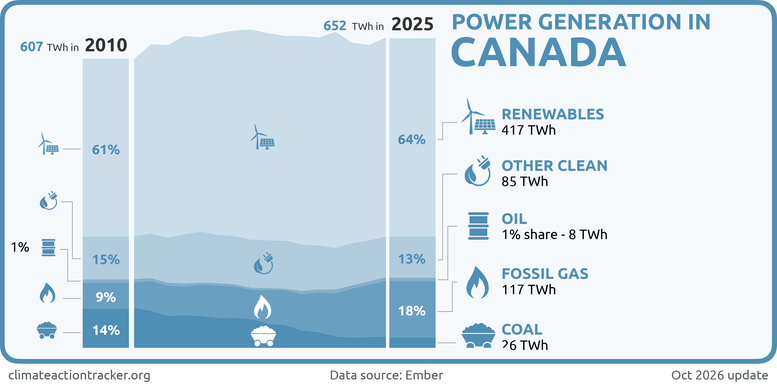
Canada already has one of the cleanest electricity systems among major economies. Yet progress is uneven across provinces and territories, which have jurisdiction over electricity generation. Some provinces have largely non-emitting systems, based primarily on hydropower or nuclear generation, whereas other remain heavily dependent on fossil fuels.
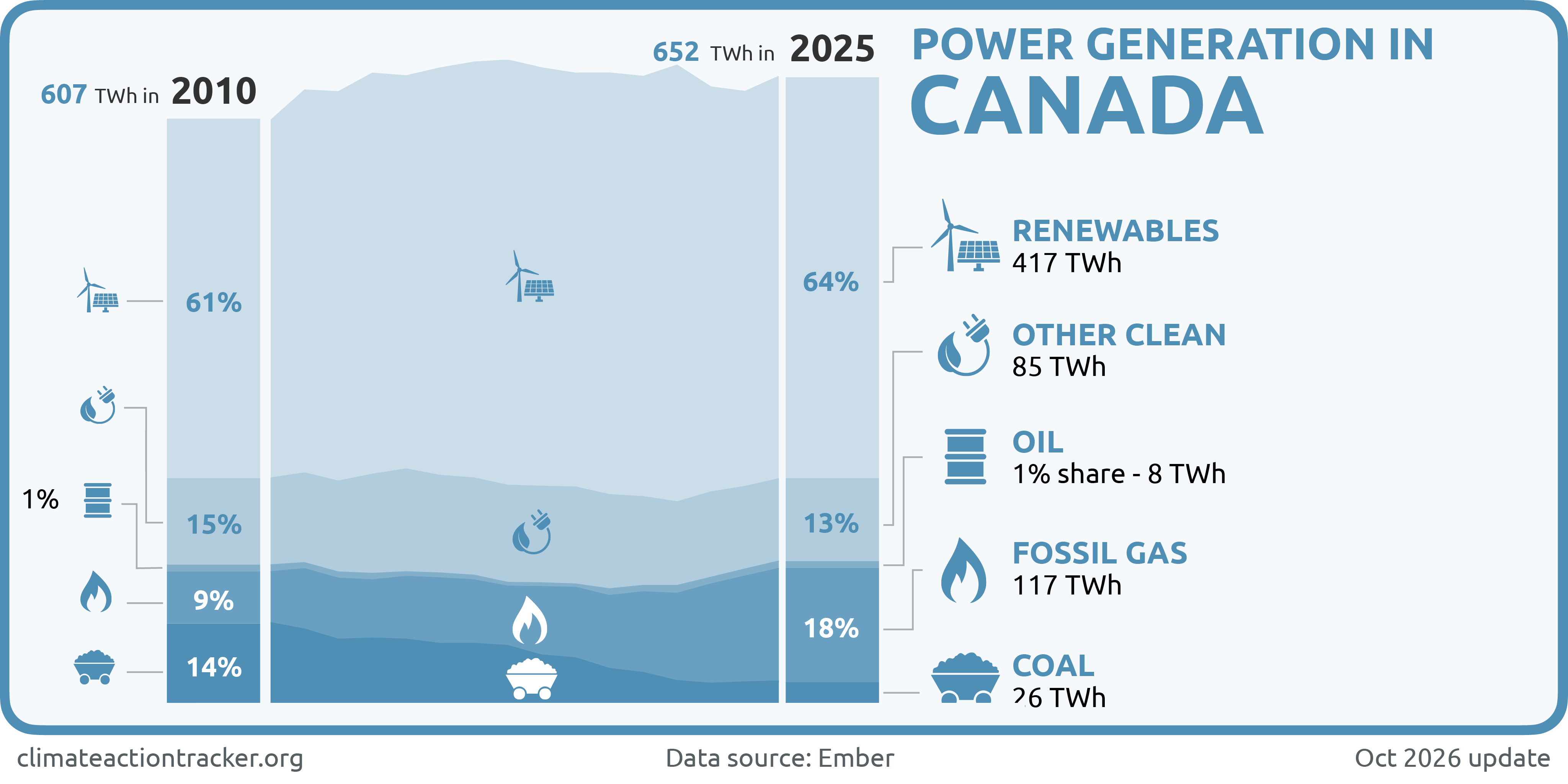
Electricity generation was responsible for 7% of Canada’s emissions in 2024, and its share of the country’s emissions has been falling steadily since 2015 as Canada shifts away from coal-fired power (Environment and Climate Change Canada, 2026a). However, fossil fuels still accounted for 23% of electricity generation in 2025. The remaining challenge is therefore to eliminate fossil fuel generation while meeting rapidly growing electricity demand driven by economy-wide electrification.
The previous federal government finalised Clean Electricity Regulations in December 2024, designed to achieve a net zero electricity system by 2050 (Government of Canada, 2024b). Under Prime Minister Mark Carney, the federal government has signalled that these regulations will be reviewed and amended and has agreed to suspend their application in Alberta under the Canada-Alberta memorandum of understanding (Prime Minister of Canada, 2025).
In May 2026, the federal government announced a new national electricity strategy aimed at doubling the capacity of Canada’s electricity system by 2050 to support the accelerated electrification of the economy. However, the strategy explicitly opens the door to an increased role for fossil gas in the electricity system, and the use of CCS and carbon offsets to achieve the 2050 net-zero goal (Natural Resources Canada, 2026a).
To be 1.5°C compatible, Canada would need to phase out all fossil fuels in the power sector by 2035 (Climate Action Tracker, 2026). The CAT does not see a role for CCS in the power sector, given its high cost, low technological maturity and residual emissions.
Coal
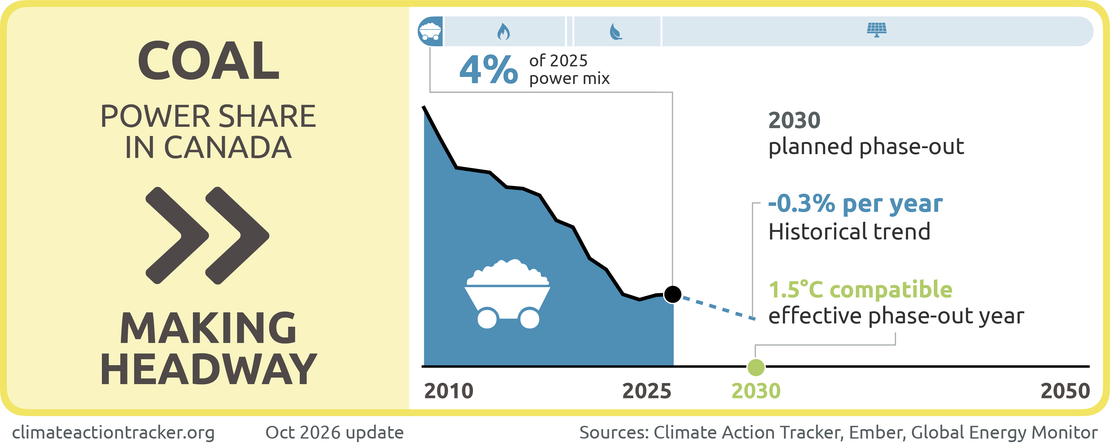
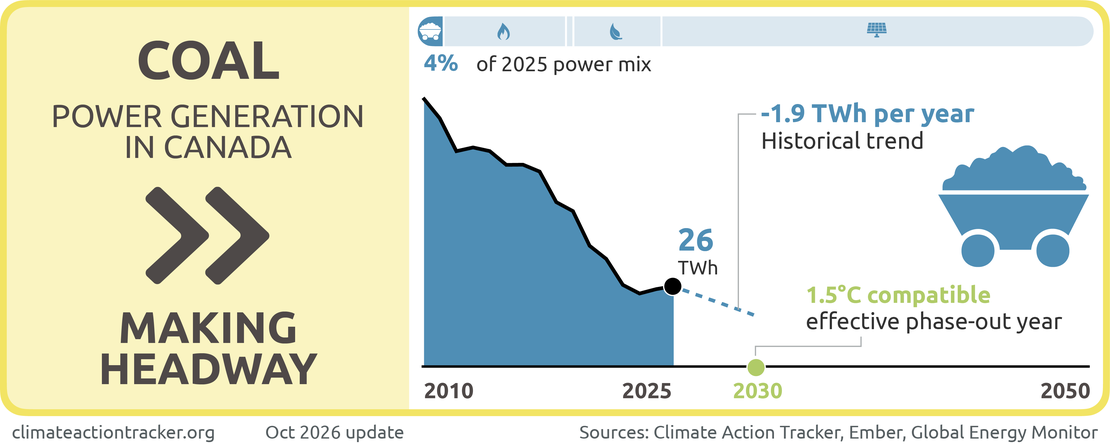
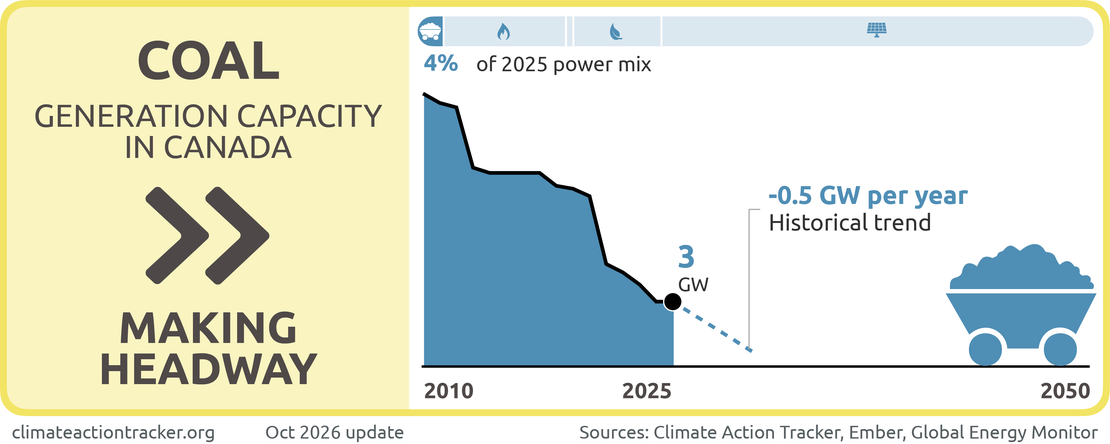
We evaluate Canada as ‘Making headway’ on coal-fired power. Coal generation has decreased significantly over the last five years, with coal's share of the overall power mix also steadily declining (Ember, 2026). Canada co-founded the Powering Past Coal Alliance in 2017 and has had a regulatory system in place since 2018 to phase out “unabated” coal power by 2030. Only three of Canada’s ten provinces still generate power from coal. Alberta phased out coal-fired generation in 2024, well ahead of its initial commitment of 2030 (Natural Resources Canada, 2023b). However, the province of Saskatchewan plans to extend the life of its coal-fired power plants, despite federal rules that require them to be phased out by 31 December 2029 (Meyer, 2026).
In addition to provincial pushback, there are limitations to the federal government’s coal phase-out efforts. Current regulations still allow for plants which emit up to 420 gCO2/kWh, roughly half the emissions intensity of conventional coal power (Government of Canada, 2018d). However, the regulations are designed to allow for coal-fired power generation with carbon capture and storage (CCS) technology.
Carbon Capture and Storage refers to technologies which use engineered methods to capture CO2 from a source and store it geologically. CCS can be applied to a range of different CO2 sources in different sectors. CCS technologies are neither commercially viable nor proven at scale, despite large public subsidies for research and development globally. Heavily relying on unproven CCS for power generation simply prolongs the use of fossil fuels, diverting attention and resources away from the necessary and urgent switch to renewable energy generation that drives down actual emissions.
The use of CCS should be limited to industrial applications where there are fewer options to reduce process emissions—not to reduce emissions from the electricity sector where renewables are cost-effective mitigation alternatives, not least because CCS doesn't remove 100% of emissions from power plants.
Canada’s experience with CCS at Saskatchewan’s Boundary Dam coal plant since 2014 demonstrates these challenges, as it has been plagued with technical and operational problems and has not met its annual CO2 capture target (Rives, 2022; SaskPower, 2022b, 2022a; Schlissel, 2021; Taylor, 2019).
Fossil gas
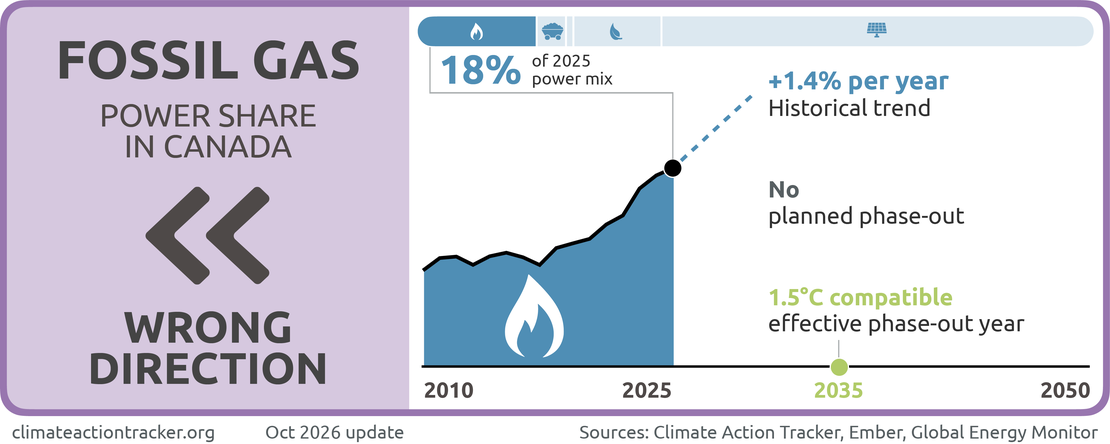
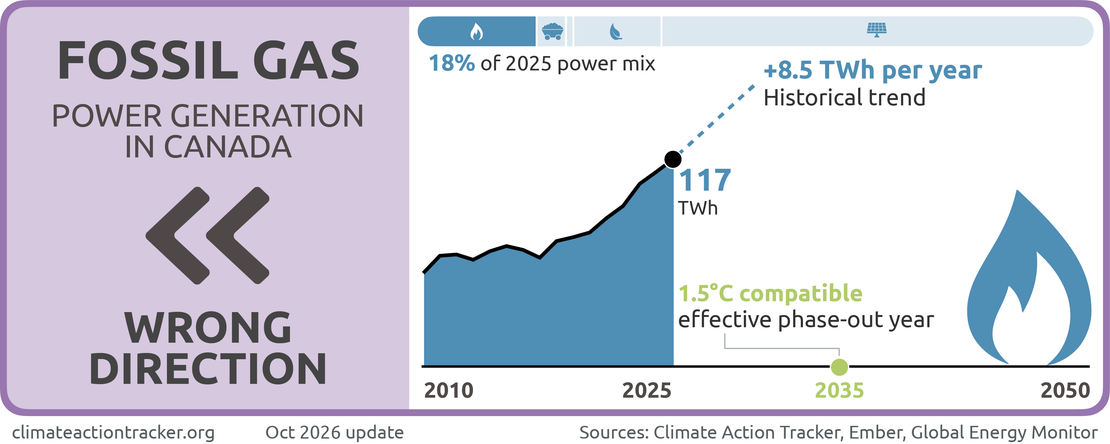
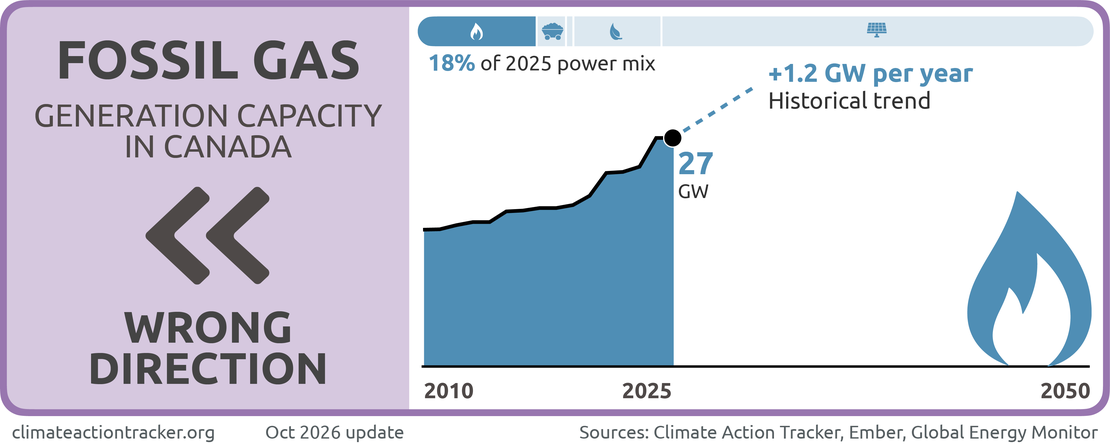
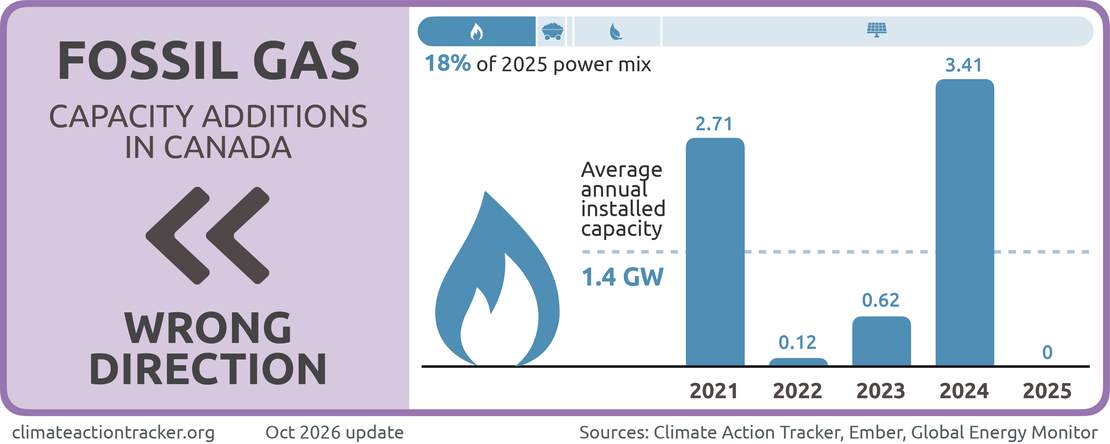
Canada is moving in the ‘Wrong direction’ on fossil gas. Electricity generated from fossil gas has increased over the last five years, with its share of the overall power mix also rising steadily – from 12% in 2020 to 18% in 2025 (Ember, 2026). This trend runs counter to what is needed for 1.5°C compatibility, which would require developed countries like Canada to phase out unabated fossil gas power by 2035.
Under the previous federal government, Canada introduced Clean Electricity Regulations in December 2024 to operationalise the 2050 net zero emissions electricity grid target. The Regulations update emissions performance standards for all grid-connected fossil-generated electricity above 25 MW capacity (Government of Canada, 2022g, 2023a, 2018e). Government projections estimated the Regulations would result in 180 MtCO2e emissions reduction between 2024-2050.
Under Prime Minister Mark Carney, the federal government has signalled that these regulations will be reviewed and amended and has agreed, under the Canada-Alberta memorandum of understanding, to suspend their application in Alberta, allowing the province to meet the 2050 net zero power grid goal through its carbon pricing system. However, Alberta has not yet demonstrated how exactly it will deliver emissions reductions equivalent to those required under the federal regulations. In addition, suspending the regulations in Alberta raises concerns that other provinces may seek similar exemptions, further undermining the effectiveness and certainty of the federal rules.
The existing regulations contain concerning exemptions and flexibility provisions. Exemptions will apply in cases of emergencies, when fossil gas without CCS may be used, and for remote northern communities (where much of the power is diesel-generated). For older facilities, only emissions that exceed the sector benchmark of 370 gCO2/kWh need to be offset. Planned units which are under construction by 31 December 2027 and meet certain criteria will be allowed to operate without an Annual Emissions Limit until the end of 2049 (Government of Canada, 2024b).
In May 2026, the federal government announced a new national electricity strategy that aims to double electricity supply by 2050. The strategy explicitly opens the door to an expanded role for fossil gas in the power system (Natural Resources Canada, 2026a).
This policy shift reinforces trends already underway, as Canada has continued to build and rely on fossil gas in its power sector in recent years. Cascade Power, a 900 MW fossil gas plant, began operating in 2024 (Cascade Power, 2021). SaskPower is also building new fossil gas plants scheduled to come online in 2024–2026 (SaskPower, 2022a).
Continuing investment in fossil gas infrastructure is concerning, especially given that the cost of fossil gas is expected to increase further, while renewable electricity generation continues to get cheaper.
Renewables
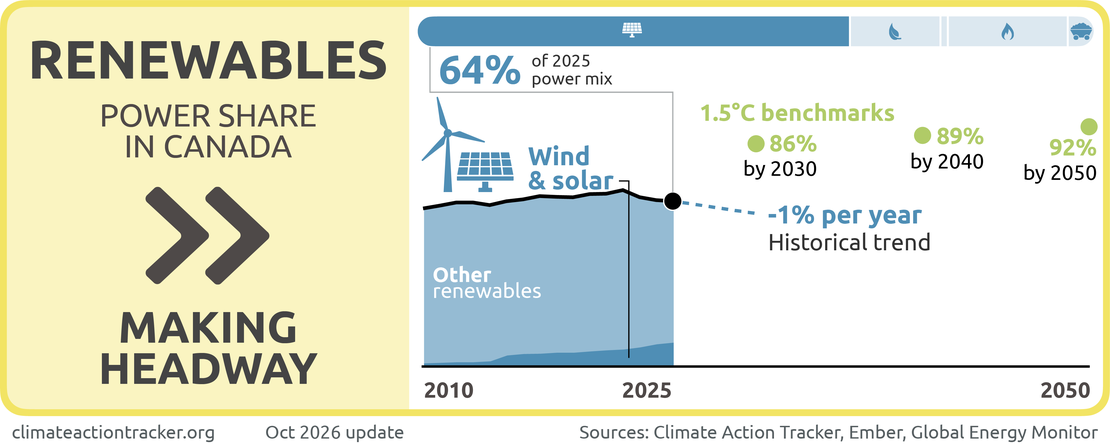
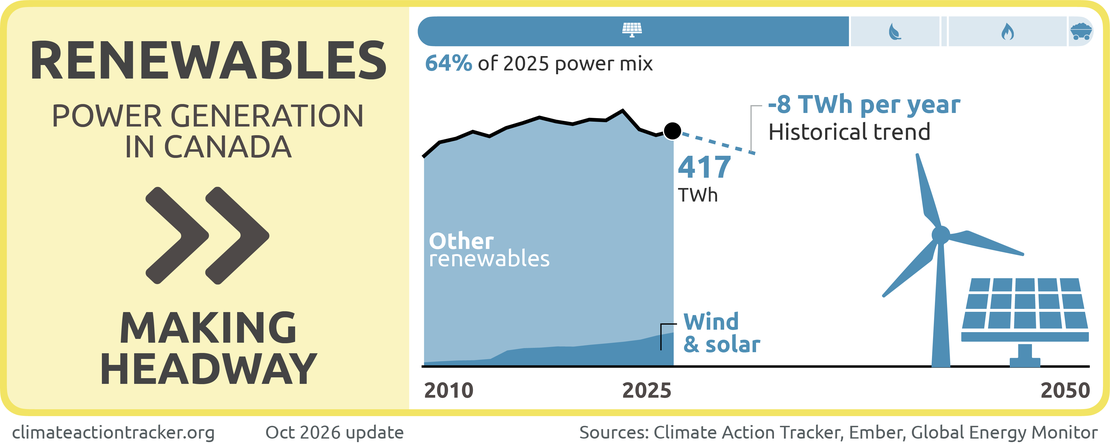
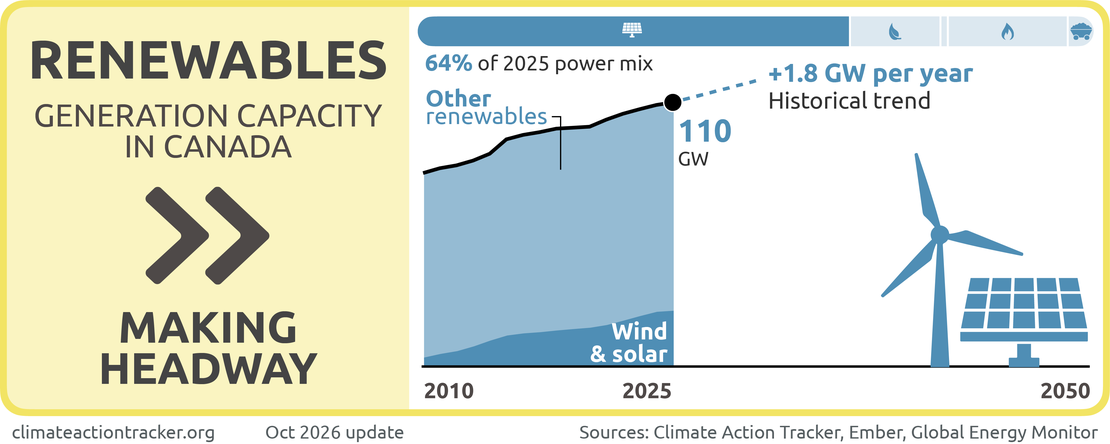
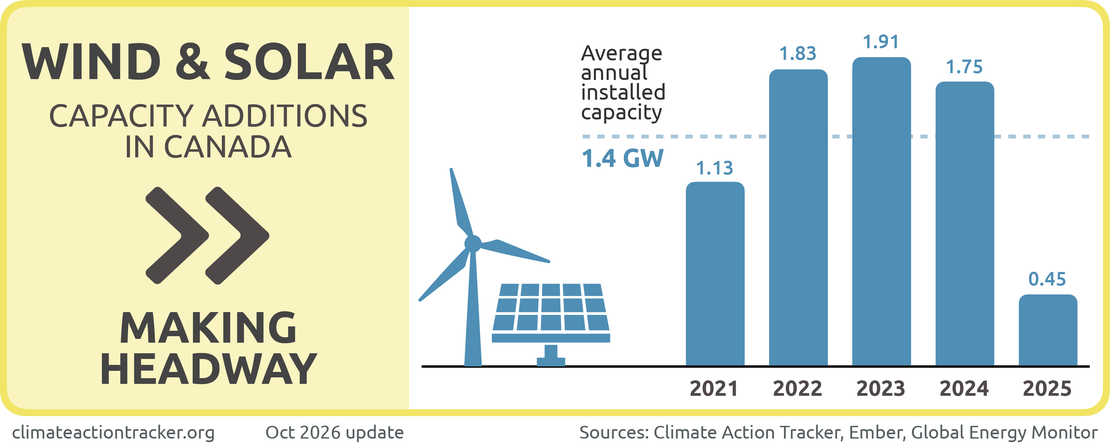
Canada is ‘Making headway’ on renewables:
- While the share of wind and solar in the power mix has been increasing steadily since 2000, Canada has seen a dip in renewable generation between 2022 and 2025. In 2022, renewables (including hydro) generated 453 TWh of electricity, whereas in 2025, total generation from renewables declined to 417 TWh (Ember, 2026).
- Nevertheless, nearly two-thirds of Canada’s electricity is already renewable, due to a long legacy of hydropower that still supplies 54% of demand.
- Both wind and solar power are increasing fast, growing from 2% of total generation in 2014 to 10% in 2025 (Ember, 2026).
- Canada’s wind rollout is broadly aligned with a 1.5°C pathway, with around 29 GW of wind capacity projected by 2030 – slightly exceeding the benchmark of 27 GW. However, Canada’s solar rollout needs to accelerate significantly, with a projected capacity gap of 29 GW in 2030, between current solar rollout and the 1.5°C-compatible benchmark (Climate Action Tracker, 2026).
- Nuclear power has been slowly declining over the last decade, but still provides 13% of total generation as of 2025, leaving approximately 23% of power to be supplied from fossil sources (Ember, 2026).
Despite this strong starting position for achieving an early carbon-free grid, under current policies, Canada is expected to use fossil gas for power generation beyond 2030, betting on CCS to deliver on its promise of a net zero emissions grid by 2050.
To be fully 1.5°C compatible, Canada would need to accelerate its renewables deployment to phase out all fossil fuels in the power sector by 2035 (Climate Action Tracker, 2026). The CAT’s latest benchmarks show that aligning Canada’s power sector with a 1.5°C pathway would require renewables to supply 95 to 97% of electricity generation by 2030, with wind and solar accounting for 29 to 31% of total generation. Achieving this trajectory would require approximately 46 GW of new wind and solar capacity between 2023 and 2030, equivalent to average annual additions of around 4.3 GW for solar and 1.5 GW for wind. Combined wind and solar capacity would need to reach about 70 GW by 2030, comprising 27 GW of wind and 43 GW of solar.
Canada has several funding programmes for ‘clean electricity’ projects, including for renewables, nuclear, transmission, storage, as well as CCS projects (Environment and Climate Change Canada, 2022a). However, the CAT does not see a role for CCS in the power sector, given its high cost, low technological maturity and residual emissions (Climate Action Tracker, 2023b).
Scaling renewables at the required pace and scale will depend on reducing current policy uncertainty, fragmented provincial approaches, inadequate transmission and grid capacity, and constraints on skilled labour. Meaningful Indigenous participation in the planning and development of new electricity infrastructure will also be essential.
Hydrogen
Canada released its Hydrogen Strategy in 2020, identifying hydrogen as playing a key role in meeting Canada’s emission reduction targets (Natural Resources Canada, 2020). The Strategy estimated that hydrogen could reduce emissions by 22–45 MtCO2e by 2030, primarily in the transport and industry sectors.
By 2050, the Strategy found that in a transformative scenario, hydrogen could supply up to 30% of final energy demand in 2030, delivering 90–190 MtCO2e of emissions reductions – if hydrogen were deployed across all sectors of the economy. The Strategy is not limited to green hydrogen (produced with renewable energy only), but includes hydrogen produced from fossil fuels with CCUS.
Canada’s Commissioner for the Environment and Sustainable Development heavily criticised the estimates in the Hydrogen Strategy, finding the underlying assumptions on policy implementation and price development ‘unrealistic’ (Commissioner of the Environment and Sustainable Development, 2022b; Office of the Auditor General of Canada, 2022b). One example is the assumption that a blending level of 7.3% can be achieved in the medium term: in the absence of blending obligations for 2030, a carbon price of at least CAD 500/tCO2, rather than the anticipated CAD 170/tCO2, would be required to achieve this.
Russia’s illegal invasion of Ukraine has reinforced the need for European countries to diversify energy sources and suppliers. In August 2022, Canada and Germany established a Hydrogen Alliance through which Canada aimed to start exporting green hydrogen to Germany in 2025, though this has not materialised (Government of Canada & Government of the Federal Republic of Germany, 2022).
Canada supports domestic hydrogen production and uptake through the Clean Hydrogen Investment Tax Credit, the Clean Fuels Fund, funding for hydrogen production and refuelling infrastructure, and purchase incentives for hydrogen fuel cell vehicles.
Agriculture
Agriculture was responsible for around 10% of Canada’s total emissions in 2024 and 30% of methane emissions (Environment and Climate Change Canada, 2026c). Under Canada’s current and proposed policies, the sector’s emissions are projected to remain relatively flat at 2024 levels in 2030 – 69 MtCO2e and 68 MtCO2e, respectively.
The previous federal government committed to publishing a Sustainable Agriculture Strategy. While the government conducted consultations in 2022 to inform the development of the Strategy, it was never finalised. Canada’s current agricultural climate policies are primarily targeted programmes and investments that encourage the development and adoption of clean technologies to reduce emissions and fertiliser use, including the Agricultural Climate Solutions programme to implement farming practices that reduce emissions.
In 2020, Canada announced a voluntary target of reducing emissions from fertiliser use by 30% below 2020 levels by 2030, a key source of N2O emissions (Environment and Climate Change Canada, 2020a). Direct emissions from synthetic nitrogen fertiliser have increased substantially since 2005. In August 2022, the government concluded consultations on the approaches to achieve the target, but has not yet announced the next steps (Government of Canada, 2022c, 2022m, 2022n).
Some agricultural activities will be eligible for the federal government’s GHG offset system, established in June 2022. Credits generated under the system can be used to reduce the compliance costs of industrial facilities covered by the government’s carbon pricing system (OBPS). Protocols for projects related to reducing enteric methane emissions from beef cattle have been published, and ones for reducing manure methane emissions and enhancing soil organic carbon are under development (Environment and Climate Change Canada, 2026e).
Waste
Waste sector emissions accounted for around 3% of Canada’s total emissions in 2024, but 19% of the country’s methane emissions (Environment and Climate Change Canada, 2026a). Municipal landfills are the primary source of waste sector emissions. Efforts to reduce methane emissions to date have only been able to balance out the increased waste generated from a growing population. As a result, current methane emissions from landfills are only slightly lower than they were 20 years ago.
The federal government finalised regulations in December 2025 to cut methane emissions from landfills by 42% below 2019 levels by 2030 (Environment and Climate Change Canada, 2026f). The regulations, which are the primary measure targeting waste sector emissions, establish performance-based methane concentration limits for municipal solid waste landfills and require regular surface monitoring, leak detection, and corrective actions.
In June 2022, the government finalised the details around generating offset credits from landfill methane recovery and destruction projects (Government of Canada, 2022j). These credits can be used to reduce the compliance costs of industrial facilities covered by the government’s carbon pricing system (OBPS).
Forestry
Canada’s managed forests have historically been a source of emissions. However, according to Canada’s latest national inventory report, forest lands represented a small net sink in 2024, removing an estimated 1.2 MtCO2e that year.
As per UNFCCC guidelines, Canada’s official emissions inventory does include emissions from forest fires, which continue to intensify across the country, with 2023 setting a tragic record: 16.5 Mha of land was burnt, an area larger than Greece and over double the previous record from 1989 (Natural Resources Canada, 2023a). According to the government estimates, direct, immediate emissions from forest fires on managed lands released 870 MtCO2e in 2023, far exceeding the country’s total reported emissions from all other sources that year, and 320 MtCO2e in 2024 (Environment and Climate Change Canada, 2026a). 2025 was the second worst wildfire season in Canadian history after 2023, with nearly 6,000 wildfires burning over 8.3 Mha of land (Public Safety Canada, 2025).
Canada’s net zero strategy assumes 100 MtCO2e of sequestration from LULUCF and nature-based solutions in 2050 to assist with achieving the country’s net zero target. In 2030, the federal government’s projections assume 25 MtCO2e of sequestration from LULUCF and nature-based solutions in the current policies scenario and 37 MtCO2e in the planned policies scenario, though the government has not provided details on where those reductions will come from. These projections are based on the federal government’s accounting contribution, which applies a “net-net” approach – comparing emissions in 2030 with those in 2005.
As the country’s forests have, until recently, been a net source of emissions, with significant year-over-year fluctuations, Canada will need to take significantly more action in this sector if it is to achieve the scale of removals outlined in its emissions projections.
Canada has implemented several initiatives to support nature-based solutions (Environment and Climate Change Canada, 2025d). Its flagship plan, launched in 2021, was to plant two billion trees during the 2020s (Government of Canada, 2021a; Liberal Party of Canada, 2019; Natural Resources Canada, 2021c). However, as announced in the federal government’s 2025 budget, the Two Billion Trees programme will wind down, with existing contribution agreements honoured, but no new funding provided (Natural Resources Canada, 2026c).
The programme was not without its challenges. In April 2023, the country’s Auditor General expressed concern over the slow rollout of the plan, concluding that the target would not be met without significant changes (Office of the Auditor General of Canada, 2023).
The programme was designed to sequester up to 2 MtCO2e by 2030 and up to 11–12 MtCO2e by 2050, but the auditors concluded that it would be a tiny net source of emissions (0.1MtCO2e) to 2030, due to emissions from planting activities and site preparation, and would only sequester 4.3 MtCO2e in 2050 (Office of the Auditor General of Canada, 2023). Even if achieved, these emission reductions are uncertain, as their long-term storage capacity faces several risks, including forest fires, pest outbreaks, and drought.
Further analysis





Latest publications




Stay informed
Subscribe to our newsletter